Learning how to package fragile food for delivery is one of the most valuable skills a small food business can master. A jar of jam, a bottle of sauce or a box of decorated biscuits can survive a long journey in perfect condition, or arrive as a sticky mess that costs you a refund, a replacement and a customer. The difference is rarely luck. It is almost always the packaging.
This guide covers choosing the right box, picking cushioning that actually protects food, packing step by step, keeping temperature-sensitive items safe, and labelling your parcels so couriers handle them well.
Why Fragile Food Is So Hard to Ship
Food is harder to protect than most fragile goods because it combines several problems at once. Glass jars and bottles are heavy for their size, so they hit the bottom of a box with real force. Baked goods are light but crush easily and go stale if air gets in. Chocolate melts, cream spoils, and anything with liquid inside can leak and ruin the whole parcel.
A food parcel is also handled many times between your packing bench and the customer’s door: sorted on belts, stacked under heavier parcels, loaded into vans and dropped on doorsteps.
Know What You Are Packing
Different foods break in different ways, so start by sorting your products into groups and packing each group the way it needs.
Glass jars and bottles
Jars of jam, honey, sauces and pickles are the most common breakage risk. Glass shatters under a sharp knock, and the contents are heavy, so movement inside the box is the enemy. Each jar needs its own wrap and enough cushioning to stop jars touching each other, with at least 5 cm of padding between the glass and the box wall.
Baked goods and biscuits
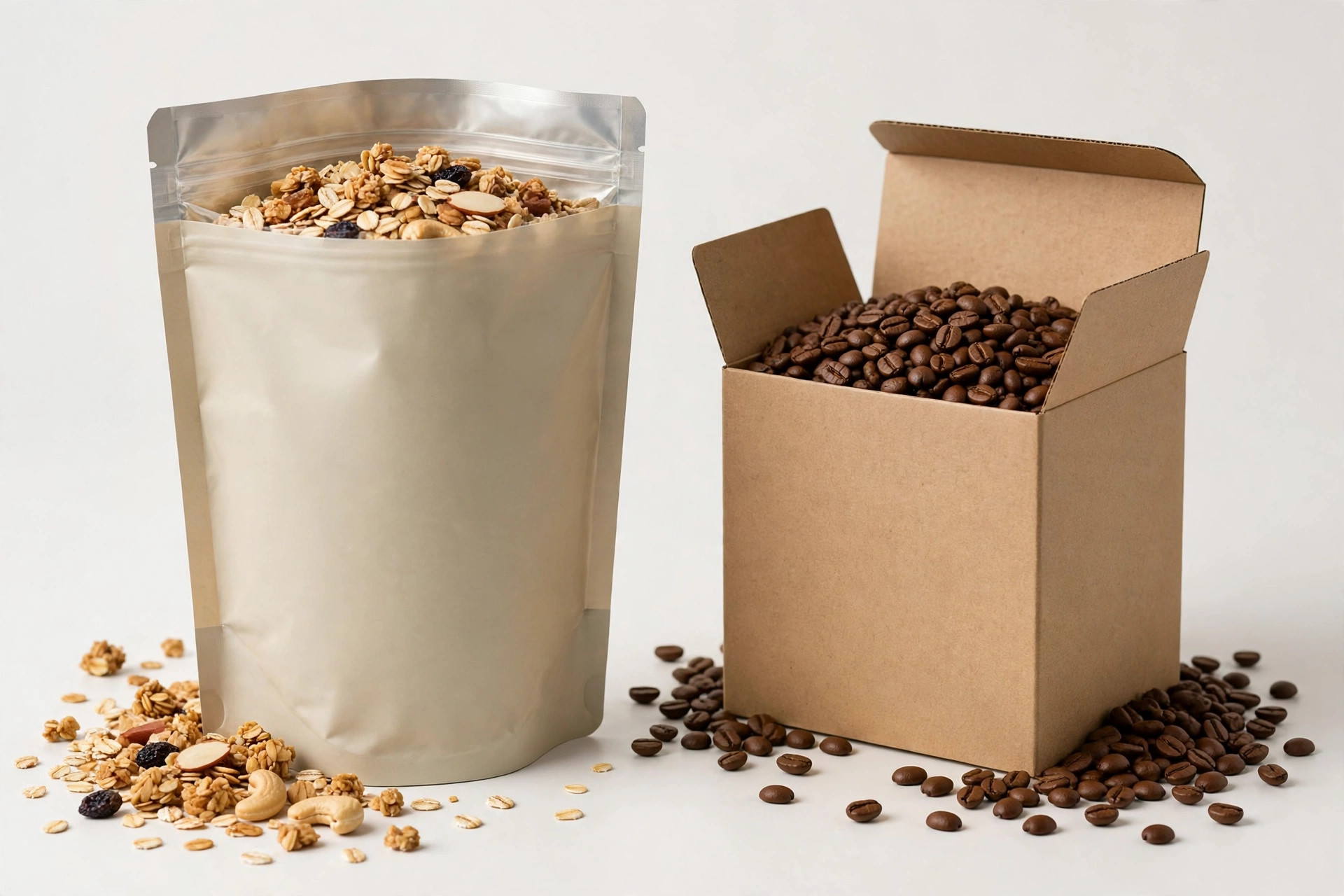
Cakes, biscuits and pastries are light but crushable, so they need a rigid inner container, such as a sturdy bakery box, inside the outer shipping box. Wrap decorated items individually in greaseproof paper or cellophane so icing does not smudge, and fill every gap so nothing slides around.
Chocolate and confectionery
Chocolate snaps and melts. Pack it in a rigid box with dividers, keep it away from direct contact with cold packs (condensation causes sugar bloom, the white film on the surface), and wrap it in foil or paper first. In warm weather, insulated packaging and frozen gel packs are essential.
Choose the Right Outer Box
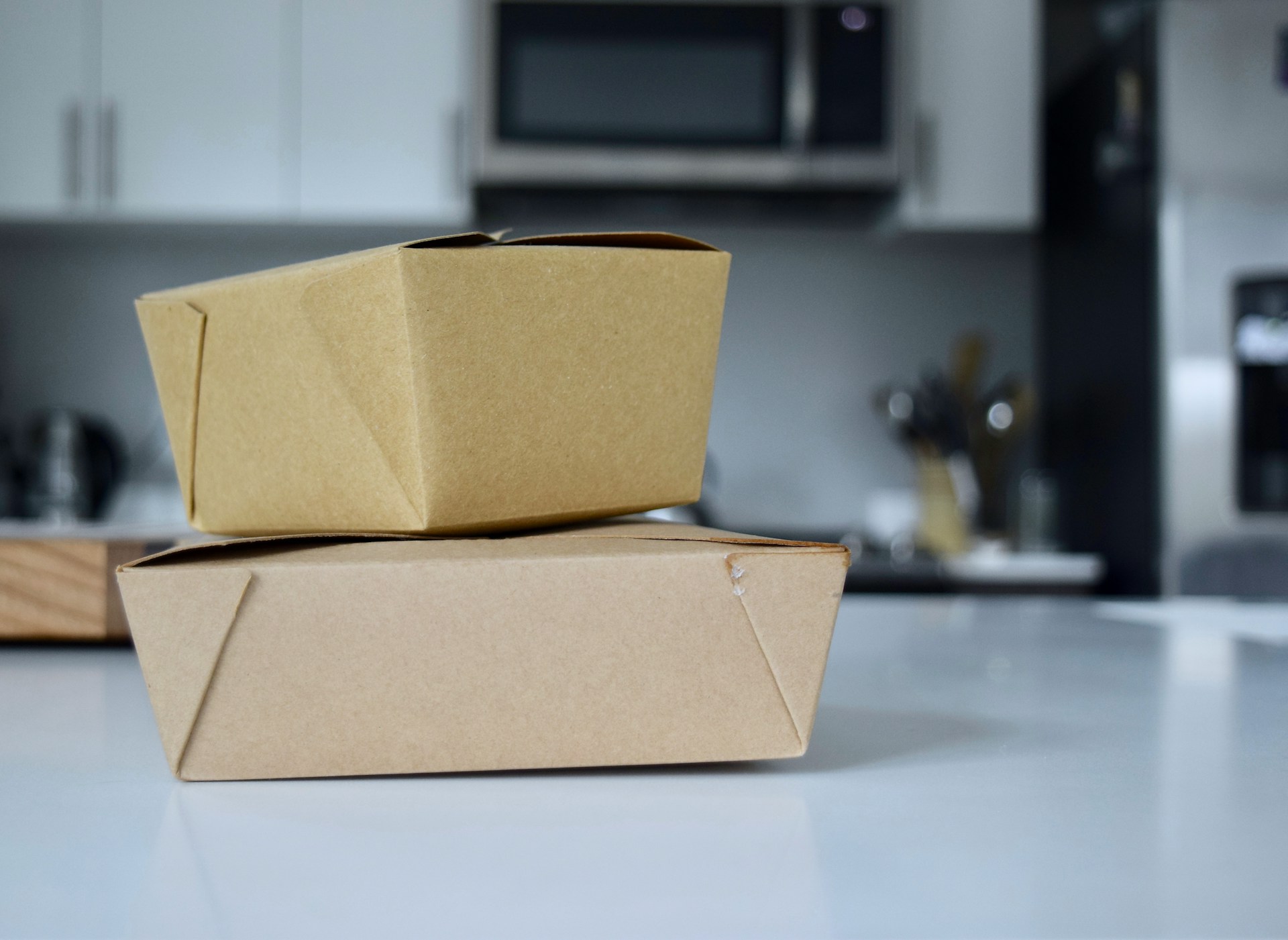
The outer box is the first line of defence. A box that is too big lets items rattle around; a box that is too small squeezes the cushioning flat so it cannot absorb shocks.
- Use a double-wall corrugated box for glass, ceramic and heavy food parcels. The extra layer of corrugated board makes the box far stiffer and much harder to crush under stacked parcels.
- Size the box to the contents. Aim for about 5 cm of cushioning space around your items on all sides, and keep two or three standard box sizes in stock if you ship the same products regularly.
- Use a new box, not a reused one. Cardboard loses strength each time it is used, so a box that has already been through the post is far more likely to split or collapse.
- Check the box before you pack it. Look for soft spots, damp patches and crushed corners. A box that is already weak will not protect anything.
Pick the Right Cushioning
Cushioning does two jobs: it absorbs shocks and it stops items moving.
Bubble wrap
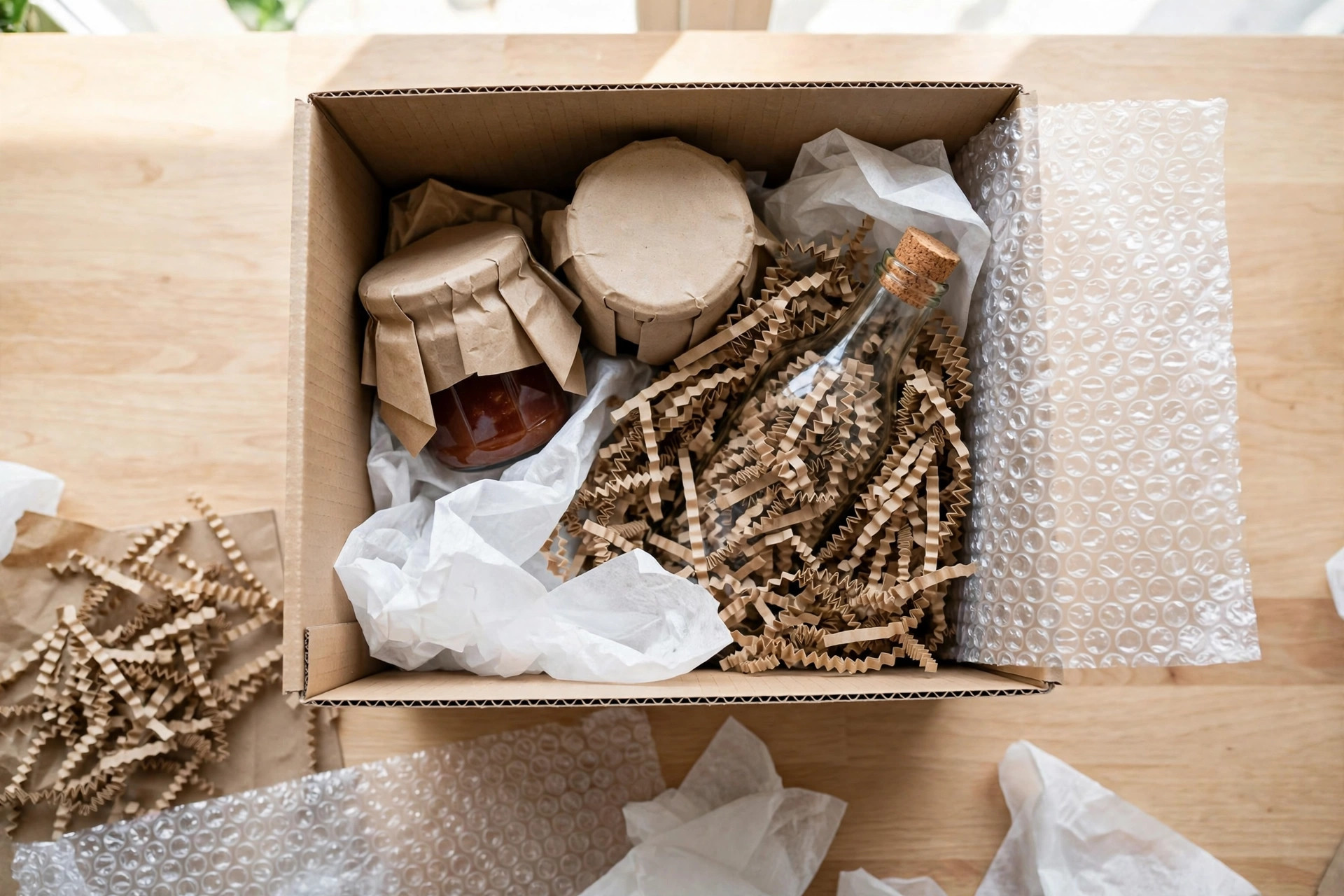
Bubble wrap is the most versatile cushioning for fragile food. Wrap each jar or bottle individually with at least two layers, tape the wrap closed, and use extra wrap around necks and lids, the most vulnerable points. Large bubbles suit heavier items; small bubbles suit lighter ones.
Paper void fill and crumpled kraft paper
Scrunching kraft paper into loose balls and packing them tightly around your items is cheap, effective and easy to recycle. It works best for lighter items and for filling gaps around a wrapped jar, but use it as a filler rather than the main protection for heavy glass.
Air pillows and foam
Inflated air pillows are light, which keeps postage costs down, and they fill large voids quickly. Foam sheets and foam pouches give a snug fit for bottles and are reusable.
Dividers and moulded inserts
If you ship the same jars or bottles every week, cardboard dividers or moulded pulp inserts are worth the investment. They hold each item in its own cell so items cannot knock together, the most common cause of breakage in multi-item parcels, and they make packing faster and more consistent.
How to Pack Fragile Food Step by Step
Follow the same routine for every order. Consistency is what keeps breakage low when you are busy.
Step 1: Prepare each item. Check every lid and cap is tight and wipe jars clean. Wrap each item individually in bubble wrap or paper, taping it closed, and pay extra attention to necks, lids and bases.
Step 2: Seal liquids against leaks. For sauces, oils and anything liquid, wrap the lid area in cling film or place the item in a sealed plastic bag before wrapping it. If a jar does crack, the bag keeps the leak inside and protects the rest of the parcel.
Step 3: Cushion the bottom of the box. Lay at least 5 cm of cushioning in the bottom before anything goes in; this layer takes the impact when a parcel is set down hard.
Step 4: Place the heaviest items at the bottom. Heavy jars go in first, standing upright, with cushioning between them so they cannot touch each other or the box walls. Lighter items go on top.
Step 5: Fill every gap. Push crumpled paper or air pillows into every space around and between items until nothing moves when you gently shake the box.
Step 6: Add a top layer of cushioning. Finish with another 5 cm of cushioning on top, then close the box.
Step 7: Seal with the H-taping method. Tape the centre seam, then tape across both ends so the tape forms an H shape on the top and bottom. Use proper packing tape, not masking tape, and run it around the box twice for heavy parcels.
Step 8: Label clearly. Mark the box fragile on at least two sides, add a this-way-up arrow, and include the delivery address inside the box as well as outside, in case the outer label is damaged.
Keeping Temperature-Sensitive Food Safe
Some fragile food is also perishable, and that changes the packing plan. An insulated liner or a polystyrene box inside the outer carton will hold the temperature for hours, and frozen gel packs do the cooling. Place gel packs around the food rather than directly against chocolate, where condensation can damage the surface, and wrap them in paper first.
Timing matters as much as insulation. Ship perishable food on Monday to Wednesday so it cannot sit in a depot over the weekend, and choose a next-day or 48-hour service rather than the cheapest option. Tell the customer which day the parcel will arrive, and ask them to bring it indoors promptly.
Choosing a Courier and Testing Your Packaging
Not every courier treats parcels the same way, and the cheapest option is rarely the best for fragile food. Look for a service with a clear claims process for breakages, tracking at every stage, and delivery windows that suit perishable goods.
Before you trust a new packaging setup, test it. Pack a sample parcel exactly as you would a real order, then drop it from waist height onto a hard floor, turn it upside down, and stack a heavier box on top of it. If anything is damaged, add more cushioning or change the box before a customer finds the problem for you.
Common Mistakes to Avoid
- Using a box that is too big. Empty space lets items slide and smash into each other. Fill it or size down.
- Wrapping several jars together. Items wrapped as a bundle knock against each other. Wrap each one separately.
- Skimping on the bottom layer. Most drops land on the base of the box. Thin cushioning there is the single most common cause of breakage.
- Using newspaper as the only cushioning. Newsprint goes flat under weight and the ink can transfer onto packaging. Use it only as extra filler.
- Forgetting the leak barrier. One cracked sauce jar can soak through the whole parcel.
- Shipping perishables late in the week. A Friday dispatch that misses its slot can sit in a warehouse all weekend. Ship early in the week instead.
Packing fragile food well is a skill, not a cost to be cut. Every parcel that arrives intact protects your reputation, saves you a refund and a reshipment, and turns a first-time buyer into a repeat customer. Spend the extra minute and the extra layer of bubble wrap.
Frequently Asked Questions
What is the best cushioning material for fragile food in the post?
Bubble wrap is the most reliable all-rounder for glass jars and bottles because it absorbs shocks and moulds around awkward shapes. For lighter items such as biscuits, crumpled kraft paper works well and is easier to recycle. Foam inserts and moulded pulp trays are best when you ship the same product repeatedly, because they hold each item in a fixed position.
How much space should I leave between a jar and the box wall?
Leave at least 5 cm (about 2 inches) of cushioning on every side of a glass jar or bottle, including the top and bottom. That gap absorbs the impact when a parcel is dropped or stacked.
Should I use a double-wall box for fragile food?
Yes, for anything made of glass or ceramic, or for heavier food parcels. A double-wall corrugated box is much stiffer than a single-wall box and resists crushing when other parcels are stacked on top of it. Single-wall boxes are fine for light, well-cushioned items such as biscuits, but they are a false economy for jars and bottles.
How do I keep chocolate and other heat-sensitive food safe in transit?
Ship heat-sensitive food early in the week so it does not sit in a depot over the weekend, and use an insulated liner with frozen gel packs inside the box. Choose the fastest delivery service you can afford, and tell the customer the parcel needs to go straight into a cool place on arrival.
Do I need to label a parcel as fragile?
Yes, add a clear fragile label on at least two sides of the box, and include an arrow showing which way is up. Labels help, but never rely on them alone: pack as if the parcel will be dropped, stacked and turned upside down.
More Articles You’ll Like
Keep reading — more from this category and across the site:
- What Does ‘Lock In’ Mean? Meaning, Origin, and Usage
- What Is Offset Printing? A Beginner’s Guide
- How to Find Obituaries in Huntsville, AL: A Step-by-Step Guide
- How to Start a Small Business: Step-by-Step Guide for Beginners
- 10 Healthy Lifestyle Habits for a Better Life
- What Does ‘Serendipity’ Mean? Meaning, Origin, and Examples
- 50 Christmas Knock-Knock Jokes for Kids and Adults