Choosing between stand-up pouches vs boxes is one of the first packaging decisions a food business faces, and it shapes far more than how your product looks. It affects your cost per unit, your shipping bill, how long your food stays fresh, how much shelf space you take up, and what your customers think of your brand before they taste a thing.
There is no single right answer: a pouch that is perfect for coffee beans can be a disaster for fragile biscuits, and a beautiful box can quietly eat your margins on a low-priced snack. This guide compares the two formats side by side, so you can choose the one that fits your product, your budget and your customers.
What Is a Stand-Up Pouch?
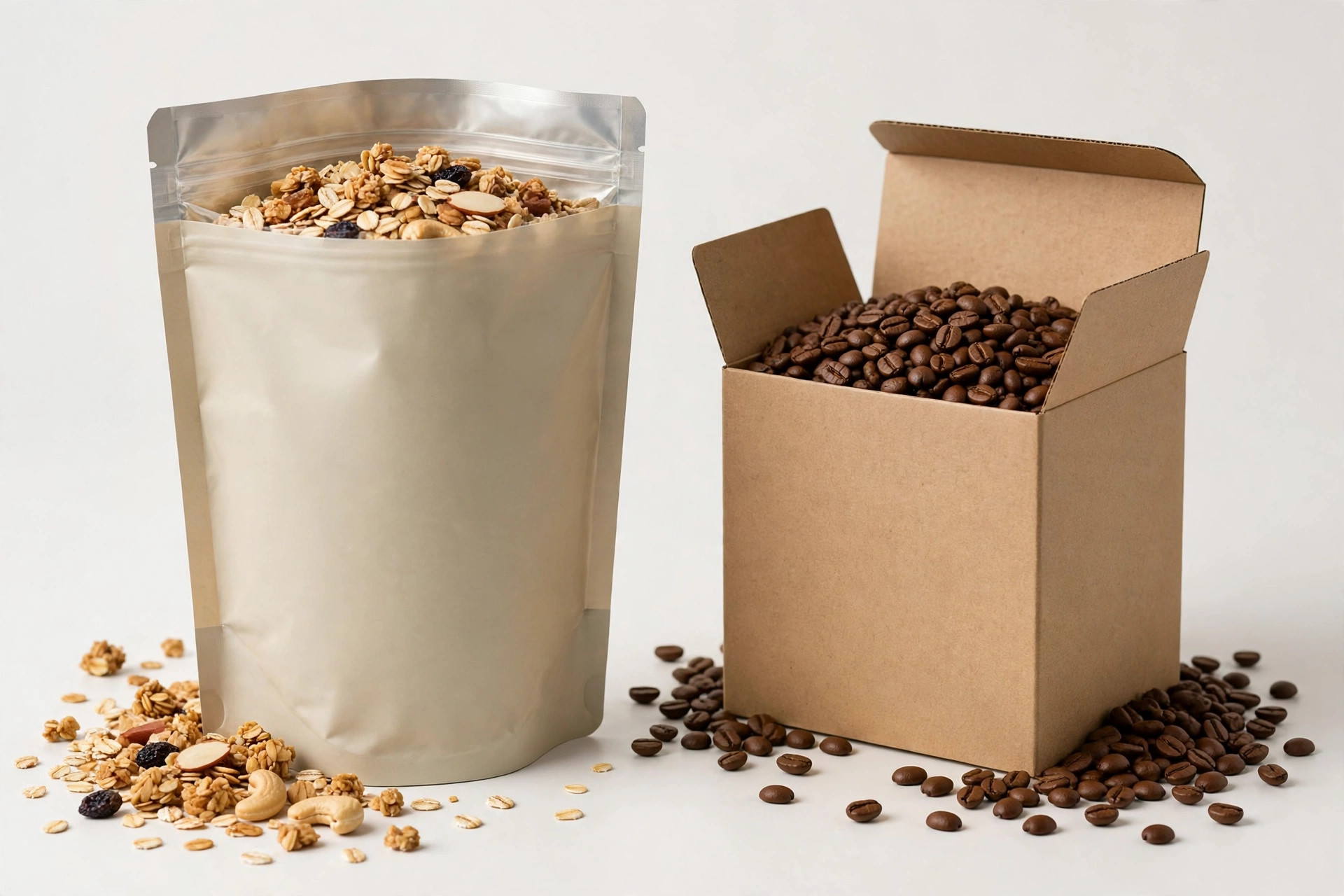
A stand-up pouch, often called a doypack, is a flexible bag made from layers of plastic film, foil or paper, sealed at the edges with a flat gusset at the bottom so it stands upright on a shelf. Most food pouches have a resealable zipper at the top and a tear notch for easy opening, and the film can be printed across the whole surface in bright, photographic quality.
Pouches are used for coffee, tea, dried fruit, nuts, granola, pet food, sauces, soups and baby food. They are light, they take up very little space when empty, and high-barrier films keep out oxygen and moisture, which keeps food fresh for longer.
What Is a Food Box?
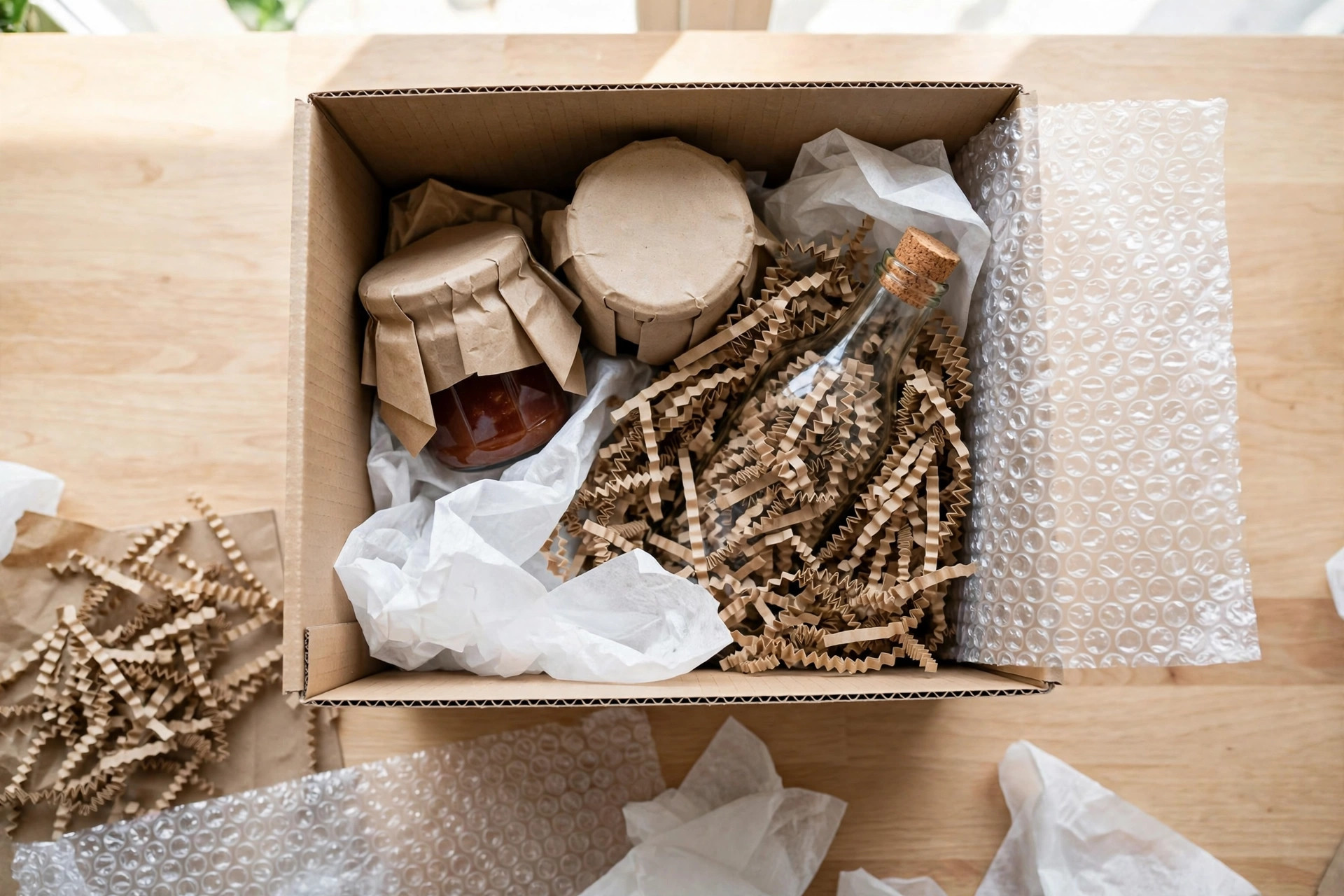
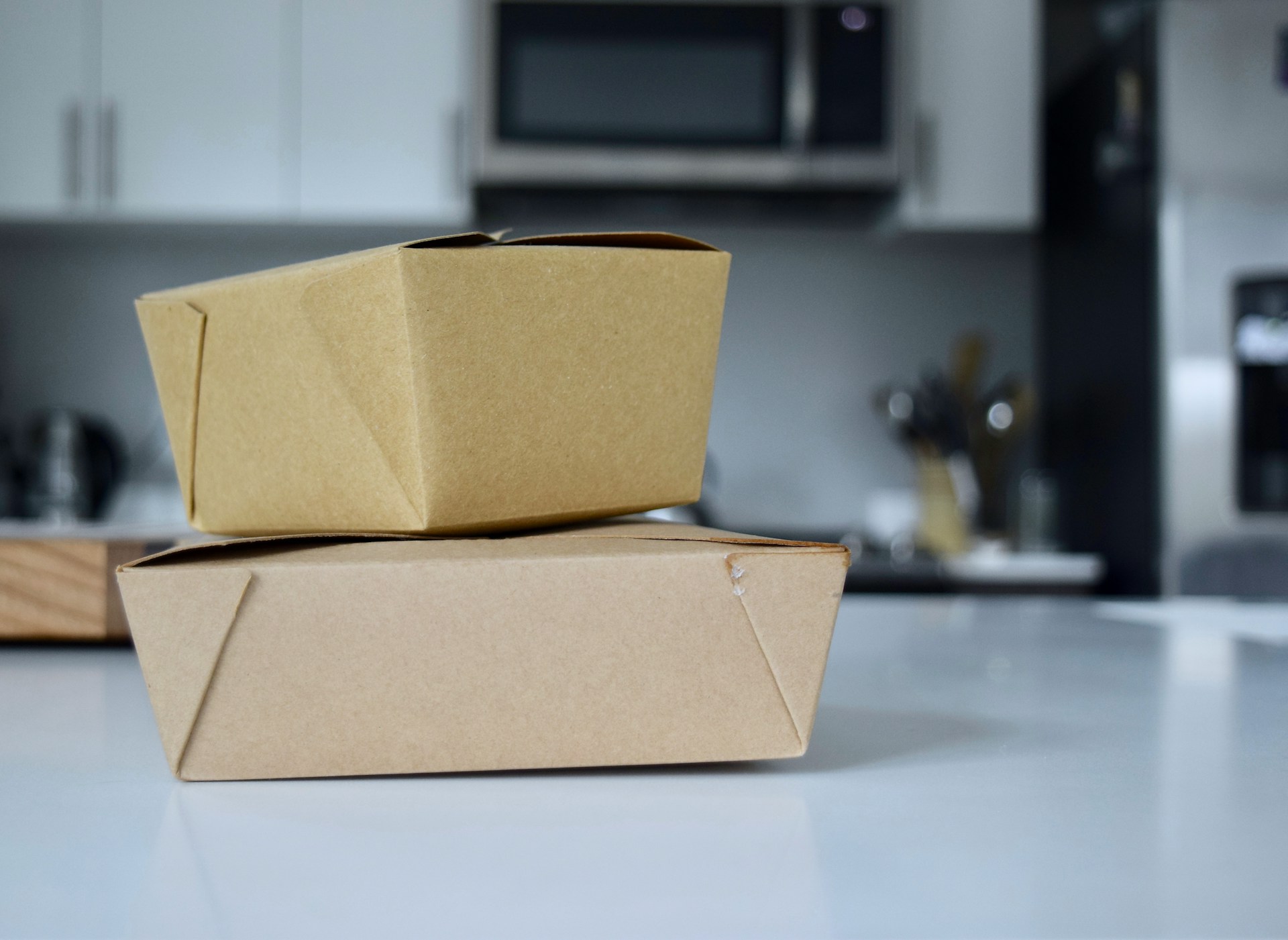
A food box is a rigid container made from cardboard, paperboard or corrugated board, folded or glued into shape. Boxes range from simple kraft cartons for biscuits to sturdy printed boxes for gift sets. Many food boxes hold an inner bag or liner that keeps the food fresh, while the box itself provides structure, protection and branding.
Boxes are the traditional choice for cereals, biscuits, chocolates, tea bags, frozen food and meal kits. Customers know them, retailers know how to stack them, and most cardboard is easy to recycle.
Cost: Pouches Usually Win
On cost, pouches have a clear edge in most cases. The material is cheaper per unit than a printed box, empty pouches take up a fraction of the storage space, and a filled pouch weighs less, which cuts shipping costs on every order.
Boxes cost more per unit, especially with full-colour printing, and they need more warehouse space. They can be cheaper to fill, though: a simple box can be packed by hand with no special equipment, while pouches usually need a heat sealer, and high volumes need a filling machine or a contract packer.
As a rough rule, if your product is light and dry, a pouch will usually be the cheaper format overall. If your product is heavy or fragile, the box may work out cheaper once you count breakages and returns.
Shelf Presence and Branding
On a shop shelf, both formats can look excellent, but they do it differently. A pouch gives you a large, curved print surface with photographic quality, and its shape stands out among rows of boxes. It can also be made in any size.
A box gives you flat, crisp panels that are easy to read, and it stacks into neat, uniform rows that retailers love. Boxes also feel more premium: a rigid, well-printed box suggests a gift or a special product, which is why chocolates, hampers and premium biscuits almost always come in boxes.
For online sales, shelf presence matters less, and the pouch’s lighter weight and smaller size become more important. For retail, look at what your competitors use: if every shelf is full of boxes, a pouch will stand out.
Product Protection and Freshness
Freshness is where pouches often have the advantage. A pouch made from high-barrier film, sealed with a zip and a heat seal, keeps oxygen and moisture out very effectively, and the zip lets the customer reseal it after opening. That is a real benefit for coffee, nuts, dried fruit and anything that goes stale quickly.
A plain cardboard box is not airtight, so food in a box normally relies on an inner bag or foil liner to stay fresh. The box’s strength is physical protection: it resists crushing, protects delicate items such as biscuits and chocolates from being squashed, and survives rough handling in the post better than a flexible pouch, which can be punctured by sharp objects.
Think about your product’s main risk: if it is staleness, a pouch with a good barrier film and a zip is hard to beat; if it is crushing or breakage, a rigid box is the safer choice.
Sustainability: A Genuine Trade-Off
Sustainability is the hardest part of this comparison, because each format wins on a different measure. Cardboard boxes are widely recyclable, customers know how to recycle them, and many are made from recycled board.
Pouches use far less material in the first place, which means less raw material, less energy in production and far lower transport emissions, because they are lighter and take up less space. The catch is that most pouches are made from several layers of different materials laminated together, which makes them difficult or impossible to recycle in normal household recycling. Mono-material pouches, made from a single type of plastic, are improving this, but they are not yet available everywhere and may cost more.
Be honest with your customers about the trade-off rather than claiming one format is simply greener. If you choose pouches, explain that they use less material and less fuel to ship. If you choose boxes, say they are recyclable and, where true, made from recycled board.
Convenience for Customers
Customers notice the small things. A pouch with a resealable zip and a tear notch is easy to open, easy to close and easy to store in a cupboard, and it pours neatly. The downside is that a pouch can be hard to stand up once it is half empty.
A box is easy to open, easy to close and easy to stack in a cupboard, and it stays upright. For products that are used a little at a time over weeks, such as tea or cereal, a box with an inner bag is often the more practical format in the kitchen.
Which Format Suits Which Product?
Here is a quick guide by product type.
- Coffee, tea, nuts, dried fruit, granola, snacks: pouches are usually the better choice, thanks to the barrier film, the resealable zip and the lower cost.
- Biscuits, crackers, chocolates, pastries: boxes protect delicate shapes far better, and the premium feel suits the product.
- Sauces, soups, liquids and wet food: pouches with a spout or a strong seal work well and are lighter to ship; boxes need a sealed inner container, which adds cost.
- Cereals and breakfast foods: boxes are the standard, and customers expect them, though pouches are gaining ground for granola and muesli.
- Gift sets, hampers and premium products: boxes, almost always. The unboxing experience is part of the product.
- Powders, supplements and pet food: pouches, especially larger ones with a zip, are the common choice for their freshness and low shipping weight.
A Simple Decision Checklist
Work through these questions and the answer usually becomes clear.
- Is your product fragile or crushable? If yes, lean towards a box.
- Does it go stale quickly once opened? If yes, lean towards a pouch with a zip.
- Is shipping cost a big part of your price? If yes, the lighter pouch will save money on every order.
- Is it a gift or a premium product? If yes, a box supports the price.
- Are you selling mainly online or in shops? Online favours pouches; retail often favours boxes for stacking and facing.
- How important is recyclability to your customers? If it is a top concern, a box is the easier story to tell.
- Can you fill pouches efficiently? If you pack by hand in small batches, a box may be simpler until volumes grow.
If you score mostly pouches, go with pouches. If you score mostly boxes, go with boxes. If it is a tie, consider the hybrid option below.
The Hybrid Option: Pouch Inside a Box
Many successful food brands use both formats at once: a pouch as the primary pack that holds the food, inside a printed box for retail display or for gift sets. You get the pouch’s freshness, resealability and low material cost, plus the box’s protection, shelf presence and premium feel.
The trade-off is cost and material: you are paying for two packs instead of one. That makes the hybrid best suited to premium products, gift ranges and retail lines where the box earns its keep on the shelf.
Whichever you choose, test it before you commit. Order samples, fill them with your actual product, ship them to yourself or to friends, and check how they arrive: the seal, the freshness after a week, how the pack looks on a shelf, and what it costs to post.
Frequently Asked Questions
Are stand-up pouches cheaper than boxes?
Usually, yes. Pouches use less material, take up less space in storage and weigh less, so they cost less to buy and less to post. Boxes cost more per unit but need no extra filling equipment beyond a simple sealer, while pouches often need a heat sealer or a contract packer.
Do stand-up pouches keep food fresh as well as boxes?
Often better. A pouch with a high-barrier film and a resealable zip keeps out air and moisture very effectively, which is why they are popular for coffee, snacks and dried goods. A plain cardboard box on its own is not airtight, so food in boxes usually sits inside an inner bag or liner that does the real freshness work.
Can stand-up pouches be recycled?
Most standard pouches are made from layers of different plastics laminated together, which makes them hard to recycle in normal household recycling. Mono-material pouches made from a single type of plastic, and paper-based pouches, are easier to recycle where facilities exist. Cardboard boxes are widely recyclable, which is one of their biggest advantages.
Which is better for the shelf: pouches or boxes?
It depends on the store. Pouches stand out on a shelf with bright, full-surface printing and they take up less shelf depth. Boxes stack neatly, are easy to face up, and give a more premium, gift-like feel. For online sales, where there is no shelf, the pouch’s lighter weight and smaller size usually win.
Can I use both pouches and boxes for the same product?
Yes, many brands do. A common approach is a pouch as the primary pack that holds the food, placed inside a printed box for retail display or gift sets. That gives you the pouch’s freshness and low cost with the box’s shelf presence and protection, though it does add cost and material.
More Articles You’ll Like
Keep reading — more from this category and across the site:
- What Does ‘Lock In’ Mean? Meaning, Origin, and Usage
- What Is Offset Printing? A Beginner’s Guide
- How to Find Obituaries in Huntsville, AL: A Step-by-Step Guide
- How to Start a Small Business: Step-by-Step Guide for Beginners
- 10 Healthy Lifestyle Habits for a Better Life
- What Does ‘Serendipity’ Mean? Meaning, Origin, and Examples
- 50 Christmas Knock-Knock Jokes for Kids and Adults