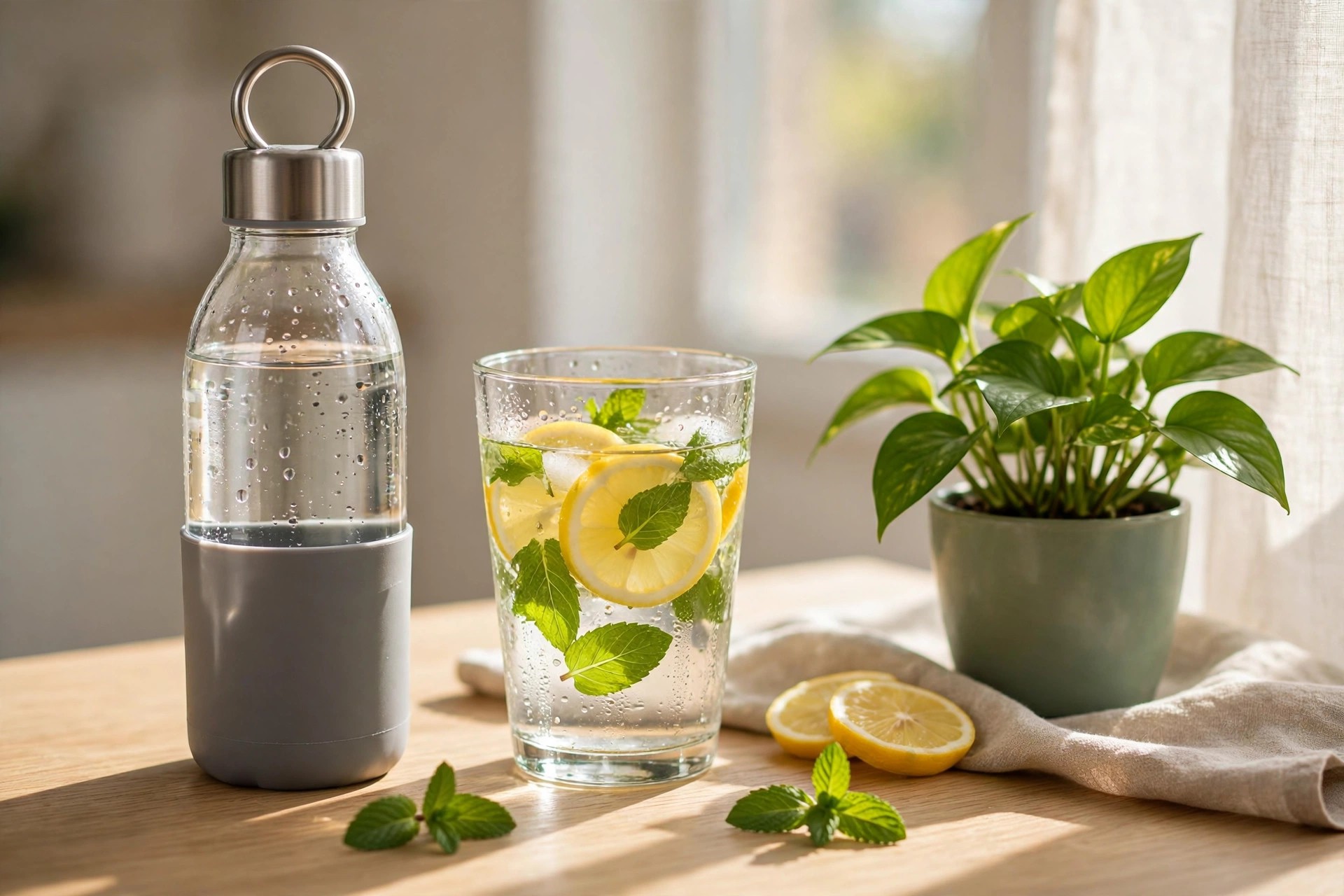
Most of us know we should drink more water — and most of us still do not. We get busy, we forget, and by evening we realise the bottle on our desk is still full. The fix is rarely willpower. It is making water easy, visible, and habitual. This guide explains how to drink more water every day, with 15 simple tips that actually fit a normal life.
Water does quiet, essential work in your body all day long: it carries nutrients, regulates temperature, cushions joints, and helps your brain concentrate. You do not need to overthink it — you just need a steady supply through the day instead of a desperate litre at bedtime, and keeping a glass by your bed is part of a good bedtime routine.
Why Drinking Enough Water Matters
Even mild dehydration can leave you tired, foggy, and headachy. Your body is roughly 60 percent water, and losing just a small percentage through sweat, breathing, and normal daily activity is enough to affect your energy and focus. Many people reach for coffee or a snack when what they actually need is a glass of water.
Staying hydrated also helps your skin look healthier, supports digestion, and keeps your kidneys working well. It will not fix everything — water is not a miracle cure — but it is one of the cheapest, simplest health habits there is. If you are building healthy lifestyle habits one step at a time, drinking more water is one of the easiest wins you can pick. It also pairs well with eating better: when you eat healthy on a budget, fruit, vegetables, and soups add to your fluid intake without you even noticing.
How Much Water Do You Actually Need?
There is no magic number. The old “eight glasses a day” rule is a rough guide, not a prescription — your needs depend on your size, how active you are, the weather, and how much water your food already provides. A widely used guide is around 2 to 3 litres of total fluid a day for most adults, but that includes water from food and other drinks, not just plain water.
A simpler check is the colour of your urine: pale yellow usually means you are drinking enough, while dark yellow means you need more. Thirst is a late signal, so the goal is to drink regularly through the day rather than waiting until you feel parched. If you exercise, work outdoors, or live somewhere hot, you will need more — and if you are starting a new fitness habit, such as learning to start running for beginners, remember that sweat losses count too.
15 Simple Tips to Drink More Water Every Day
1. Start the day with a glass of water
Keep a glass by your bed and drink it before you do anything else. After seven or eight hours without fluids, your body needs water first thing, and starting the day hydrated sets the tone for the rest of it.
2. Carry a bottle everywhere
A reusable bottle you like is the single most effective trick. Keep it on your desk, in your bag, and in the car. If water is always within reach, you will drink it without thinking; if it is in another room, you will not.
3. Set a bottle goal, not a litre goal
Instead of aiming for an abstract number of litres, aim to finish and refill your bottle a set number of times — for example, three full bottles by the end of the workday. It turns hydration into a simple, visible target.
4. Drink a glass before every meal
A glass of water before breakfast, lunch, and dinner adds three glasses a day with almost no effort. It also helps you feel fuller, which can stop you mistaking thirst for hunger at mealtimes.
5. Tie drinking to habits you already have
Habit stacking works: drink a glass when you brush your teeth, when you make coffee, or when you sit down at your desk. Attach water to something you already do every day and it becomes automatic.
6. Keep water visible
Out of sight means out of mind. A bottle on your desk beats a bottle in a cupboard every time. At home, keep a jug of water in the fridge where you see it every time you open the door.
7. Add flavour without sugar
If plain water bores you, add slices of lemon, cucumber, mint, or orange. Sparkling water with a squeeze of fruit is another good option. Flavour makes water something you want, not something you force down.
8. Use a marked bottle or an app
Bottles with time markings show you at a glance whether you are on track, and a simple phone reminder can nudge you on busy days. Use them until the habit sticks, then drop them.
9. Eat your water too
Around a fifth of your daily fluid comes from food. Watermelon, cucumber, oranges, strawberries, and soups are all high in water. A diet rich in fruit and vegetables quietly tops up your hydration all day.
10. Drink water before, during, and after exercise
Take a few sips before you work out, keep water nearby during longer sessions, and drink after you finish. You lose fluid through sweat even in cool weather, and replacing it helps you recover faster.
11. Swap one sugary drink a day for water
If you drink soda or juice regularly, replace just one a day with water. You cut sugar and add hydration at the same time, and one swap is easy enough to stick to.
12. Keep a glass by your bed at night
A glass of water on the nightstand helps if you wake up thirsty, and it is ready for your first drink in the morning. Keep it small — you do not want to be up all night for bathroom trips.
13. Make water the easy choice when eating out
Ask for a glass of water with your meal instead of a soft drink. It is free in most places, it pairs with any food, and it keeps you hydrated while you eat.
14. Use reminders until it is a habit
Set three or four phone alarms a day for the first two weeks — mid-morning, lunch, mid-afternoon, and evening. Once drinking regularly feels normal, you can delete them.
15. Track it for a week
Write down every glass for seven days. Most people are surprised at how little they actually drink, and seeing the number is often all the motivation needed to fix it. After a week of tracking, the habit usually runs itself.
Building the Habit for Good
The tips above work best in combination: a bottle on your desk, a glass before meals, and a morning glass together can add a litre or more without any real effort. Start with the two or three that feel easiest and add more over the following weeks. Habits stick when they are small and attached to things you already do.
It also helps to think of hydration as part of a bigger picture. Drinking enough water, moving your body, and eating well reinforce each other — when one improves, the others get easier. Simple steps like meal prep for beginners make healthy eating automatic, and the same principle applies here: set up your environment so the healthy choice is the easy one. And if stress is what pushes you towards coffee and sugary drinks instead of water, learning simple ways to reduce stress every day can help with that too.
The Bottom Line
Drinking more water is not complicated — it is just easy to forget. Keep water visible, carry a bottle, drink a glass before every meal, and tie sips to habits you already have. Within a week or two, you will be drinking more without thinking about it, and you will probably feel the difference: steadier energy, fewer headaches, and better focus. Small habit, real payoff.
Frequently Asked Questions
How much water should I drink every day?
There is no single number that fits everyone — needs vary with body size, activity, weather, and diet. A widely used guide is around 2 to 3 litres of total fluid a day for most adults, including water from food and other drinks. Your urine colour is a useful check: pale yellow usually means you are drinking enough.
Does tea or coffee count towards my water intake?
Yes, mostly. Tea, coffee, and other drinks do contribute to your daily fluid intake, and the mild diuretic effect of caffeine does not cancel that out for regular drinkers. Plain water is still the best choice for hydration, but a cup of tea counts — just do not rely on sugary drinks as your main source of fluid.
What are the signs I am not drinking enough water?
Common signs include thirst, a dry mouth, darker urine, headaches, tiredness, and trouble concentrating. You may also notice dry skin or constipation. If you feel thirsty, you are already slightly dehydrated, so try to drink regularly through the day rather than waiting for thirst.
Is it possible to drink too much water?
Yes, though it is rare for healthy adults. Drinking very large amounts in a short time can dilute the sodium in your blood, a condition called hyponatremia. For most people, drinking to thirst and spreading intake through the day is safe — there is no need to force down litres beyond what your body asks for.
How can I remember to drink water at work?
Keep a bottle on your desk where you can see it, and tie drinking to habits you already have — a glass with every coffee, a sip after every email batch, or a refill every time you stand up. Phone reminders or a marked bottle with time goals also work well until the habit becomes automatic.
More Articles You’ll Like
Keep reading — more from this category and across the site:
- How to Start a Morning Routine That Actually Works
- How to Declutter Your Home in a Weekend: A Room-by-Room Guide
- How to Start Journaling for Beginners: A Simple Guide
- 15 Simple Ways to Reduce Stress Every Day
- How to Build a Workout Routine for Beginners
- How to Practice Self-Care on a Busy Schedule
- How to Do a Digital Detox: A Practical Guide to Unplugging
- How to Stay Active While Working From Home: 15 Easy Ways
- 50 Funny Candy Cane Jokes for Kids and Adults to Share
- How to Choose the Right Paper for Printing: A Guide