Learning how to stay active while working from home is one of the best things you can do for your energy, focus, and health. Without a commute, office stairs, or a walk to lunch, it is easy to spend an entire day in one chair. The good news is that you do not need a gym membership or an hour of free time to fix that. Small, regular movement woven through your day works better than one heroic workout followed by eight hours of sitting.
This guide gives you 15 easy ways to move more while working from home, grouped into desk stretches, walking breaks, home workouts, and simple routine changes. Pick two or three to start with, and add more as they become habits. The approach is the same one that works in how to build a workout routine for beginners: start small, stay consistent, and build from there.
Why Sitting All Day Is a Problem
Sitting is not the enemy on its own; sitting without breaks is. Long unbroken stretches in a chair stiffen your hips and shoulders, slow your circulation, and leave you feeling sluggish by mid-afternoon. Your concentration drops too, because your brain works better when your body moves regularly.
The fix is not willpower but design. When movement is built into your schedule, it happens automatically. A stretch after every call, a walk before lunch, and a short workout before you log off can add up to an hour of movement without ever feeling like exercise.
Desk Stretches You Can Do in Minutes
These five stretches take less than a minute each and need no equipment. Do them once or twice a day, or one at a time between tasks.
- Neck rolls. Drop your chin to your chest, then slowly roll your head in a half circle from shoulder to shoulder. Repeat five times each way to release the tension that builds from looking at a screen.
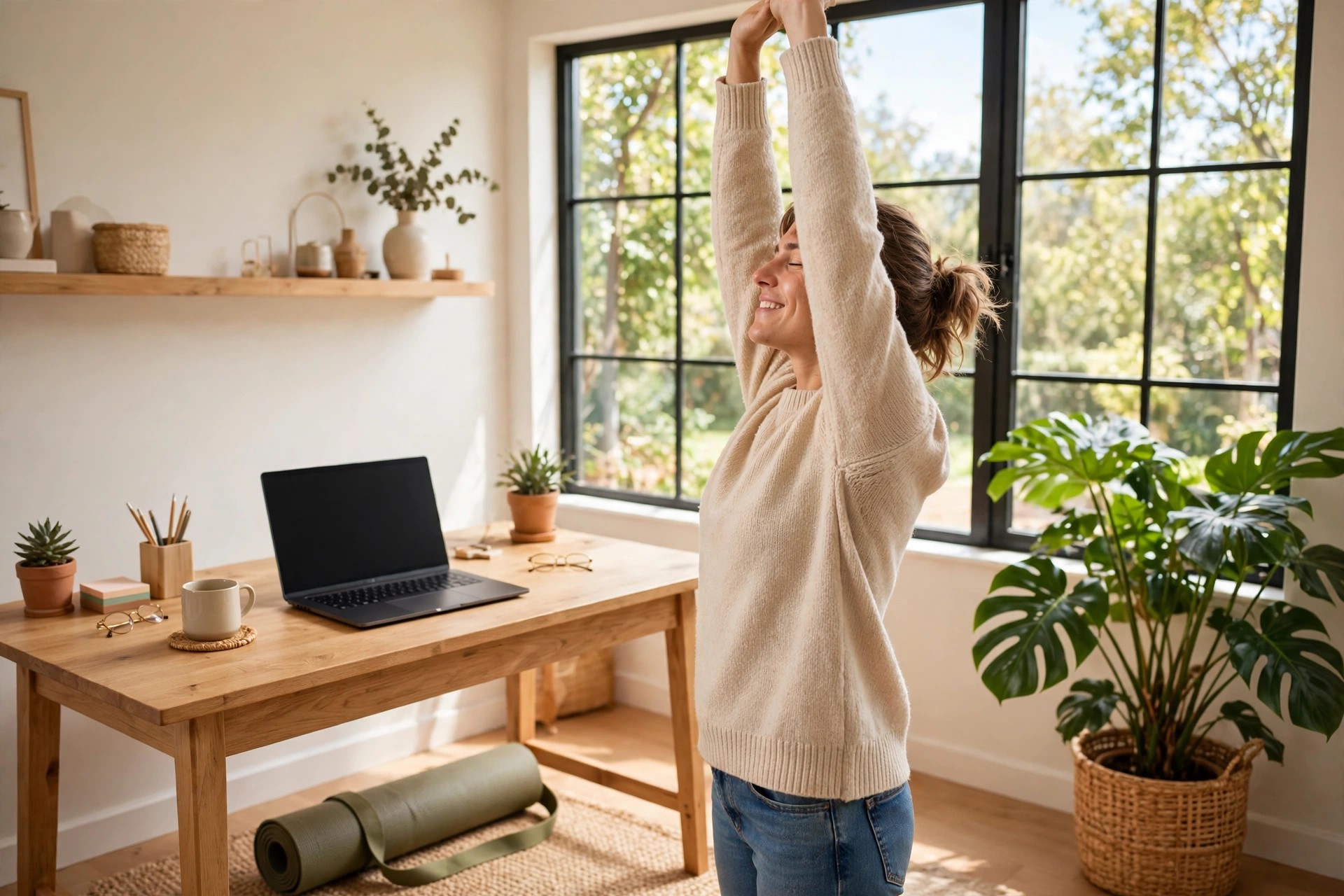
- Shoulder shrugs and rolls. Lift both shoulders to your ears, hold for three seconds, then drop them and roll them backwards ten times. This is the fastest way to undo a morning of hunching.
- Seated spinal twist. Sit tall, place your right hand on your left knee, and twist gently to the left. Hold for twenty seconds, breathe normally, then switch sides.
- Standing hamstring stretch. Stand up, place one heel on the floor in front of you, and lean forward slightly from the hips until you feel a gentle stretch behind your leg. Hold for twenty seconds per leg.
- Wrist and finger stretches. Stretch one arm out, palm up, and gently pull the fingers back with the other hand. Then make fists and open your hands wide ten times. Your typing hands will thank you.
Walking Breaks That Fit Around Work
Walking is the easiest exercise there is, and working from home makes it surprisingly easy to fit in. These five ideas add steps without stealing work time.
- Walk during phone calls. Any call where you do not need to share your screen is a walking call. Pace around the house or step outside, and a thirty-minute call becomes a mile of movement.
- Take a fake commute. A ten-minute walk before you start work and another when you finish replaces the movement a commute used to give you, and it creates a clear line between work time and home time.
- Use the far room. Put your water bottle, charger, or printer in another room so you have a reason to stand up and walk several times a day. Small trips add up fast.
- Walk after lunch. A ten to fifteen minute walk after eating helps digestion, clears the afternoon fog, and is one of the most reliable energy boosts there is. Pair it with simple ways to reduce stress every day and your afternoon becomes noticeably calmer.
- Set a movement alarm. A gentle reminder every hour to stand, stretch, and walk for two minutes breaks up sitting before stiffness sets in. Even a walk to the window and back counts.
Home Workouts Without a Gym
You do not need equipment or much space to get a real workout at home. These three options cover strength, energy, and flexibility.
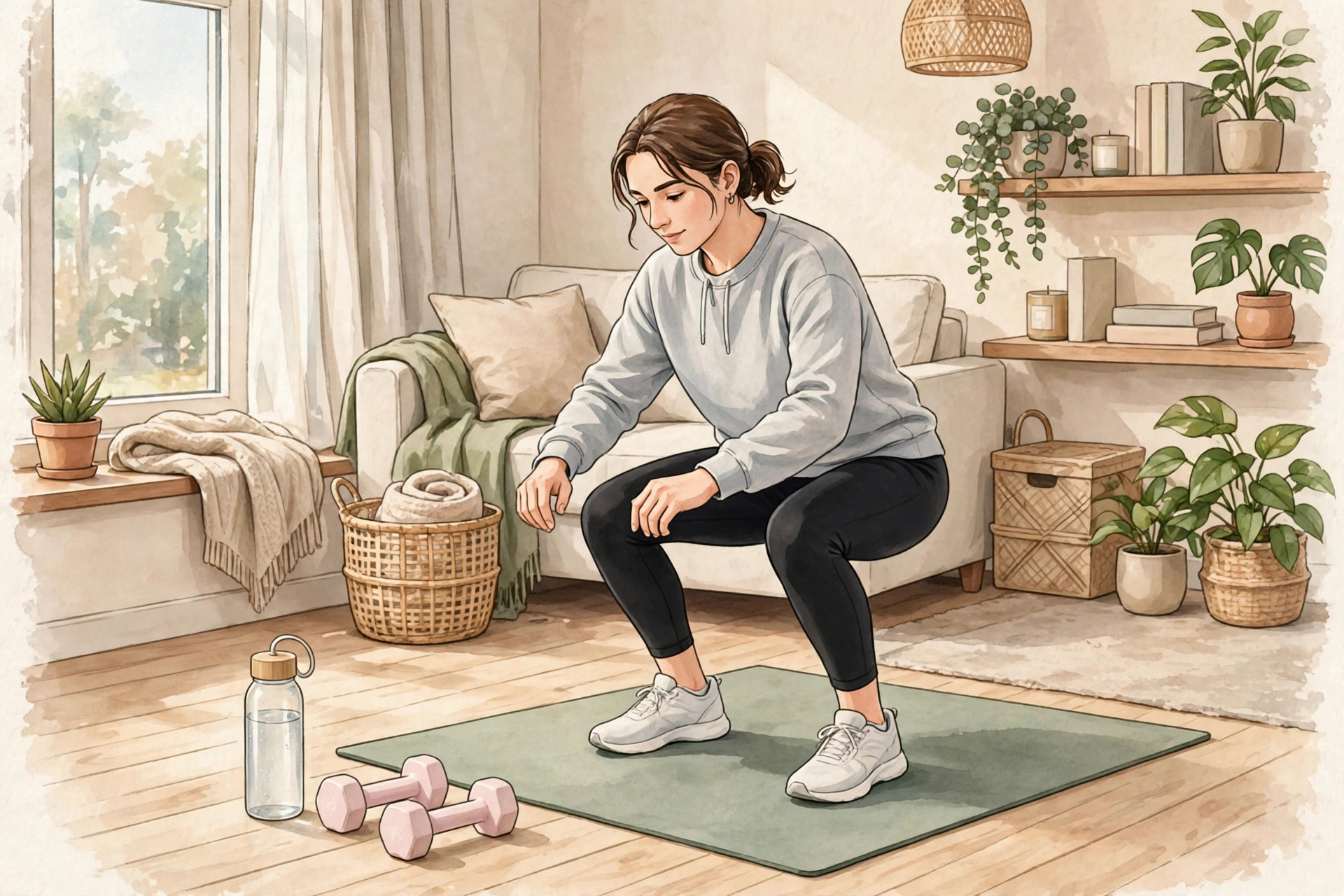
- A ten-minute bodyweight circuit. Ten squats, ten push-ups against a desk or the floor, ten lunges per leg, and a thirty-second plank, repeated twice. It takes ten minutes and works your whole body.
- Stair or step intervals. If you have stairs, walk up and down them five times at a brisk pace. No stairs? March in place, lifting your knees high, for two minutes. It raises your heart rate quickly and wakes you up.
- A short yoga or mobility video. A fifteen-minute follow-along video is an easy way to stretch everything at once. It also doubles as a mental reset, which is why it sits so well alongside how to practice self-care on a busy schedule.
Build Movement Into Your Routine
Exercises only work if they actually happen, so the last two ideas are about making movement automatic rather than optional.
- Anchor movement to habits you already have. Do ten squats while the kettle boils, stretch while your coffee brews, and walk after lunch every day. Habits stick when they are attached to something that already happens, which is also the secret behind a morning routine that actually works.
- Protect your evenings from screens. End the workday with a walk, a stretch, or a short workout instead of sliding straight from the laptop to the sofa. It marks the end of work, helps you sleep better, and keeps your evenings from becoming a second shift of sitting. A short digital detox in the evening makes this far easier.
Set Up Your Workspace to Help
Your desk setup either helps you move or traps you in one position. Keep your screen at eye level so you are not looking down all day, and your feet flat on the floor with your knees at roughly a right angle. If you can, use a laptop stand and an external keyboard so you are not hunched over a small screen.
Consider a standing option, even a simple one: a sturdy box or a raised shelf lets you stand for calls or short tasks. The goal is not to stand all day but to change position often. Sit, stand, stretch, walk, and repeat. Variety is what keeps your body comfortable.
Start Today, Start Small
How to stay active while working from home comes down to one idea: move a little, often. You do not need a perfect routine or special equipment. Pick one stretch, one walking break, and one workout from this list, and try them for a week. Notice how your energy and focus change, then add one more. A home office that keeps you moving is one of the best investments you can make in your working life.
Frequently Asked Questions
How much movement do I need during a work-from-home day?
Aim for short bursts of movement every 30 to 60 minutes, plus a longer walk or workout of 20 to 30 minutes each day. The total matters more than any single session, so small regular breaks add up to a meaningful difference.
Can desk stretches really help with back pain?
Gentle stretches can ease stiffness and improve circulation, especially when done regularly through the day. They help most alongside walking breaks and a better sitting position, but persistent or sharp pain should be checked by a doctor.
What is the best home workout with no equipment?
A circuit of bodyweight moves such as squats, push-ups, lunges, and planks works well and needs no equipment at all. Ten to fifteen minutes, three or four times a week, is enough to build strength and energy over time.
How do I remember to move when I am busy?
Tie movement to things you already do: stretch after every video call, walk while on phone calls, and stand up whenever you finish a task. A timer or a reminder on your phone helps until the habit becomes automatic.
Is standing while working better than sitting?
Standing for part of the day is better than sitting all day, but standing still for hours has its own drawbacks. The best approach is to change position often, alternating between sitting, standing, and walking breaks.
More Articles You’ll Like
Keep reading — more from this category and across the site:
- 10 Healthy Lifestyle Habits for a Better Life
- How to Build a Bedtime Routine That Helps You Sleep Better
- How to Declutter Your Home in a Weekend: A Room-by-Room Guide
- How to Start Journaling for Beginners: A Simple Guide
- How to Eat Healthy on a Budget: Practical Tips That Work
- Meal Prep for Beginners: A Simple Guide to Eating Well
- Child-Resistant Packaging Explained: Rules and Safety
- 50 Funny Gingerbread Jokes for Kids and Adults to Share
- How to Calibrate Your Printer for Accurate Colors
- How to Choose a Business Structure for Your Small Business