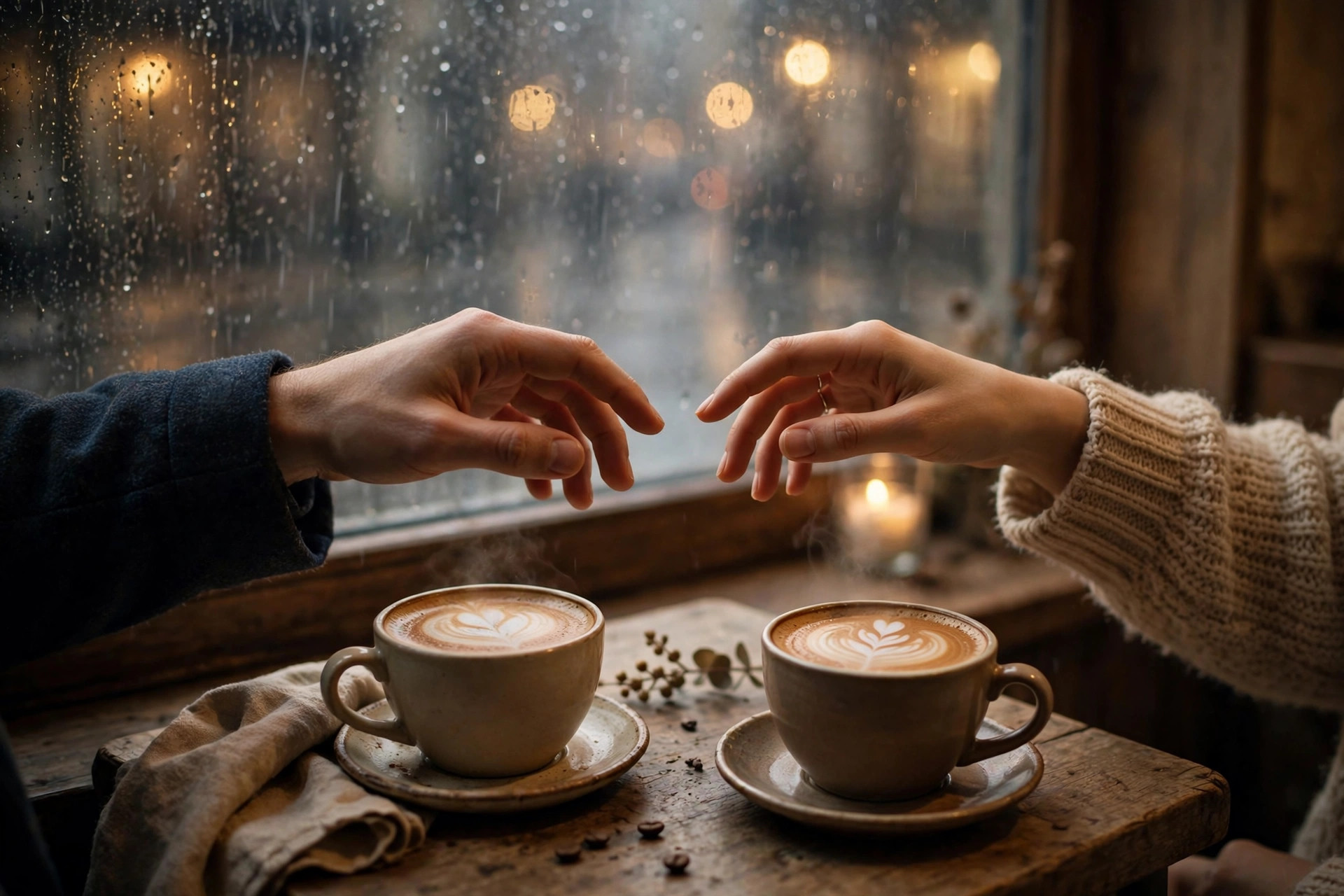
Some words carry a whole philosophy inside them, and “kismet” is one of them. The kismet meaning is fate or destiny — the idea that certain things are meant to happen, and that the course of our lives is shaped by forces larger than ourselves. When people say “it was kismet,” they mean that a meeting, a chance, or a turn of events felt too perfect to be an accident. Two strangers sit next to each other on a plane and discover they grew up on the same street. A lost letter arrives thirty years late, on exactly the right day. These are the moments people call kismet, and the word captures a feeling that ordinary words like “luck” or “coincidence” cannot quite hold. It is close to the happy chance of serendipity, but with a deeper sense that the meeting was written in the stars.
What Does “Kismet” Mean?
Kismet is a noun that means fate or destiny, especially the kind of fate that brings people together or shapes the course of a life. Dictionaries define it as “the force that is believed to control what happens in the future” and “destiny, especially in the sense of something that is meant to be.” When someone says “it was kismet that we met,” they are saying the meeting was not random — it was supposed to happen. The word carries a warm, romantic feeling that the plainer word “fate” often lacks.
The word is most often used for meetings and relationships. Lovers who meet by chance, friends who keep crossing paths in different cities, a job opportunity that appears at exactly the right moment — all of these can be described as kismet. The word suggests that the universe had a hand in the outcome, and that the people involved were always going to find each other. It is a favourite word in love stories, where a chance encounter turns out to be the beginning of a lifelong relationship, and in stories about second chances, where a missed opportunity returns years later.
Where Does “Kismet” Come From?
Kismet comes from the Turkish word “kısmet,” which itself comes from the Arabic word “qisma,” meaning a portion, a share, or a lot. The original idea was that each person is given a portion of life — a share of fortune, love, and success — and that this portion is decided by a higher power. In Turkish and Arabic cultures, the word carries a deep sense of acceptance: your kısmet is what is written for you, and the wise person accepts it with grace rather than fighting it.
The word entered English in the early 1800s, when British travellers and writers in the Ottoman Empire and India brought it home along with other words from Turkish, Persian, and Urdu. It appeared first in travel writing and novels set in the East, where it added an exotic flavour to stories about fate and fortune. By the late 1800s, it had become a familiar word in English literature, used by writers who wanted a more poetic alternative to “fate.” The musical and film “Kismet,” first staged on Broadway in 1953 and filmed in 1955, helped make the word famous with a wider audience, and it has been in regular use ever since.
Today, kismet is used in English, Urdu, Hindi, and Turkish, and it means roughly the same thing in all of them: the portion of life that is given to you. In South Asian cultures, the word is still used in everyday speech, often with a shrug and a smile — “it was not my kismet” means “it was not meant to be,” said with acceptance rather than bitterness. That attitude of graceful acceptance is part of what makes the word so appealing. It does not just describe fate; it describes a way of living with fate. The same gentle acceptance runs through the idea of halcyon days, those calm, golden periods of life that people remember with warmth and longing.
Kismet vs. Fate, Destiny, and Luck
Several words describe the forces that shape our lives, and knowing the differences will sharpen your writing. “Fate” is the broadest and oldest of these words, and it often carries a dark or unavoidable feeling — a tragic fate, a cruel fate. Kismet is warmer and more personal: it is usually about good fortune, love, or meaningful meetings, not about doom. “Destiny” is grander and more formal, suggesting a great purpose or a life’s mission. Kismet is smaller and more intimate, the kind of fate that works through a chance meeting on a train.
“Luck” is different again. Luck is random — a coin toss, a lottery win, a lucky break. Kismet is the opposite of random: it is the feeling that something was meant to happen. A lucky person wins a prize by chance. A person guided by kismet meets the love of their life because the universe arranged it. The two words describe opposite views of the world: luck says life is an accident, kismet says life has a pattern. A traveller who sets off with a traveller’s wanderlust and finds a new home by chance might call the discovery luck, but if the new home changes their life, they might call it kismet instead.
How to Use “Kismet” in a Sentence
Kismet is a noun, and it is most often used in the phrases “it was kismet” and “by kismet.” You can say “It was kismet that we met that night” or “By kismet, we ended up in the same city again.” The word can also take a possessive: “my kismet,” “her kismet,” or “our kismet.” It is a singular noun with no plural — you would not say “kismets.” The word works in both formal and informal writing, though it sounds slightly literary and romantic, so it fits better in stories, personal essays, and conversation about love and life than in a business report.
The word carries a positive feeling in almost every use. People describe good things as kismet — a meeting, a marriage, a career, a friendship — and rarely use it for bad events. When the outcome is unhappy, people usually choose “fate” or “bad luck” instead. Kismet is the word for the times when fate feels generous. Because the word is slightly unusual, it makes a strong impression when used well. A wedding speech that says “it was kismet that brought us together” sounds more memorable than one that says “we were lucky to meet.” The word can name an ineffable feeling, the sense that some things are too meaningful for ordinary language, in a single elegant word.
Example Sentences
- “It was kismet that we sat next to each other on that flight — we have been inseparable ever since.”
- “She believed it was her kismet to become a doctor, even though she discovered her calling late in life.”
- “By kismet, the old friends ran into each other in a foreign city, twenty years after they last met.”
- “He called it kismet when the job he had dreamed of opened up the very week he was ready to apply.”
Kismet in Stories and Culture
Kismet has been a favourite theme of storytellers for as long as the word has existed in English. In novels and films, kismet is the force that brings two lovers together against the odds, or reunites friends who thought they had lost each other forever. The classic plot is simple: two people meet by chance, are separated by circumstance, and then meet again when neither expects it. The audience understands immediately that the reunion is not an accident — it is kismet. Films like “Serendipity” and “Sliding Doors” are built entirely on this idea, and their popularity shows how much people enjoy believing that life has a hidden pattern. Even a small moment of limerence and longing can feel like kismet when two people discover they were thinking of each other at exactly the same moment.
Common Mistakes to Avoid
The most common mistake is using kismet as a simple synonym for luck. Luck is random; kismet is meaningful. If you say “it was kismet that I won the lottery,” you are suggesting the universe wanted you to win, which is a much bigger claim than “I got lucky.” Save kismet for the moments that feel genuinely meant — a meeting, a calling, a turning point — and use luck for the random ones.
Frequently Asked Questions
What does “kismet” mean?
Kismet is a noun meaning fate or destiny, especially the kind of fate that brings people together or shapes the course of a life. When people say “it was kismet,” they mean that a meeting or event felt too perfect to be an accident and was meant to happen. The word comes from Turkish “kısmet” and Arabic “qisma,” meaning a portion or share of life.
How do you pronounce “kismet”?
Kismet is pronounced “KIZ-met,” with the stress on the first syllable. The first syllable rhymes with “quiz” and the second sounds like “met.” In Turkish, it is pronounced “kuhs-MET,” but the English pronunciation puts the stress on the first syllable.
What is the difference between kismet and fate?
Fate is the broadest word for the forces that shape life, and it often carries a dark or unavoidable feeling. Kismet is warmer, more personal, and usually positive — it describes good fortune, love, and meaningful meetings rather than doom. Destiny is grander and more formal, while kismet is intimate, like the story of two people finding each other.
Is kismet the same as luck?
No. Luck is random, while kismet is meaningful. A lucky person wins a prize by chance, but a person guided by kismet meets the love of their life because it was meant to be. Luck says life is an accident; kismet says life has a pattern. People use kismet when an event feels too perfect to be mere chance.
Can kismet be used for bad events?
Almost never. Kismet almost always describes something good or meaningful — a meeting, a marriage, a calling, or a second chance. Using it for a disaster or a loss sounds strange and can seem callous. For unhappy outcomes, “fate” or “bad luck” is the better and more honest choice.
More Articles You’ll Like
Keep reading — more from this category and across the site:
- What Does ‘Petrichor’ Mean? Meaning, Origin, and Examples
- What Does ‘Ephemeral’ Mean? Meaning, Origin, and Examples
- What Does ‘Sonder’ Mean? Meaning, Origin, and Examples
- What Does ‘Luminous’ Mean? Meaning, Origin, and Examples
- What Does ‘Ubiquitous’ Mean? Meaning, Origin, and Examples
- What Does ‘Mellifluous’ Mean? Meaning, Origin, and Examples
- What Does ‘Quintessential’ Mean? Meaning and Examples
- What Does ‘Verdant’ Mean? Meaning, Origin, and Examples
- What Does ‘Ethereal’ Mean? Meaning, Origin, and Examples
- 50 Funny Christmas Cookie Jokes for Kids and Adults