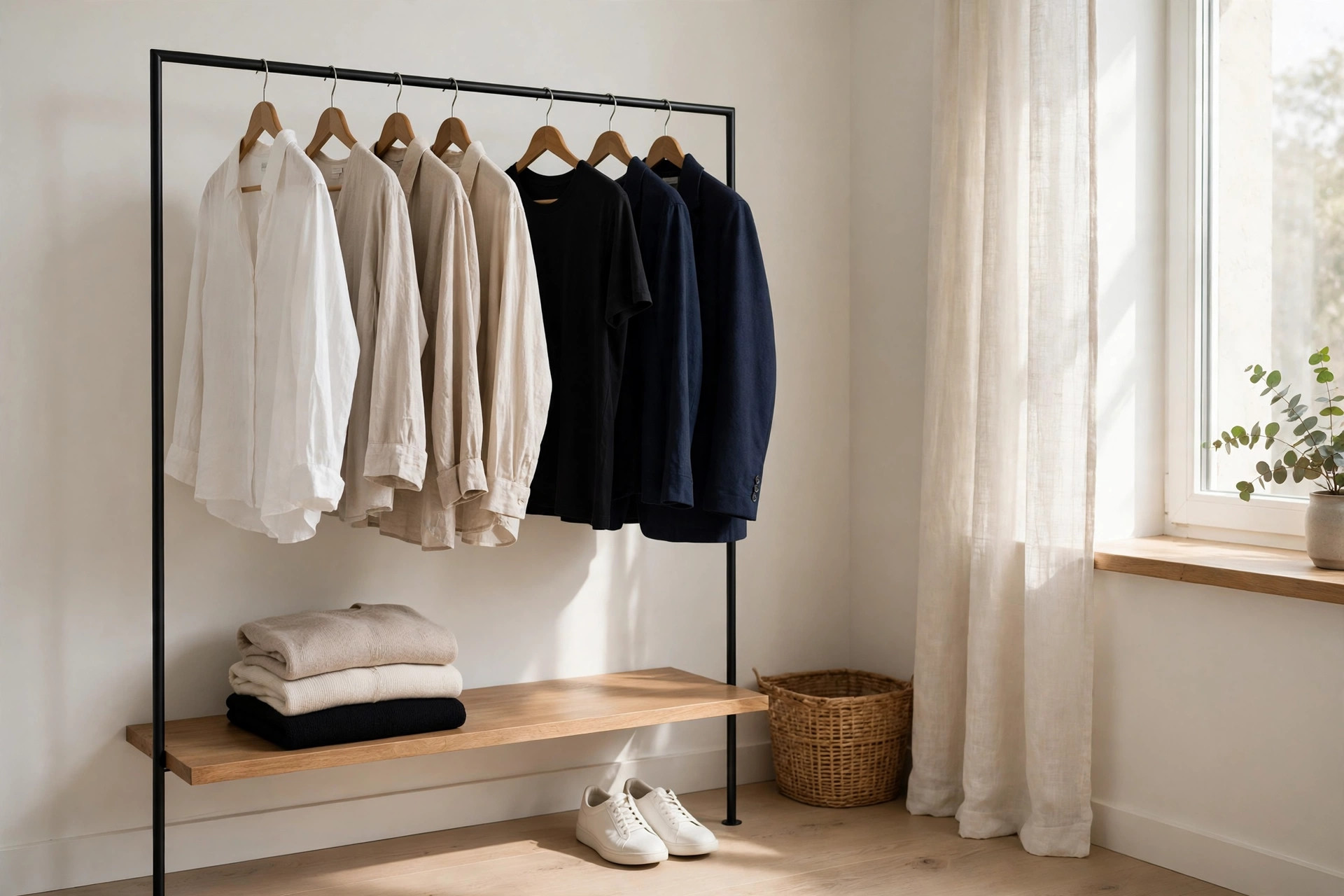
Most of us own far more clothes than we actually wear. The closet is full, yet every morning brings the same frustration: nothing feels right, nothing goes together, and getting dressed takes too long. Learning how to build a capsule wardrobe is the simplest fix — a smaller, carefully chosen collection of clothes that all work together, so every outfit is easy and every piece earns its place.
A capsule wardrobe is not about owning almost nothing or dressing the same way every day. It is about choosing versatile pieces you genuinely like, in colours that go together, and letting go of the rest. If your closet feels chaotic, start with how to declutter your home in a weekend — the same approach works for a wardrobe clear-out. This guide walks you through the process, from clearing your closet to choosing your core pieces.
What Is a Capsule Wardrobe?
A capsule wardrobe is a small collection of essential clothing items that can be mixed and matched to create many different outfits. The idea was popularised in the 1970s by London boutique owner Susie Faux, and it has stayed popular because it solves a real problem.
There is no official number, but most capsule wardrobes contain around 30 to 40 pieces, not counting underwear, sleepwear, and workout clothes. What matters is the principle: every piece should work with several others and suit your lifestyle.
Why Build a Capsule Wardrobe?
The most obvious benefit is simpler mornings. When everything in your closet goes together, getting dressed stops being a decision and becomes a quick choice between a few good options. That small daily saving adds up — fewer rushed mornings, less laundry, and no more standing in front of a full closet feeling like you have nothing to wear.
A capsule wardrobe also saves money over time. Instead of buying cheap pieces on impulse that you wear once, you invest in fewer, better items that last. You stop duplicating things you already own and filling gaps that do not exist. It is one of the most practical simple ways to reduce stress every day, because it removes a small daily source of friction before your day has even started.
There is a sustainability benefit too: fewer purchases mean less waste, and clothes worn often are far better value than clothes that sit unworn.
How Many Pieces Do You Need?
The classic suggestion is around 33 pieces for a season, but do not treat that as a rule. Your number depends on your climate, your job, and how often you do laundry.
Think in categories rather than a single total. For a three-month season, something like this works well:
- 8 to 10 tops, including t-shirts, blouses, and shirts
- 4 to 5 bottoms, such as jeans, trousers, and skirts
- 2 to 3 dresses or jumpsuits, if you wear them
- 3 to 4 layers, like cardigans, blazers, or light jackets
- 1 coat suited to the season
- 3 to 4 pairs of shoes
- A few accessories: scarves, belts, and a bag or two
If that total feels too low, start higher — perhaps 45 or 50 pieces — and trim down next season.
Step 1: Clear Out Your Closet
Every capsule wardrobe starts with an honest clear-out. Take everything out of your closet and drawers and sort it into four piles: keep, repair, donate or sell, and discard. Try things on as you go. Anything that does not fit, feels uncomfortable, or you have not worn in the past year goes in the donate pile.
Be honest about the “maybe” pile. Clothes you keep “just in case” or because they were expensive rarely earn their place. If an item makes you feel bad every time you see it, let it go. Keep only clothes that fit well, feel comfortable, and suit the life you live now.
Put the keep pile back in the closet, grouped by type. Seeing everything at once makes the next steps easier, and you may be surprised at how many outfits you already own.
Step 2: Define Your Style and Colours
Before buying anything, work out what your style actually is. Look at the keep pile and notice the patterns: which pieces do you reach for most often, which outfits make you feel confident, which colours dominate? The answers are your style — not a magazine’s idea of it.
Next, choose a colour palette. A capsule wardrobe works because the pieces coordinate, and that starts with colour. Pick two or three neutrals as your base — black, white, navy, grey, beige, or brown — and add one or two accent colours you love, such as sage green, burgundy, or mustard. Every new piece should fit this palette, so it will work with most of what you already own.
Also think about your lifestyle: working from home calls for comfortable everyday pieces, walking to work needs practical shoes, and regular events need one or two dressier outfits. A capsule wardrobe that ignores your real life will not last a month.
Step 3: Choose Your Core Pieces
Core pieces are the versatile workhorses of your wardrobe — the items you will wear several times a week in different combinations, usually in your neutral colours and simple, classic cuts. Good examples include:
- A well-fitting pair of jeans and a pair of smart trousers
- Plain t-shirts in white, black, and one neutral
- A crisp white shirt and a simple blouse
- A versatile blazer or structured cardigan
- Everyday shoes and a smarter pair
- A coat that suits your climate
When you are missing a core piece, buy quality over quantity. One well-made pair of trousers that fits beautifully is worth more than three cheap pairs that do not. Try things on and sit down in them — comfort matters as much as appearance, because an uncomfortable piece will stay in the closet.
Step 4: Add a Few Accent Pieces
Once your core is in place, add personality with a few accent pieces in your chosen accent colours: a patterned scarf, a coloured jumper, a statement top, or a pair of shoes in a bold shade. These make outfits feel different from each other, even when the core stays the same.
Accessories are the easiest way to vary a capsule wardrobe. A scarf, a belt, or a different bag can change the feel of an outfit completely and takes up almost no space. Three or four you love will do more than a drawer full of ones you never reach for.
Resist buying accent pieces on impulse. The test is simple: does it go with at least three things in your capsule? If not, it will sit unworn.
Step 5: Plan Outfits, Not Just Clothes
A wardrobe only works if the pieces combine into outfits you will actually wear. After choosing your pieces, spend an hour trying combinations and photographing the ones you like. Aim for at least 15 to 20 outfits — if you cannot make that many, you probably have too many similar pieces or a gap in one category.
Save the photos in a folder on your phone for busy mornings. Laying out tomorrow’s clothes the night before makes mornings calmer, and it fits neatly into how to start a morning routine that actually works — one less decision before your coffee.
Capsule Wardrobe Examples
Here are two quick examples built from the core pieces above. For work, smart trousers, a white shirt, and a blazer make a polished meeting outfit; swap the shirt for a plain t-shirt and add trainers for a casual Friday. For the weekend, jeans, a striped top, and a cardigan are the base — add a scarf for a walk, or dress it up with a smarter shoe for lunch out. The pattern is always the same: a few neutral bases, a layer or two, and one accent that changes the mood.
How to Maintain Your Capsule Wardrobe
A capsule wardrobe is a system, not a one-time project. At the start of each season, review what you have, store out-of-season pieces, and note any gaps — an hour or two, four times a year.
Use a simple rule for new purchases: one in, one out. When you buy something new, remove something old. This keeps the total stable and forces you to think before buying — is this new piece really better than the one it replaces? Shopping with that mindset is a form of how to practice mindfulness daily applied to your closet.
Look after what you own, too. Follow care labels, fold knitwear instead of hanging it, and repair small problems — a loose button, a dropped hem — before they become reasons to throw something away.
The Bottom Line
Learning how to build a capsule wardrobe comes down to three ideas: keep only what you wear and love, choose pieces that work together, and buy slowly and deliberately. Planning outfits in advance — laying them out the night before — pairs well with how to build a bedtime routine that helps you sleep better, since a calm evening makes for a calm morning.
You do not need to do it all this weekend. Clear out one drawer today and try on five items — a capsule wardrobe built slowly is far more likely to last than one assembled in a single shopping spree.
Frequently Asked Questions
How many items should be in a capsule wardrobe?
Most capsule wardrobes have around 30 to 40 pieces per season, not counting underwear, sleepwear, and workout clothes. The number is a guide — your ideal total depends on your climate, your job, and how often you do laundry. Start with what feels manageable and trim down over a few seasons.
How much does it cost to build a capsule wardrobe?
It costs very little to start, because you begin with what you already own. The spending comes later, when you replace worn-out pieces or fill gaps — and because you buy fewer, better items, most people spend less overall.
Can I build a capsule wardrobe on a tight budget?
Yes. Start by shopping your own closet — most people already own most of their capsule. For gaps, look at charity shops, second-hand apps, and end-of-season sales.
How do I build a capsule wardrobe for different seasons?
Keep a core of year-round pieces — jeans, basic tops, a blazer — and swap seasonal items in and out. Store out-of-season clothes in a box and review your capsule each season.
What if I get bored of wearing the same clothes?
That is what accent pieces and accessories are for. A different scarf, a new colour, or a different way of layering can make familiar pieces feel fresh.
More Articles You’ll Like
Keep reading — more from this category and across the site:
- 10 Healthy Lifestyle Habits for a Better Life
- How to Start Journaling for Beginners: A Simple Guide
- How to Build a Workout Routine for Beginners
- How to Practice Self-Care on a Busy Schedule
- How to Do a Digital Detox: A Practical Guide to Unplugging
- How to Eat Healthy on a Budget: Practical Tips That Work
- How to Stay Active While Working From Home: 15 Easy Ways
- Meal Prep for Beginners: A Simple Guide to Eating Well
- How to Create a Winter Self-Care Routine That Works
- 50 Funny Ice Skating Jokes for Kids and Adults to Share