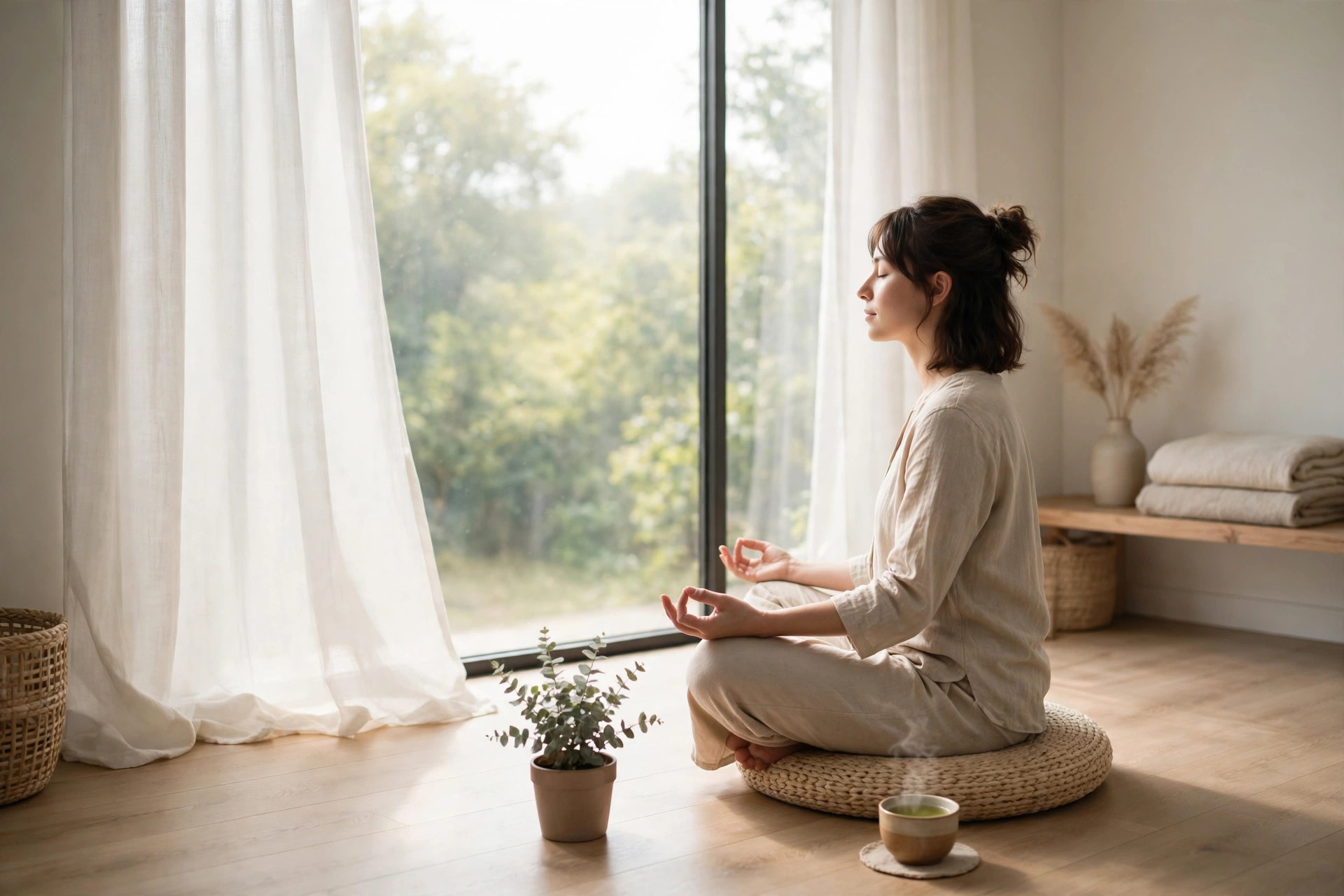
Mindfulness sounds simple — pay attention to the present moment — yet most of us spend our days on autopilot. We eat without tasting, walk without noticing, and listen while already planning what to say next. Learning how to practice mindfulness daily is not about adding another chore to your schedule. It is about bringing your attention back to the life you are already living, one small moment at a time.
You do not need a meditation cushion, an app subscription, or an hour of free time. A few minutes of deliberate attention, repeated every day, is enough to start noticing a difference: less rushing, less reacting, and more calm in ordinary moments. Mindfulness pairs naturally with other simple habits — if you already know how to practice gratitude daily, mindfulness will feel familiar, because both train the same skill: paying attention on purpose.
What Is Mindfulness?
Mindfulness is the practice of paying attention to the present moment, on purpose and without judgement. That definition, made popular by researcher Jon Kabat-Zinn, captures the whole idea. You notice what is happening right now — your breath, the sounds around you, the feeling of your feet on the floor — instead of replaying the past or rehearsing the future.
It helps to clear up a common misunderstanding: mindfulness is not about emptying your mind or feeling calm all the time. Thoughts will come, and that is normal. The practice is simply noticing a thought, letting it pass, and gently returning your attention to the present. You will do this dozens of times in a single sitting, and every return is the exercise working. Like any skill, it improves with practice — a few minutes a day is enough to begin.
Why Practising Mindfulness Daily Matters
Research in psychology has repeatedly linked regular mindfulness practice with lower stress, better focus, and improved emotional regulation. The changes are usually gradual — more like getting fitter than flipping a switch.
One reason daily practice helps is that our attention is constantly pulled in a dozen directions. Phones, deadlines, worries, and endless to-do lists train the brain to scatter. Mindfulness is the counterweight: a few minutes of focused attention each day teaches your mind to settle, and that steadiness carries into the rest of your day. It is one of the most effective simple ways to reduce stress every day, because it works directly on the habit of worrying about what might happen next. Food tastes better when you actually taste it, and conversations feel richer when you actually listen — you do not need to change your life to benefit, only to notice more of it.
7 Simple Ways to Practice Mindfulness Every Day
1. Start with one mindful breath
Before you reach for your phone in the morning, take one slow breath. Breathe in through your nose for a count of four, hold briefly, and breathe out slowly for a count of six. Feel the air, feel your chest rise, and notice how your body feels. That single breath is a complete mindfulness practice, and it takes less than a minute. Do it every morning for a week and you have already built a daily habit.
2. Try a five-minute breathing meditation
Sit comfortably, close your eyes or soften your gaze, and focus on your breathing. Count each breath up to ten, then start again. When your mind wanders — and it will — notice it without frustration and return to counting. Five minutes is enough, and if five feels long, start with two. Set a gentle timer so you are not checking the clock.
3. Do a body scan before bed
Lie down and slowly move your attention through your body, from the top of your head to your toes. Notice tension in your jaw, shoulders, or hands, and let each area soften as you breathe. A body scan takes five to ten minutes and doubles as a wind-down ritual — it works beautifully as part of how to build a bedtime routine that helps you sleep better, because it gives your mind something calm to focus on instead of the day’s worries.
4. Eat one meal mindfully
Choose one meal or snack a day to eat without screens. Put your phone away, sit down, and actually taste your food — the flavours, the textures, the temperature. Chew slowly. Most of us eat on autopilot, barely registering what we consume, so a single mindful meal a day is a surprisingly powerful practice.
5. Take a mindful walk
On your next walk, leave your headphones in your pocket. Feel your feet touching the ground, notice the rhythm of your steps, and listen to the sounds around you — birds, traffic, wind in the trees. When your mind drifts to your to-do list, gently bring it back to your steps. A ten-minute mindful walk can clear your head as well as a coffee break, and it needs no special equipment or extra time.
6. Use everyday moments as anchors
You do not need to set aside time for mindfulness if you attach it to things you already do. Wash the dishes and feel the warm water. Wait for the kettle and listen to it boil. Brush your teeth and notice the taste of the toothpaste. These tiny anchors — thirty seconds each — add up to several mindful minutes a day without changing your schedule at all.
7. Practise mindful listening
In your next conversation, try listening without planning your reply. Focus entirely on what the other person is saying — their words, their tone, their expression. Resist the urge to interrupt. Conversations feel deeper, and the other person lights up because they feel genuinely heard.
Making Mindfulness a Daily Habit
The hardest part of mindfulness is not the practice itself — it is remembering to do it. The simplest fix is habit stacking: attach your practice to something you already do every day. Meditate for two minutes after brushing your teeth. Take three mindful breaths while the coffee brews. Do a body scan when you get into bed. When the new habit rides on an old one, you do not need willpower or reminders.
It also helps to practise at the same time each day. Morning works well, because it sets the tone before the day gets busy — how to start a morning routine that actually works pairs naturally with a short mindfulness practice. Evening works too, especially if you want to wind down before sleep. The best time is the one you will actually keep.
Start small and stay small for a while. Two minutes a day, done consistently, builds a stronger habit than twenty minutes attempted once and abandoned. Missing a day is not failure — just pick it up again the next day without a lecture to yourself.
Common Mistakes Beginners Make
The most common mistake is expecting a blank mind. A quiet mind is not the goal, and chasing it only creates frustration. Thoughts are part of the practice, not a sign that you are doing it wrong. Each time you notice your mind has wandered and you return to your breath, you have just done a rep.
Another mistake is starting too big. An hour-long meditation sounds impressive, but it is a fast way to quit. Short, regular sessions beat long, irregular ones every time. Similarly, many people only practise mindfulness when they are stressed, treating it like medicine. It works far better as a daily habit — like brushing your teeth — than as an emergency measure.
Finally, avoid judging your sessions. Some days your mind will be calm and focused; other days it will race. Both days count — the practice is about showing up and paying attention, whatever shows up with you.
The Bottom Line
Learning how to practice mindfulness daily comes down to one simple idea: a few minutes of attention, every day, on purpose. One mindful breath in the morning, a short breathing practice, a meal eaten slowly, a walk taken without headphones — these small moments add up. Over weeks, they train your attention, soften your reactions, and help you sleep better, since calm evenings make it easier to improve your sleep quality naturally.
Start today, start small, and be patient with yourself. You do not need to feel different after one session. Keep going for a few weeks, and you may find that the world has not changed — but the way you experience it has.
Frequently Asked Questions
How long should I meditate each day as a beginner?
Start with just two to five minutes a day. That is enough to build the habit and begin noticing benefits. After two or three weeks of consistent practice, you can gradually lengthen your sessions to ten or twenty minutes if you enjoy it, but there is no minimum that makes the practice count.
What if my mind keeps wandering during mindfulness practice?
A wandering mind is completely normal — it happens to everyone, including experienced meditators. Noticing that your mind has wandered and gently returning your attention is the actual exercise. You are not failing; you are practising. Over time, the wandering gets easier to catch, but it never disappears entirely.
Do I need an app or special equipment to practice mindfulness?
No. You need nothing but a few minutes and a willingness to pay attention. Apps can be helpful for guided sessions and reminders, especially at the start, but they are optional. A quiet spot and a timer are enough, and many of the best mindfulness practices — mindful eating, walking, and listening — need no equipment at all.
Can mindfulness help with anxiety and stress?
Regular mindfulness practice is linked in research with lower stress and better emotional regulation, and many people find it helps them feel calmer day to day. It is a supportive daily habit, not a treatment on its own — if you are dealing with persistent anxiety, it is worth talking to a doctor or mental health professional alongside your practice.
What is the best time of day to practice mindfulness?
The best time is the one you will actually stick to. Morning practice sets a calm tone for the day, while evening practice helps you unwind before sleep. Many people practise briefly at both ends of the day. Try a morning session for two weeks, and if it does not stick, switch to the evening and see which fits your life better.
More Articles You’ll Like
Keep reading — more from this category and across the site:
- 10 Healthy Lifestyle Habits for a Better Life
- How to Declutter Your Home in a Weekend: A Room-by-Room Guide
- How to Start Journaling for Beginners: A Simple Guide
- How to Build a Workout Routine for Beginners
- How to Practice Self-Care on a Busy Schedule
- How to Do a Digital Detox: A Practical Guide to Unplugging
- How to Eat Healthy on a Budget: Practical Tips That Work
- How to Stay Active While Working From Home: 15 Easy Ways
- How to Reduce Screen Time Before Bed: Practical Tips
- 50 Funny Christmas Jokes for Kids to Share This Holiday