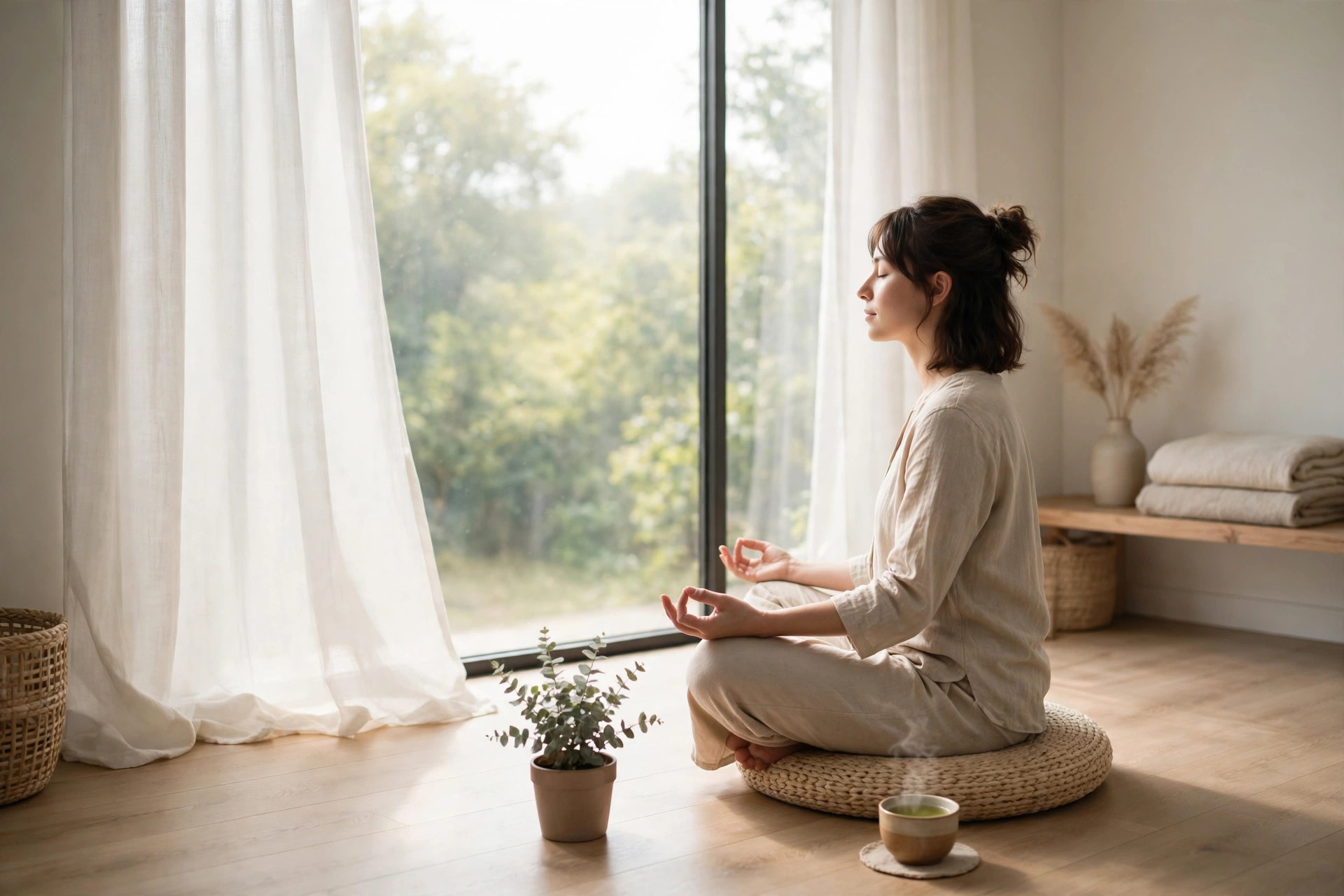
Winter is the hardest season to look after yourself. The days are short, the mornings are dark and cold, and it is tempting to stay indoors, skip your walks, and let your routines slide until spring. Learning how to create a winter self-care routine that works is not about adding a long list of new habits — it is about choosing a few small, warming rituals that protect your energy, mood, and sleep.
A good winter routine is realistic. It fits a busy life, works on dark weekday mornings, and does not fall apart the first time you have a bad week. If you already have the basics in place, build on them — how to practice self-care on a busy schedule covers the foundations, and this guide adapts them for winter.
What Is a Winter Self-Care Routine?
A winter self-care routine is a small set of daily habits designed for the colder months: things that keep you warm, rested, active, and connected when daylight is scarce and the weather keeps you indoors. It is not a luxury spa day or an expensive list of products — just the ordinary stuff, sleep, light, movement, warm food, and rest, done deliberately instead of left to chance.
The key difference is that winter asks more of you. Your body works harder to stay warm, your sleep can be disrupted by dry air and long nights, and low light can leave you feeling flat. A winter routine answers those pressures: more light, warmer meals, gentler movement, and a proper wind-down.
Why Winter Self-Care Matters
Short days affect almost everyone. With less daylight, many people feel sleepier, less motivated, and lower in mood — a normal response to the season, not a personal failing. Getting outside in daylight, even briefly, helps your body clock stay on track, so you sleep better and feel more alert.
Cold weather also tempts us into habits that quietly make things worse: staying up late, skipping exercise, and eating for comfort rather than energy. A routine interrupts that drift. It does not need to be ambitious — just regular. A few steady habits, repeated daily, do far more than a grand plan that lasts a week.
Start with Sleep
Sleep is the foundation of any winter self-care routine, because everything else is harder when you are tired. Winter suits sleep well: cool, dark bedrooms help. The challenge is keeping a regular schedule when dark evenings make 9 p.m. feel like midnight.
Aim for the same bedtime and wake time every day, including weekends. A regular schedule trains your body clock, so you fall asleep more easily and wake more rested. Keep your bedroom cool, dark, and quiet, and get some daylight within an hour of waking. For more detail, see how to improve your sleep quality.
Your evening wind-down matters just as much as your bedtime. An hour before bed, dim the lights, put your phone away, and do something calm: a warm shower, a few pages of a book, or a cup of herbal tea. The same low-light routine every night tells your body that sleep is coming.
Get Daylight and Fresh Air Every Day
Daylight is the single most useful tool in a winter routine, and it is free. Try to get outside during daylight hours, even for ten or fifteen minutes — a short walk at lunchtime, standing by a bright window with your coffee, or walking part of your commute.
If you work indoors all day, be deliberate: schedule a midday walk the way you would a meeting, and keep it even on grey days — overcast daylight is still far brighter than indoor lighting. If you work from home, step outside at least once before dark. Regular movement outdoors is one of the best ways to stay active while working from home through winter.
Move Your Body Gently
Winter is not the season for punishing exercise goals. Cold muscles, icy pavements, and dark evenings make intense training harder to sustain — and a routine that collapses in week two helps nobody. Instead, aim for gentle, regular movement you can do indoors when the weather is bad.
Good options include stretching or yoga at home, a short walk after lunch, dancing while you cook, or taking the stairs instead of the lift. Twenty to thirty minutes a day is realistic, and it can be split into short bursts — three ten-minute walks count as much as one thirty-minute one.
The trick is to attach movement to something you already do: stretch while the kettle boils, walk while you take a phone call, or do a few minutes of yoga before your morning shower. When movement rides on an existing habit, it happens without needing motivation.
Eat and Drink for Warmth and Energy
Winter food should warm you up and keep you going. Soups, stews, roasted vegetables, and porridge are filling, inexpensive, and easy to batch-cook. A pot of soup on Sunday can cover lunches for days, and a warm breakfast sets you up far better than a cold snack eaten standing up.
Drink enough water, even though you feel less thirsty in cold weather. Central heating and dry air are dehydrating, and mild dehydration shows up as tiredness and headaches. Keep a glass or bottle on your desk and refill it through the day. Warm drinks count too: herbal tea or hot water with lemon.
Comfort food has its place — winter is not the season for strict rules — but notice the pattern. If every evening ends with heavy snacks in front of the television, swap one evening a week for a proper cooked meal at the table. Small changes are easier to keep than a complete overhaul.
Build a Calm Evening Ritual
Winter evenings are long, and how you spend them shapes how you sleep and how you feel the next morning. A calm evening ritual does not need to be elaborate: the same few steps, in the same order, every night.
A simple version looks like this. At least an hour before bed, switch off the brightest lights and put your phone on charge outside the bedroom. Make a warm drink, change into comfortable clothes, and do something low-key — read, stretch, or write in a journal. The aim is to lower stimulation gradually, so your body is ready for sleep. If evenings disappear into scrolling, how to reduce screen time before bed has practical ways to break the habit.
It also helps to prepare for the morning during this wind-down: lay out tomorrow’s clothes, pack your bag, and check the weather. A calm evening makes for a calmer morning.
Stay Connected
Winter isolation creeps up quietly: it gets dark early, the weather is miserable, and staying in feels easier than going out. But connection is one of the strongest supports for mood in winter.
Make it easy: a weekly call with a friend, a standing coffee date, or a short walk with a neighbour. Put it in the calendar like an appointment. If meeting in person is difficult, a video call still counts. The point is regularity, not grand occasions.
It also helps to have something to look forward to: a book you are enjoying, a series you watch one episode at a time, a recipe you want to try at the weekend. Small pleasures scheduled into the week give dark evenings a shape, and a good wind-down, like how to build a bedtime routine that helps you sleep better, pairs naturally with reading before bed.
A Sample Winter Self-Care Routine
Here is what a realistic winter day could look like — adapt it to your own schedule, since the point is the rhythm, not the exact times.
- Morning: Wake at the same time each day. Open the curtains, drink a glass of water, and get daylight within the first hour. Eat a warm breakfast and stretch.
- Midday: Take a ten to fifteen minute walk outside, even if it is grey. Eat a warm lunch and drink water.
- Evening: Cook a proper meal, then wind down: dim the lights, put the phone away, and do something calm for the last hour.
- Night: Go to bed at the same time each night. Keep the room cool and dark, and leave your phone outside.
- Weekly: One longer walk, one batch-cooked meal, and one proper catch-up with a friend.
Notice how small each step is: none takes more than fifteen minutes, and none costs anything. A routine of small steps survives bad weeks, while one of big ones falls apart at the first cold or busy day.
The Bottom Line
Learning how to create a winter self-care routine that works is really about doing a few simple things on purpose: sleeping regularly, getting daylight, moving gently, eating warm food, and winding down properly. What matters is consistency — a small routine kept all winter will do far more than a perfect routine kept for a week.
Start with just one change this week. Pick the one that sounds easiest — a short lunchtime walk, a regular bedtime, or a proper wind-down — and do it every day for seven days. Once it feels automatic, add another.
Frequently Asked Questions
How do I stop feeling tired all the time in winter?
The most common causes are short days and irregular sleep. Get outside in daylight every day and keep a regular bedtime and wake time. Also check the basics: water, regular meals, and daily movement. If tiredness is severe or persists into spring, talk to a doctor.
What is the best winter self-care routine for busy people?
Keep it to three non-negotiables: a regular bedtime, a short walk in daylight, and a calm hour before bed with no screens. Those three cover sleep, light, and rest. You can add more later.
How can I exercise in winter when it is cold and dark?
Move indoors when the weather is bad: stretching, yoga, home workouts, or dancing in your living room all count. Outdoors, a short walk at lunchtime — when it is lightest — is easier than an evening run in the dark. Wear layers and proper footwear.
Does winter affect mental health?
Yes, many people feel lower in mood during winter, largely because of reduced daylight. Regular daylight, movement, sleep, and social contact all help. If low mood is persistent or interferes with daily life, talk to a doctor — winter routines support wellbeing, but they are not a substitute for proper help.
What should I eat in winter to stay healthy?
Warm, filling meals work best: soups, stews, roasted vegetables, porridge, and whole grains. Seasonal vegetables like carrots, squash, and leafy greens are inexpensive and versatile. Drink enough water even when you do not feel thirsty.
More Articles You’ll Like
Keep reading — more from this category and across the site:
- 10 Healthy Lifestyle Habits for a Better Life
- How to Start a Morning Routine That Actually Works
- How to Declutter Your Home in a Weekend: A Room-by-Room Guide
- How to Start Journaling for Beginners: A Simple Guide
- 15 Simple Ways to Reduce Stress Every Day
- How to Build a Workout Routine for Beginners
- How to Do a Digital Detox: A Practical Guide to Unplugging
- How to Eat Healthy on a Budget: Practical Tips That Work
- How to Build a Capsule Wardrobe: A Simple Guide
- 50 Funny Ice Skating Jokes for Kids and Adults to Share