Learning how to package baked goods for shipping is the difference between a delighted customer opening a box of perfect cookies and a disappointed one opening a bag of crumbs. Baked goods are fragile, sensitive to moisture and heat, and often shipped by people who have never mailed food before. The good news is that with the right wrapping, the right box, and a little planning, almost any sturdy bake can survive a trip across the country. This guide walks you through choosing shippable bakes, gathering supplies, wrapping and boxing step by step, and picking a shipping service that gets your treats there fresh.
Why Baked Goods Break in Transit
Packages get dropped, stacked, squeezed, and shaken. A parcel that leaves your kitchen in perfect shape can be tossed onto a conveyor belt, buried under heavier boxes, and left in a hot delivery van before it reaches its destination. Baked goods are vulnerable in three ways: they crumble under pressure, they go stale or soggy when exposed to air and moisture, and they melt or spoil in heat. Good packaging defends against all three. A rigid outer box absorbs knocks, individual wrapping keeps air and moisture out, and cushioning stops items from sliding around and smashing into each other. Understanding these risks helps you make smarter choices at every step, from the recipe you choose to the tape you seal the box with. The same care that goes into packaging fragile food items for delivery applies here, because a cookie travelling by post faces the same bumps as any delicate food order.
Which Baked Goods Ship Well (and Which Don’t)
Not every bake is a good traveller. Dense, sturdy treats with low moisture ship best, while delicate, creamy, or highly perishable items are risky. Choose your menu with shipping in mind.
Bakes that ship well
- Cookies: Drop cookies, shortbread, biscotti, and gingerbread are sturdy and keep for days. Bar cookies and brownies also travel well when wrapped individually.
- Quick breads and loaf cakes: Banana bread, pound cake, and fruit loaf hold their shape and actually taste better after a day or two.
- Granola, brittle, and snack mixes: Dry, crunchy items are almost indestructible in the post.
- Whole pies and fruit cakes: Dense fruit cakes are famous for surviving long journeys; whole pies ship better than slices.
Bakes to avoid shipping
- Cream-filled or frosted cakes: Buttercream softens in heat and smears; cream fillings need refrigeration.
- Meringues and macarons: Beautiful but brittle, and they hate humidity.
- Cheesecakes and custards: These need cold shipping, which is expensive and complicated.
- Anything with fresh fruit on top: It bruises, leaks, and spoils quickly.
If a customer really wants a frosted cake, ship the cake unfrosted with a small tub of frosting packed separately, and let them finish it at home. It is a simple compromise that saves the cake and the friendship.
Packaging Supplies You’ll Need
You do not need professional equipment, but you do need the right materials. Gather everything before you start baking so nothing sits around unwrapped while you hunt for tape.
- Plastic wrap and zip-top bags: For wrapping individual items airtight.
- Parchment or wax paper: To separate layers and stop treats sticking together.
- Sturdy corrugated cardboard boxes: New boxes, not reused ones that have lost their strength. Choose a box only slightly larger than your contents.
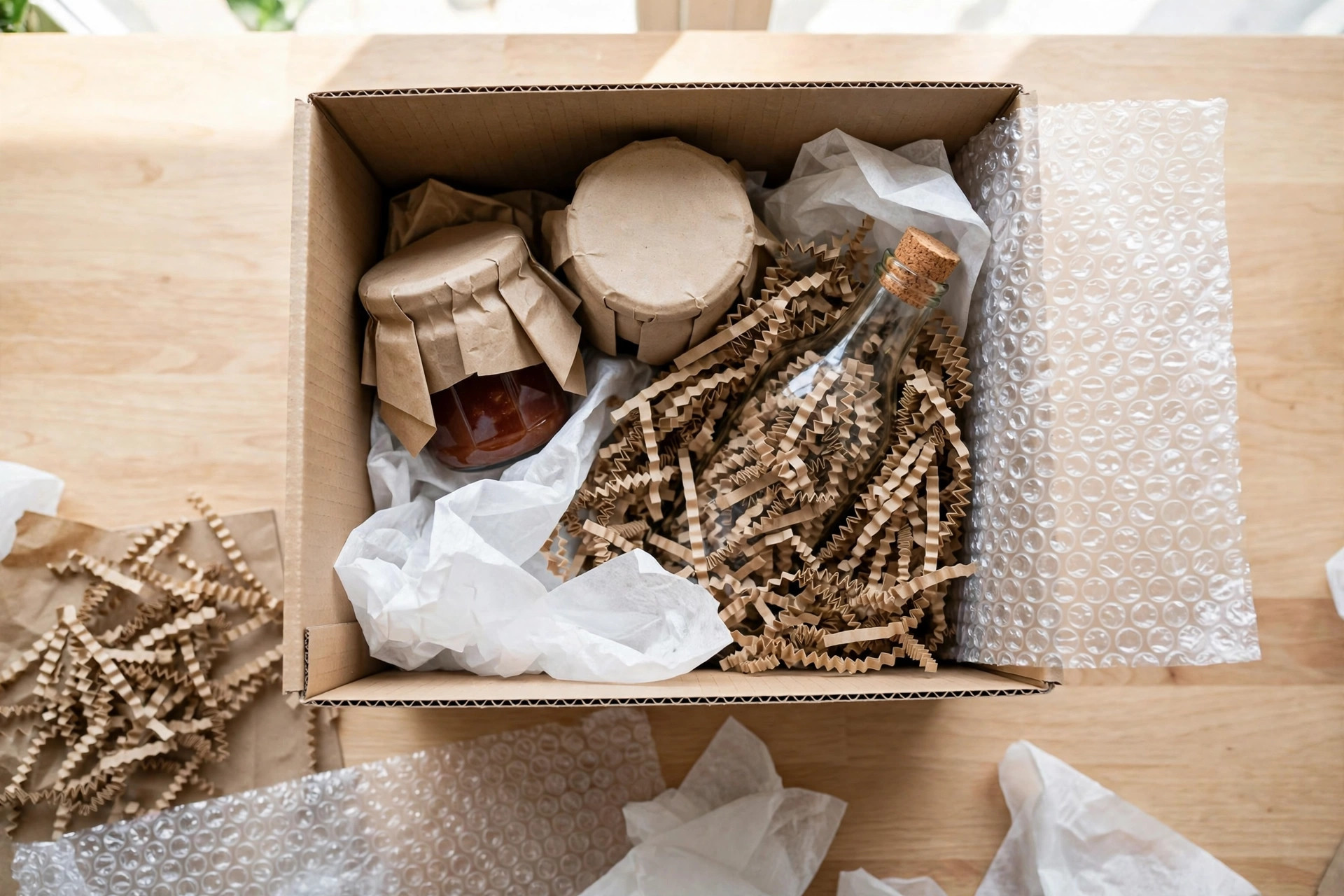
- Cushioning: Bubble wrap, crinkle-cut paper, packing peanuts, or even popped popcorn in a pinch. Avoid loose materials that shed crumbs into food.
- Packing tape: Wide, strong tape, applied in an H pattern across the flaps.
- Labels: A clear address label, plus “Fragile” and “This Side Up” stickers if you have them.
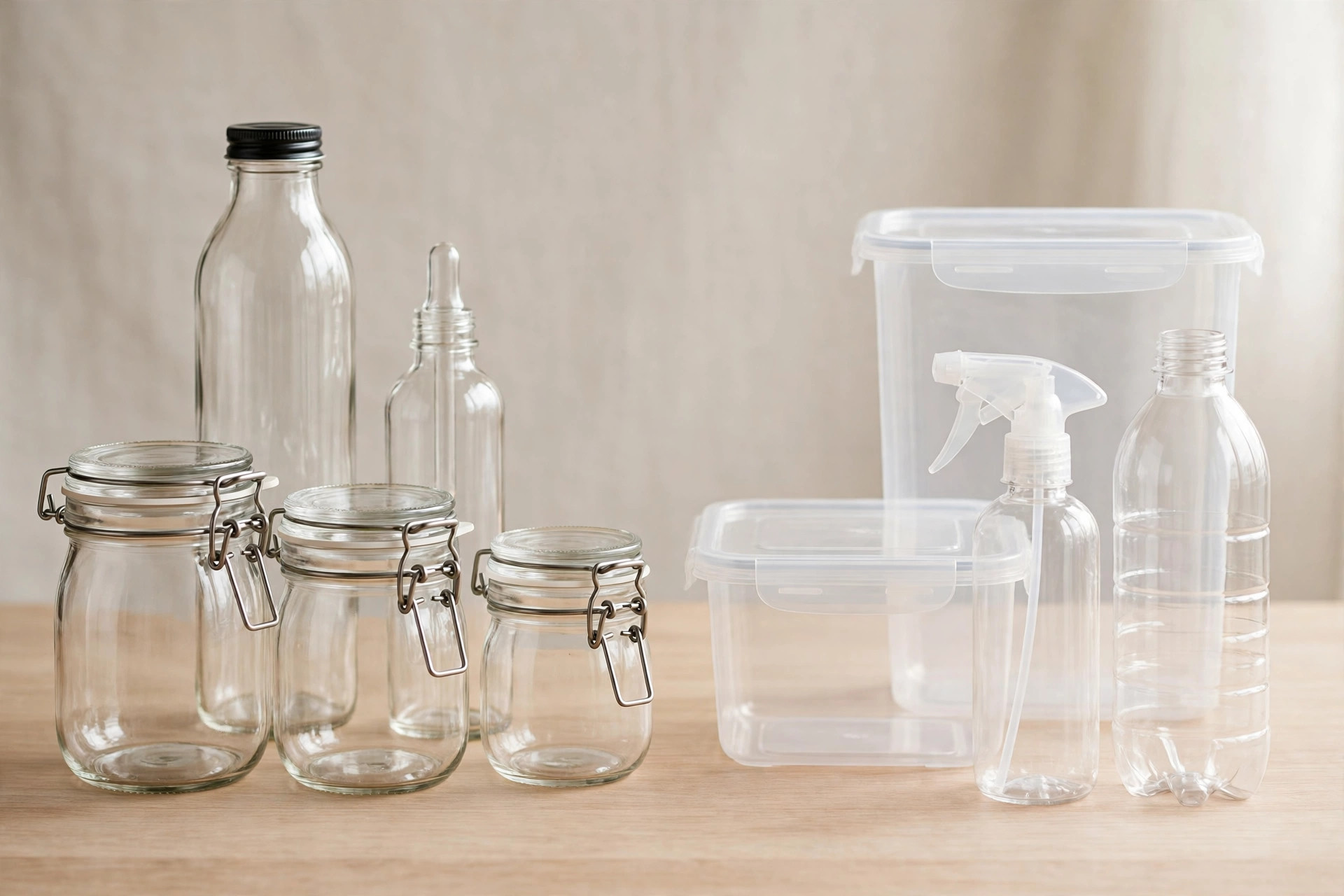
For items like jams, sauces, or frosting that travel alongside your bakes, the container matters as much as the box. Think carefully about choosing between glass jars and plastic containers for anything liquid or spreadable, since weight and breakage change the shipping calculation completely.
How to Package Baked Goods for Shipping: Step by Step
Follow these steps in order, and bake as close to shipping day as possible so your treats arrive at their freshest.
Step 1: Cool completely
Never wrap warm baked goods. Warmth creates condensation inside the wrapping, and condensation makes cookies soggy and encourages mould. Let everything cool fully on a wire rack, ideally for several hours or overnight. This single step prevents more ruined shipments than any fancy material.
Step 2: Wrap each item individually
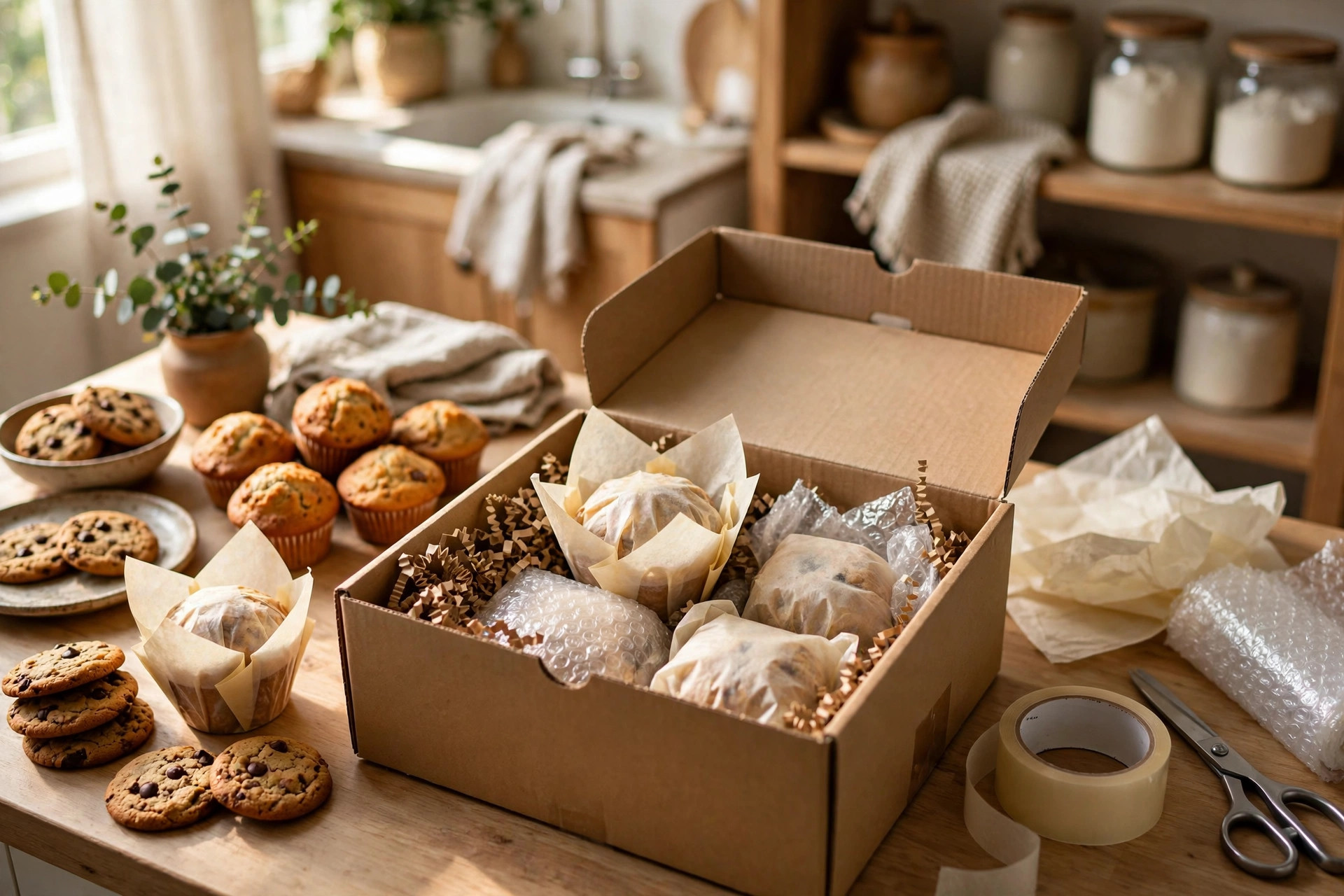
Wrap cookies in pairs, back to back, in plastic wrap, then place them in a zip-top bag and squeeze out the extra air. Wrap slices of loaf cake or brownies the same way. Individual wrapping keeps flavours from mixing, stops crumbs spreading, and means one broken cookie does not ruin the batch. For extra protection, place wrapped items in a smaller inner box or tin before they go into the shipping box.
Step 3: Cushion the bottom of the box
Put a 5 cm (2 inch) layer of cushioning in the bottom of the shipping box. Bubble wrap or crumpled paper both work. This layer absorbs the shock when the box is set down hard, which happens more often than carriers like to admit.
Step 4: Pack snugly, with no empty space
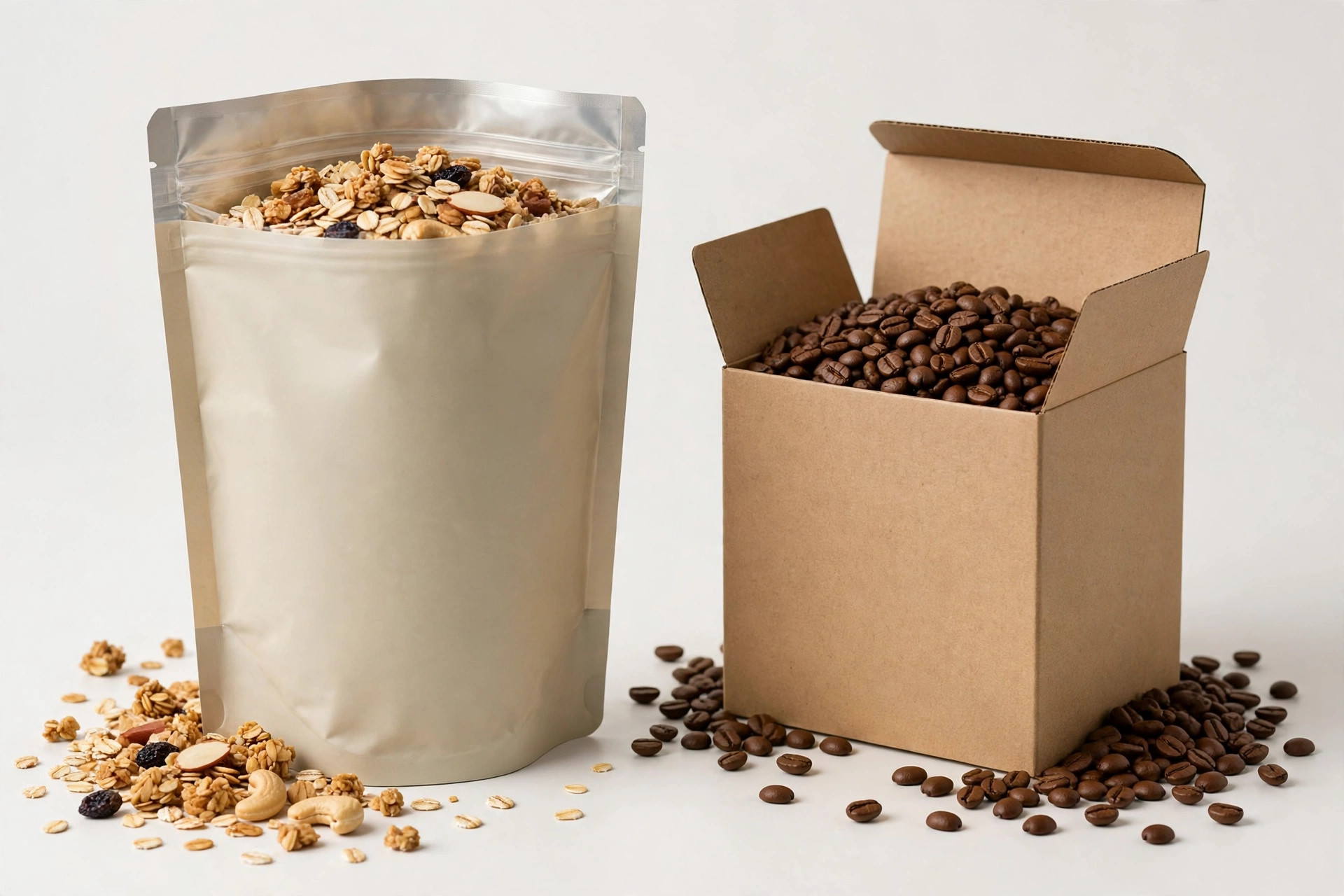
Place the heaviest items at the bottom and lighter ones on top, with cushioning between layers. Fill every gap so nothing can move. The classic test: close the box and shake it gently. If you hear or feel anything shifting, add more cushioning. A box that rattles is a box that will arrive damaged. When it comes to stand-up pouches and boxes for food products, remember that a rigid box is the safer choice for shipping, while pouches suit lighter, flatter items.
Step 5: Seal, label, and mark the box
Tape every seam with wide packing tape, using the H method: one strip along the centre seam and one across each edge. Write the address clearly, add your return address, and mark the box “Perishable” and “Fragile” if it applies. Include a note inside with your name and a short message, plus storage instructions so the recipient knows whether to eat the treats now or freeze them.
Choosing the Right Shipping Service
Speed matters more than price when food is involved. A two-day service is usually the sweet spot: fast enough that treats arrive fresh, without the cost of overnight delivery. Ship early in the week, ideally Monday to Wednesday, so the parcel never sits in a warehouse over the weekend. Avoid shipping before a public holiday for the same reason. If you are selling regularly, compare carriers on price, tracking, and reliability in your area, and consider a business account for discounted rates. Always buy tracking and, for valuable orders, insurance. Tell the recipient the tracking number and the expected delivery day so they can be home or collect the parcel quickly. When you are working out pricing your baked goods to cover packaging and postage, build the true cost of boxes, cushioning, and faster shipping into the price rather than absorbing it yourself.
Common Mistakes to Avoid
- Using a box that is too big: Extra space means extra movement. Size the box to the contents.
- Reusing weak boxes: A box that has already made one journey has lost much of its crush strength.
- Skipping the shake test: If it moves, it breaks. Pack until it doesn’t.
- Shipping on a Friday: Weekend delays turn fresh bakes into stale ones.
- Forgetting the weather: Chocolate and buttercream melt in summer heat. Ship early in the day and consider insulated mailers or ice packs in hot months.
- No note inside: A parcel without a sender’s name or storage advice confuses the recipient and wastes your effort.
Many of these mistakes come from rushing. Give yourself an extra day, and treat the packing as part of the baking, not an afterthought. If you are turning a hobby into a small venture, the same patience pays off when you are getting your first customers for a home bakery, because a box that arrives in perfect condition is the best advertisement you can send.
Frequently Asked Questions
How long do baked goods last in the post?
Most sturdy cookies, brownies, and quick breads stay fresh for 4 to 7 days when wrapped airtight. Aim for delivery within 2 to 3 days of baking for the best taste and texture, and tell the recipient to freeze anything they will not eat within a few days.
Can I ship a cake with frosting?
It is risky. Buttercream softens and smears in transit, especially in warm weather. Ship the cake unfrosted with frosting packed separately, or choose a sturdy glaze that sets hard, like a poured fondant or a simple powdered-sugar icing.
Do I need to label the box as food?
Most carriers do not require a food label for domestic baked goods, but marking the parcel “Perishable” and “Fragile” helps handlers treat it gently. Check your carrier’s rules for food shipments, especially for international deliveries, where customs rules may apply.
What is the best cushioning for baked goods?
Bubble wrap is the most reliable because it cushions without shedding. Crinkle-cut paper works well and looks attractive in a gift box. Avoid loose packing peanuts unless they are sealed in a bag, since they can get into the food wrapping.
How much does it cost to ship baked goods?
It depends on weight, distance, and speed. A small box of cookies sent two-day delivery typically costs between $8 and $20 within the same country. Weigh the finished parcel before quoting a price, and remember that faster shipping is worth it for freshness.
More Articles You’ll Like
Keep reading — more from this category and across the site:
- What Does ‘No Cap’ Mean? Meaning, Origin, and Examples
- What Is 3D Printing? How It Works and What It’s Used For
- How to Find Obituaries in Madison, AL: A Step-by-Step Guide
- How to Build a Bedtime Routine That Helps You Sleep Better
- What Does ‘Ephemeral’ Mean? Meaning, Origin, and Examples
- 50 Funny Road Trip Jokes for Kids and Adults