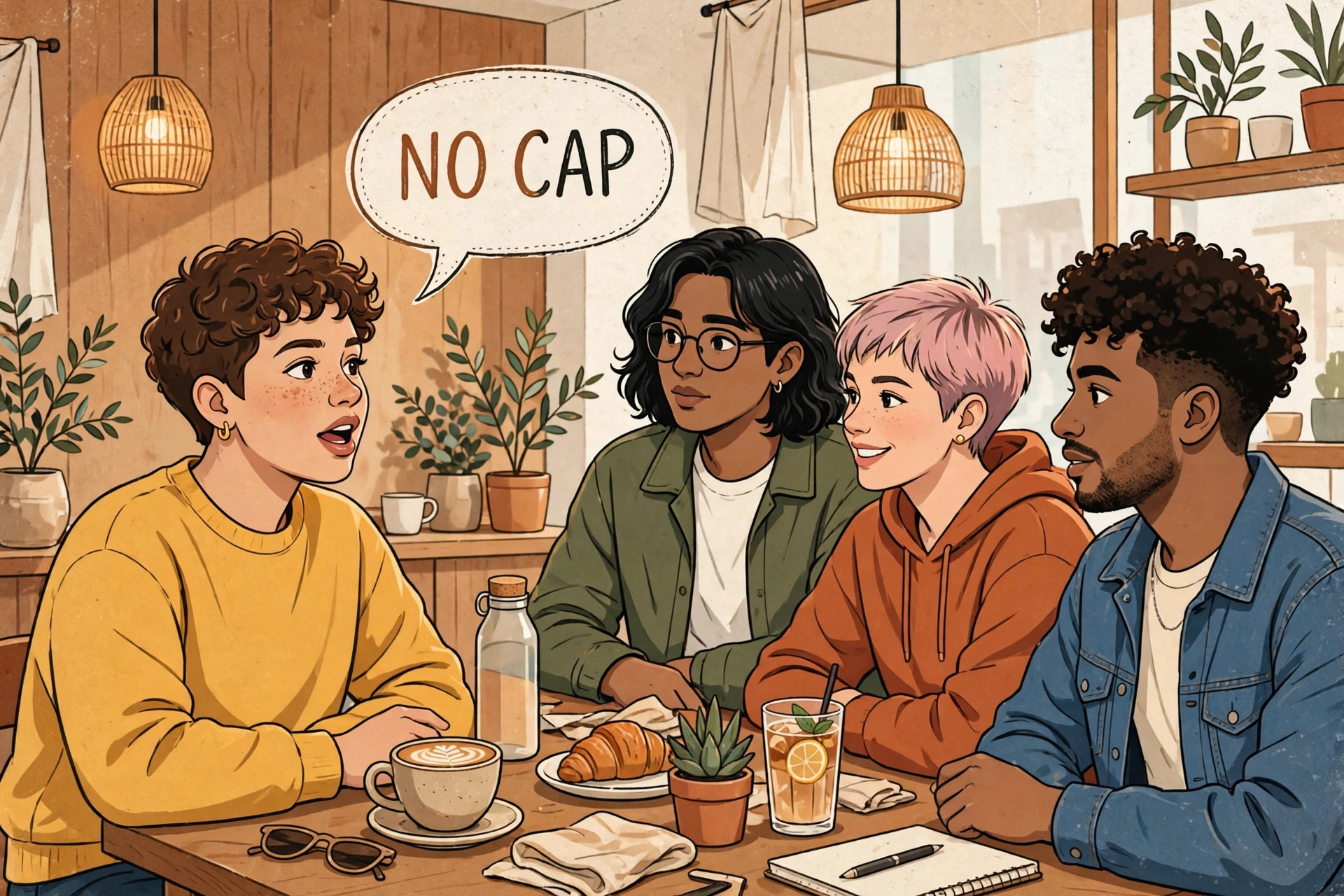

If you have heard someone say a person has “rizz,” or that they have “no rizz,” you are hearing one of the most popular slang words of the last few years. It shows up on TikTok, in Twitch chats, in school hallways, and in dating conversations online. So what is the rizz meaning, and why has this short little word become so widely used? In short, “rizz” means charm, charisma, and the skill of attracting someone romantically, usually through confident and smooth conversation. A person with rizz can talk to someone they like, make them laugh, and leave a good impression without trying too hard. This guide explains the rizz meaning in full, where the word came from, the different types people talk about, how to use it, and whether rizz is something you can actually learn.
What Does “Rizz” Mean?
“Rizz” is slang for romantic charm and the ability to attract someone. It is short for charisma, and it describes the way a person carries themselves when they are flirting or trying to impress someone they are interested in. A person with rizz is confident, funny, and good at conversation. They know what to say, when to say it, and how to make the other person feel comfortable and interested.
It is important to understand that rizz is not just about looks. A very attractive person can have no rizz at all if they are awkward, nervous, or boring in conversation. On the other hand, someone who is not conventionally good-looking can have great rizz if they are witty, warm, and confident. Rizz is about personality and social skill, not appearance. That is why people talk about it as a skill rather than a physical trait.
The word is also used as a compliment and as a joke. Saying “he has rizz” is a compliment, meaning he is smooth and charming. Saying “he has no rizz” is a teasing insult, meaning his attempts at flirting fell flat. It can also be used as a verb, as in “he tried to rizz her up,” meaning he tried to charm her. This flexibility is part of why the word caught on so quickly: it can describe a quality, an action, and a result all at once.
Where Did “Rizz” Come From?
“Rizz” comes from the word “charisma.” It takes the middle sounds of charisma — the “rizz” in the centre — and turns them into a standalone word. The term was popularised in the early 2020s by the streamer and YouTuber Kai Cenat, who used it frequently in his videos and livestreams with his friends. His large audience picked it up, and from there it spread across TikTok, Twitter, and YouTube at remarkable speed.
The word received a huge boost in 2023, when Oxford University Press named “rizz” its Word of the Year. That announcement brought the term to the attention of newspapers, television shows, and people who had never watched a Twitch stream in their lives. Around the same time, actor Tom Holland talked about having “limited rizz” in an interview, which became a widely shared clip and introduced the word to an even bigger audience. By the end of 2023, “rizz” was no longer just streamer slang. It was a mainstream word.
Types of Rizz: W Rizz, L Rizz, and Unspoken Rizz
Once “rizz” became popular, people started dividing it into types. The most common are “W rizz” and “L rizz.” In internet slang, “W” stands for a win and “L” stands for a loss. “W rizz” means successful charm: the person talked to someone they liked, and it went well. “L rizz” means the opposite: the attempt was awkward, the jokes fell flat, or the other person was not interested. People often rate each other’s stories and videos as W rizz or L rizz in the comments, turning flirting into a kind of friendly competition.
Another popular type is “unspoken rizz.” This describes charm that does not need words at all. A person with unspoken rizz attracts attention through confidence, body language, style, and the way they carry themselves. They do not need a clever opening line, because their presence does the work. This idea is popular in memes and videos, where a person walks into a room and everyone notices, without a word being spoken. It is partly a joke, but it also captures something real: confidence is often visible before a person even speaks.
How to Use “Rizz” in a Sentence
Using “rizz” is straightforward. As a noun, it describes the quality itself: “He has so much rizz, everyone likes talking to him.” As a verb, it describes the act of charming someone: “He is trying to rizz her up right now.” You will also see it in short comments and replies, where someone writes “W rizz” under a video of a smooth conversation, or “L rizz” under a video of an awkward one.
Here are two clear example sentences that show the word in everyday use:
Example 1: “He walked up, introduced himself with a smile, and had rizz from the very first minute.”
Example 2: “I tried to rizz her up with a joke, but I got so nervous that I forgot the punchline.”
In the first example, rizz is a quality the person already has. In the second, it is an action the speaker tried and failed at, which is why the sentence is funny and relatable. Both uses are common, and both are correct. The key is that rizz always relates to romantic or social charm, not to general confidence at work or in sports. You would not say someone has rizz because they gave a good presentation, unless you mean they charmed the audience in a flirty, magnetic way.
The word also pairs naturally with other slang about honesty and confidence. If someone is being genuine rather than putting on an act, that sincerity can be part of their charm, which is why people sometimes talk about speaking plainly and learning what no cap means in the same conversations where they talk about rizz. And if a flirting attempt goes badly, friends might tease the person by saying they are finished, which is close to what cooked means in slang — a playful way of saying someone is done for, at least in that moment.
Can You Learn Rizz?
This is the question most people really want answered, and the honest answer is yes, at least in part. Rizz is not a magical talent that some people are born with and others can never have. Much of what people call rizz is made up of learnable social skills: listening well, asking good questions, being funny without trying too hard, and showing genuine interest in the other person. Those are skills anyone can practise, and they improve with time and experience. Focus matters too: learning what lock in means helps, since charm also starts with giving someone your full attention.
The first step is confidence, but not arrogance. Confident people are comfortable with themselves, and that comfort puts other people at ease. Arrogant people, by contrast, make the conversation all about themselves, which is the opposite of charming. A good way to build confidence is to focus on the other person rather than on your own nerves. Ask them about their interests, listen to their answers, and respond to what they actually said, rather than waiting for your turn to talk. That kind of attention is rare, and people notice it.
Humour is the second ingredient. You do not need to be a comedian, but being able to make someone smile goes a long way. Telling funny camping jokes around a campfire, for example, is a low-pressure way to practise being funny in a group, and the same relaxed, playful energy works one on one.
Rizz vs Charm, Flirting, and Game
Rizz overlaps with several older words, but it is not exactly the same as any of them. “Charm” is the closest synonym: a charming person is pleasant, attractive, and easy to talk to. Rizz is a more specific, modern version of charm, focused on romantic attraction and on the skill of starting a conversation with someone you like. “Flirting” is the action, while rizz is the ability behind the action. You flirt using your rizz, but having rizz does not mean you are flirting all the time.
Common Mistakes With “Rizz”
The biggest mistake is thinking rizz is only about having the perfect line. A clever opening sentence can help, but it cannot rescue a conversation where the person is not listening, not interested, or only talking about themselves. Rizz is built over the whole conversation, not in the first ten seconds. Focusing too much on the opening line is like judging a whole meal by the first bite: it matters, but it is not the whole story.
Rizz in Everyday Life
Rizz shows up in small moments, not just in dramatic movie scenes. It is the person at a party who makes everyone feel welcome, or the classmate who can turn an awkward silence into a laugh. Sometimes that attraction starts with a chance meeting, the kind of lucky, unexpected encounter that is close to what serendipity means — finding something wonderful when you were not looking for it.
Frequently Asked Questions
What does “rizz” mean in slang?
“Rizz” means romantic charm and charisma, especially the skill of attracting someone through confident, smooth conversation. A person with rizz can talk to someone they like, make them laugh, and leave a good impression without trying too hard.
Where did the word “rizz” come from?
“Rizz” is short for “charisma,” taking the middle sounds of the word. It was popularised in the early 2020s by streamer Kai Cenat, and in 2023 Oxford University Press named it Word of the Year, which brought it into mainstream use.
What is the difference between W rizz and L rizz?
“W rizz” means successful charm, where a flirting attempt went well, while “L rizz” means it went badly, for example when jokes fell flat or the other person was not interested. “W” stands for a win and “L” stands for a loss in internet slang.
Can you learn rizz?
Yes, much of what people call rizz is made up of learnable skills: listening well, asking good questions, being funny without trying too hard, and showing genuine interest. Confidence and authenticity can be practised, and they improve with experience.
Is “rizz” only about looks?
No, rizz is not about looks. It is about personality and social skill. An attractive person can have no rizz if they are awkward in conversation, while someone less conventionally attractive can have great rizz if they are witty, warm, and confident.
More Articles You’ll Like
Keep reading — more from this category and across the site:
- How to Package Baked Goods for Shipping Without Breaking Them
- What Is 3D Printing? How It Works and What It’s Used For
- How to Find Obituaries in Madison, AL: A Step-by-Step Guide
- How to Price Your Products for Profit: A Simple Guide
- How to Build a Bedtime Routine That Helps You Sleep Better
- What Does ‘Ephemeral’ Mean? Meaning, Origin, and Examples
- 50 Funny Road Trip Jokes for Kids and Adults