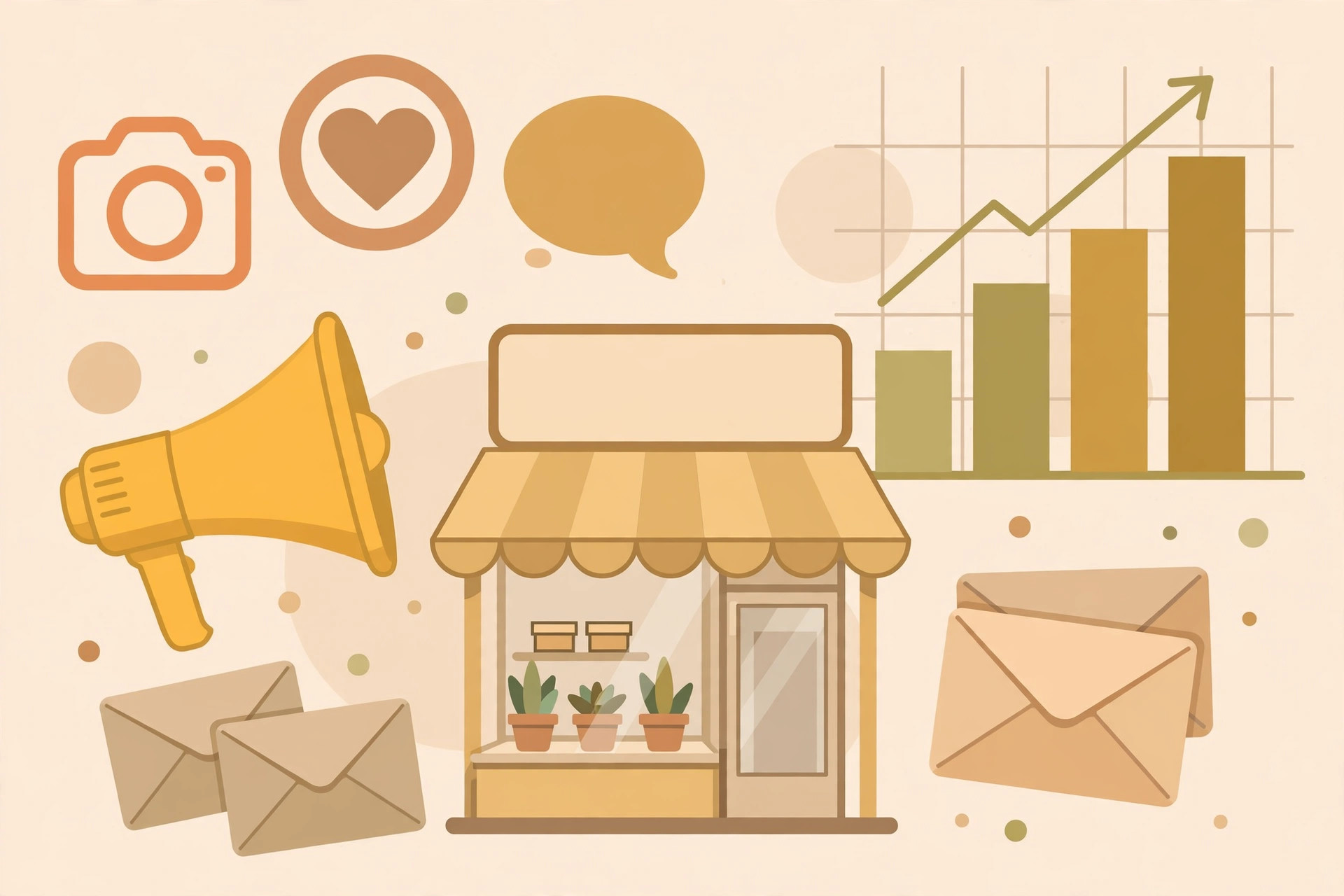
Learning how to market your business on a budget is one of the most valuable skills a small business owner can learn. Marketing does not have to mean expensive adverts or a big agency fee: some of the most effective marketing costs little or nothing, such as a helpful social media post, a happy customer telling a friend, or a listing that shows up in search results. What matters is reaching the right people, consistently, with a clear message.
This guide shares 12 low-cost marketing ideas that actually work for small businesses, plus how to choose the right ones and measure whether they are paying off. If you are still building your first customer base, our guide on how to get your first customers pairs well with these ideas and covers the basics of winning those early sales.
What Low-Cost Marketing Really Means
Low-cost marketing is not free marketing. It costs time, and time has value. A social media account costs nothing to open, but posting useful content three times a week takes hours. The trade is real: you spend time instead of money, which usually makes sense for a small business, because your time is flexible and your cash is not.
The other thing to understand is that cheap marketing still needs a clear message. Before you spend anything, write down in one sentence what you sell, who it is for, and why it is better than the alternative. If you cannot say that clearly, no amount of posting will fix it. If you are still setting up the business itself, our guide on how to start a small business walks through the foundations, including choosing what to sell and who to sell it to.
12 Low-Cost Marketing Ideas
1. Claim and Optimise Your Google Business Profile
If you serve local customers, this is the highest-value free step you can take. A Google Business Profile puts your business on Google Maps and in local search results, with your hours, photos, reviews, and contact details. Claim it, fill in every field, add good photos, and keep your hours up to date.
2. Ask Happy Customers for Reviews
Reviews are free and influence buying decisions more than almost any advert. After a good sale or a completed job, ask the customer directly with a short message linking to your Google or Facebook review page. Never pay for reviews or fake them: a steady flow of genuine ones builds trust and helps your search ranking.
3. Post Useful Content on One Social Media Channel
Pick one channel where your customers spend time and post there consistently, rather than spreading thin across five. Share tips, behind-the-scenes photos, customer stories, and answers to common questions. Be helpful and recognisable, not salesy in every post. One strong channel beats five neglected ones.
4. Start an Email List
Email is one of the cheapest ways to reach people who already like your business. Offer a small reason to sign up, such as a discount or early access to new products, and collect addresses at checkout or on your website. Send a short email once or twice a month: new products, a special offer, or a useful tip. Unlike social media, you own this list, and no algorithm decides who sees it.
5. Use Local Community Groups and Noticeboards
Local Facebook groups, community noticeboards, school newsletters, and neighbourhood apps are full of people looking for recommendations. They work well for local service businesses, including many of the small business ideas you can start in 2026, where local word of mouth matters most. Join the groups for your area, answer questions helpfully, and mention your business only when it is genuinely relevant. Over time, people start to recognise your name, and that recognition turns into referrals. Never spam a group: one thoughtful answer beats ten adverts.
6. Partner With a Complementary Business
Find a business that serves the same customers but does not compete with you, and promote each other: a florist and a wedding photographer, a gym and a healthy cafe, a bookshop and a coffee shop. Share flyers, run a joint offer, or recommend each other to customers. It costs nothing.
7. Create a Simple Referral Offer
Word of mouth is the cheapest marketing there is, and a small incentive makes it happen more often. Offer existing customers a discount or freebie when they bring a friend, and give the friend the same deal. Keep it simple enough to explain in one sentence, and track how many new customers mention it.
8. Answer Questions Where Your Customers Ask Them
People search with questions every day: how to choose a product, how much something costs, what to look for. Answer them clearly on your website or in a short video and search engines will send those people to you. Start with the five questions your customers ask most often. If you sell products, our guide on how to price your products for profit shows how clear, honest pricing pages can themselves bring in customers who are comparing options.
9. Run a Small, Tightly Targeted Ad Test
You do not need a big advertising budget to test adverts. Start with $5 to $10 a day on one platform, aimed at a narrow audience in your area, and run it for a week. Send people to one specific page, not your homepage. If it brings in sales at a price you can afford, keep it running. If it does not, stop it and try a different message. Small tests teach you what works before you spend real money.
10. Turn Customers Into Content
With permission, share photos of your products in use, customer stories, and before-and-after results. Real customers are more convincing than any stock photo, and this content costs nothing to create. If a customer had a problem, how you responded matters more than the photo, so read our guide on how to handle customer complaints before you ask anyone to share their story. If someone tags your business in a photo, repost it with a thank you. People trust other people far more than they trust adverts.
11. Speak, Teach, or Show Up in Person
Offer a short talk, workshop, or free demonstration for a local group, school, or market: a baker’s decorating demo, a gardener’s talk on seasonal planting, a bookkeeper explaining tax basics to new freelancers. You are not selling from the stage; you are showing you know your subject, and the room remembers that when they need what you sell.
12. Follow Up With Past Customers
It is cheaper to sell to someone who has already bought from you than to find a new customer. Keep a list of past customers and check in: a thank-you message, a reminder a service is due, or a note about a new product they might like. One well-handled complaint can create a more loyal customer than ten smooth sales.
How to Choose the Right Ideas for Your Business
Do not try all 12 at once. Pick two or three that fit your customers and your strengths: writing points to content and email, people skills to partnerships and local groups, and local customers to your Google profile and reviews first. Give each idea at least a month of steady effort before you judge it.
Think about where your customers already are. A business selling handmade gifts will find more buyers on visual platforms than on a professional network, while a business-to-business service will do better the other way round. If you are still deciding what to sell, think about who each option serves first, then aim your marketing at those people from the start.
How to Measure Whether It Is Working
Marketing you cannot measure is marketing you cannot improve. For each idea you try, write down what you spent, how much time it took, and what it brought in: enquiries, visits, sales, or sign-ups. Ask new customers how they found you and record the answer. After a month, you will see which channels earn their keep and which ones only eat your time.
Ignore vanity numbers: a thousand likes on a post that brings no sales is worth less than five enquiries from people ready to buy. Focus on the numbers that end in money: enquiries, bookings, and sales. If an idea brings in customers at a cost you can afford, do more of it. If it does not, stop and try something else.
Common Low-Cost Marketing Mistakes
The most common mistake is inconsistency: posting daily for a week, then nothing for a month. Marketing works through repetition, and a quiet month undoes a loud week. The second mistake is copying a big brand. A small business cannot outspend a big one, so it has to out-care it with faster replies, personal service, and local knowledge.
The third mistake is giving the customer no clear next step. Every post, flyer, or email should say what to do: visit, call, book, buy, or sign up. If people like your content but have no idea how to become customers, the marketing has failed. Finally, do not ignore the basics: a website with wrong opening hours or a phone number nobody answers wastes every other marketing effort.
Frequently Asked Questions
How much should a small business spend on marketing?
Many small businesses spend 5 to 10 percent of revenue on marketing, but a new business with a tight budget can start with far less using free channels such as a Google Business Profile, social media, email, and referrals. Spend money only where you see it bringing in customers.
What is the cheapest way to market a business?
The cheapest effective methods are a Google Business Profile, customer reviews, word of mouth, and one well-run social media channel. They cost little money but do cost time, so pick one or two and do them consistently.
How long does low-cost marketing take to work?
Some ideas work fast: a referral offer or a local group post can bring enquiries within days. Others, such as search content and email lists, build slowly over weeks or months. Give each idea a month of steady effort before judging it.
Is social media marketing really free?
Opening an account is free, but doing it well costs time: planning posts, taking photos, and replying to comments. Paid promotion is optional. Think of social media as low-cost rather than free, and budget your hours like money.
How do I know if my marketing is working?
Track where each new customer comes from by asking them, and record enquiries, bookings, and sales against what you spent. If a channel brings in customers at a cost you can afford, it is working. If it brings attention but no sales, change the message or try another channel.
More Articles You’ll Like
Keep reading — more from this category and across the site:
- How to Register a Business in Alabama: A Step-by-Step Guide
- How to Create a Business Budget: A Step-by-Step Guide
- 50 Funny Hot Chocolate Jokes for Kids and Adults
- How to Build a Workout Routine for Beginners
- How to Choose the Right Packaging Materials for Your Product
- How to Find Obituaries in Athens, AL: A Step-by-Step Guide
- How to Fix Common Printing Problems: A Troubleshooting Guide
- What Does ‘Limerence’ Mean? Meaning, Origin, and Examples
- What Does ‘Lowkey’ Mean? Meaning, Origin, and Examples