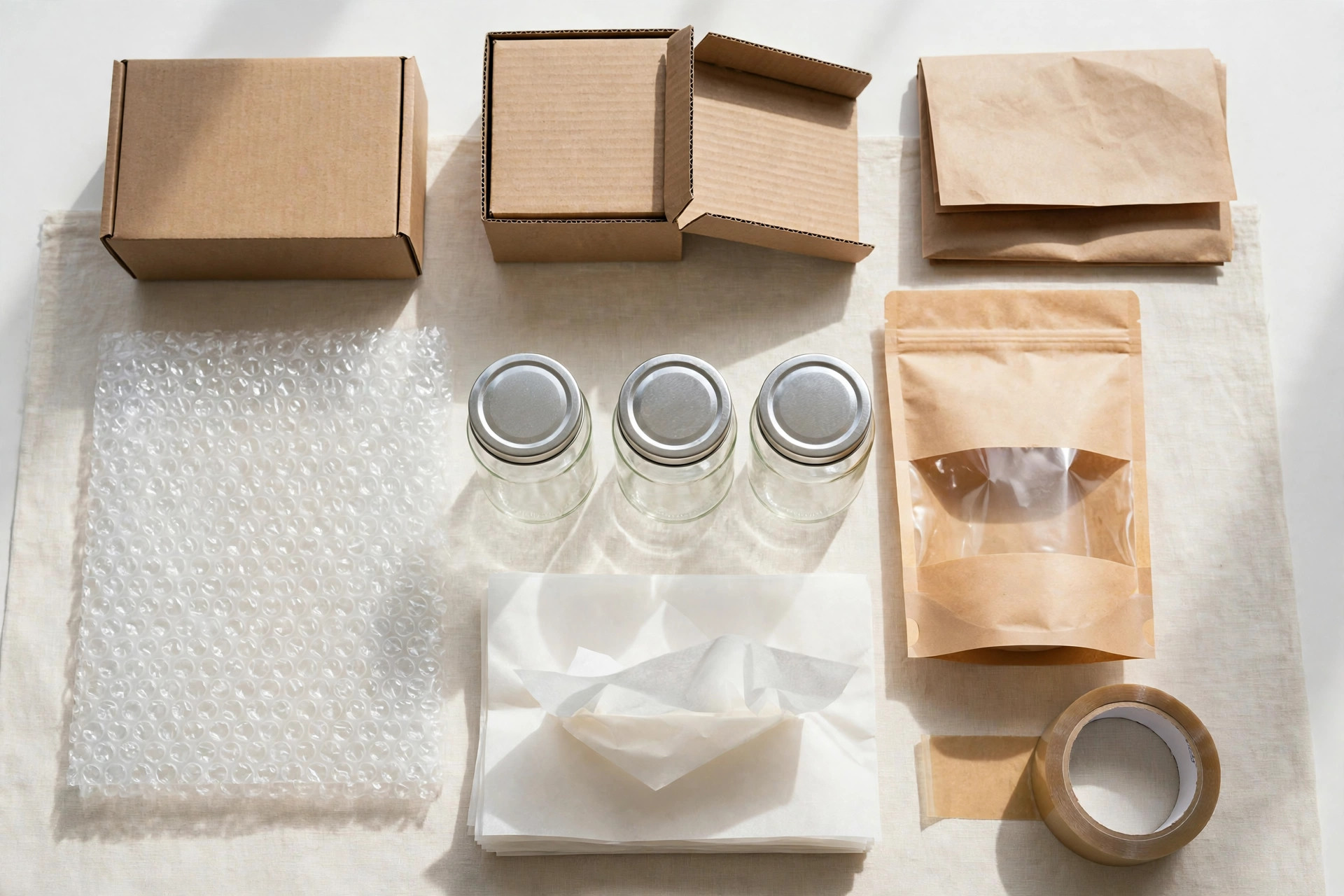
Knowing how to choose packaging materials is a practical skill for anyone who sells a physical product. The material you pick affects whether your product arrives safely, what shipping costs, how customers feel when they open it, and how much waste it creates. Yet many small sellers choose whatever box or bag is cheapest or closest to hand, and discover the problems later: crushed corners, leaking jars, or postage that eats the profit margin.
This guide explains the main packaging materials, what each one is good at, and how to match one to your product. There is no single best material for everything: the right choice depends on what you sell, how far it travels, what your customers expect, and what you can afford. If sustainability matters to your brand, eco-friendly packaging for small businesses is a good companion read, with practical swaps that keep costs down while you switch to greener materials.
Why Your Packaging Material Matters
Packaging does four jobs at once. First, it protects: it must keep your product safe from knocks, drops, moisture, and heat on its way to the customer. Second, it carries information: labels, branding, and instructions all sit on the packaging, and customers judge your product partly by how it looks. Third, it affects cost: heavier or bulkier materials raise postage, and some need extra equipment to seal or fill. Fourth, it creates waste, and customers increasingly notice whether that waste can be recycled or composted.
Getting the material wrong is expensive. A box that is too weak leads to damage claims and replacements. A material that looks cheap can make a premium product feel ordinary. And a material that cannot be recycled where your customer lives can draw complaints even when the product inside is excellent. Choosing well up front saves money and trouble later.
The Main Packaging Materials Compared
Most products can be packed well with one of six common materials. Here is what each offers and where it falls short.
Cardboard and corrugated board
Cardboard is the workhorse of product packaging: single-wall corrugated boxes suit light items, while double-wall boxes handle heavier or fragile goods. Cardboard is cheap, widely recyclable, easy to print on, and available in almost any size. Its weaknesses are moisture, it softens when wet, and bulk: it costs more to ship than flexible packaging. Use it for boxed goods, gift sets, and anything that needs a rigid shell.
Plastic: rigid and flexible
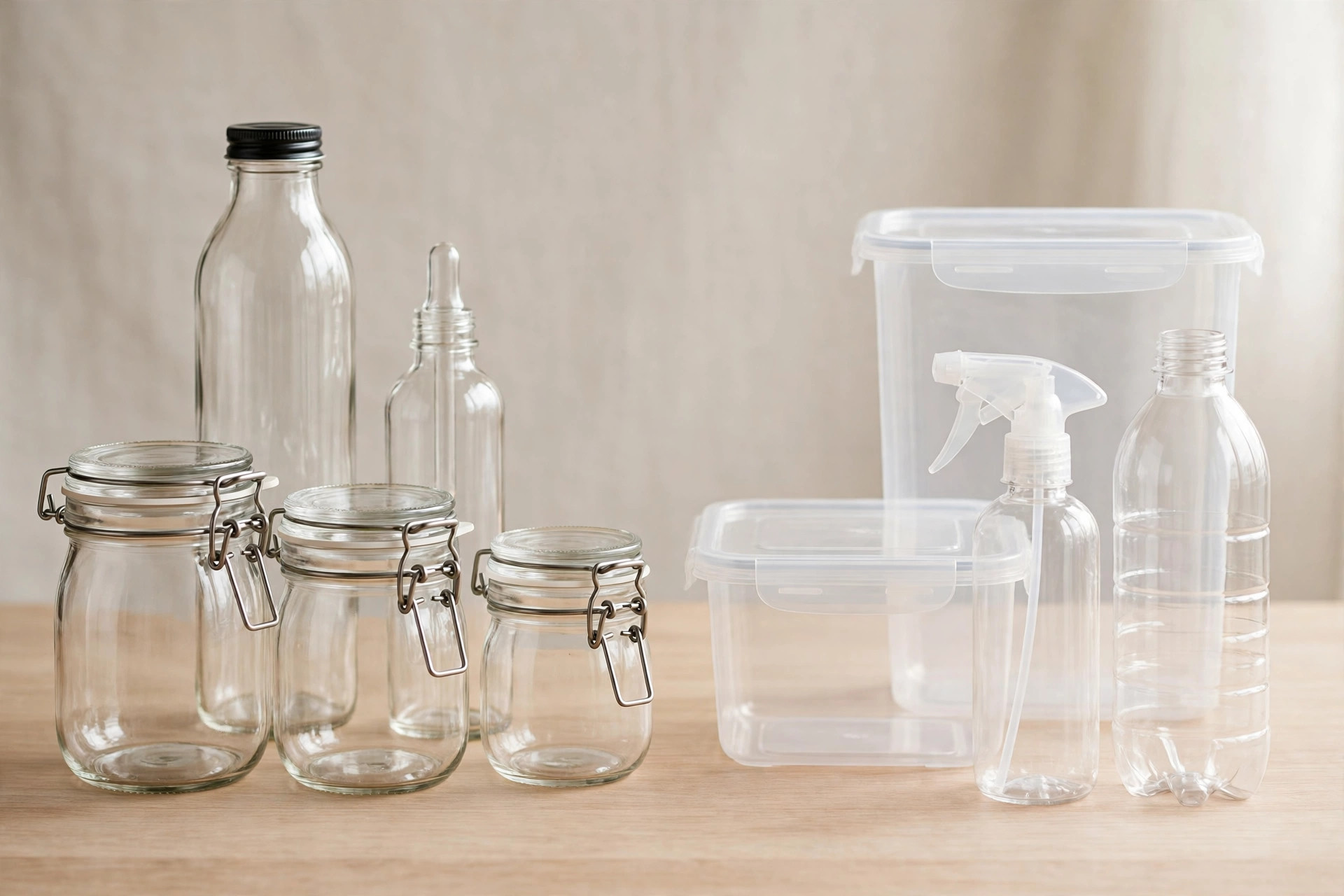
Plastic ranges from rigid bottles and tubs to flexible films and mailers. It is light, strong, and waterproof, ideal for liquids, cosmetics, and food. The downsides are environmental: many plastics are hard to recycle, and customers increasingly expect sellers to justify plastic use. If you use plastic, choose the thinnest grade that still protects the product, and say on the pack whether it can be recycled. Comparing glass vs plastic packaging is a useful starting point when you are deciding between a rigid plastic container and a glass one for the same product.
Glass
Glass is premium, airtight, and endlessly recyclable. It suits candles, sauces, cosmetics, and drinks, and customers often keep the jars long after the product is gone. The trade-off is weight and fragility: glass costs more to ship, needs serious cushioning, and breaks if dropped. Use glass when the product benefits from an airtight, non-reactive container and customers value the premium feel enough to cover the extra postage.
Metal: tins and cans
Metal tins and cans are light for their strength, fully recyclable, and excellent at keeping out light and air. They suit tea, coffee, biscuits, balms, and small gift items. The main limits are cost, metal is pricier than cardboard, and dents: a dropped tin looks damaged even when the product inside is fine. Tins also need a separate label or printed design, which adds a step.
Flexible pouches and bags
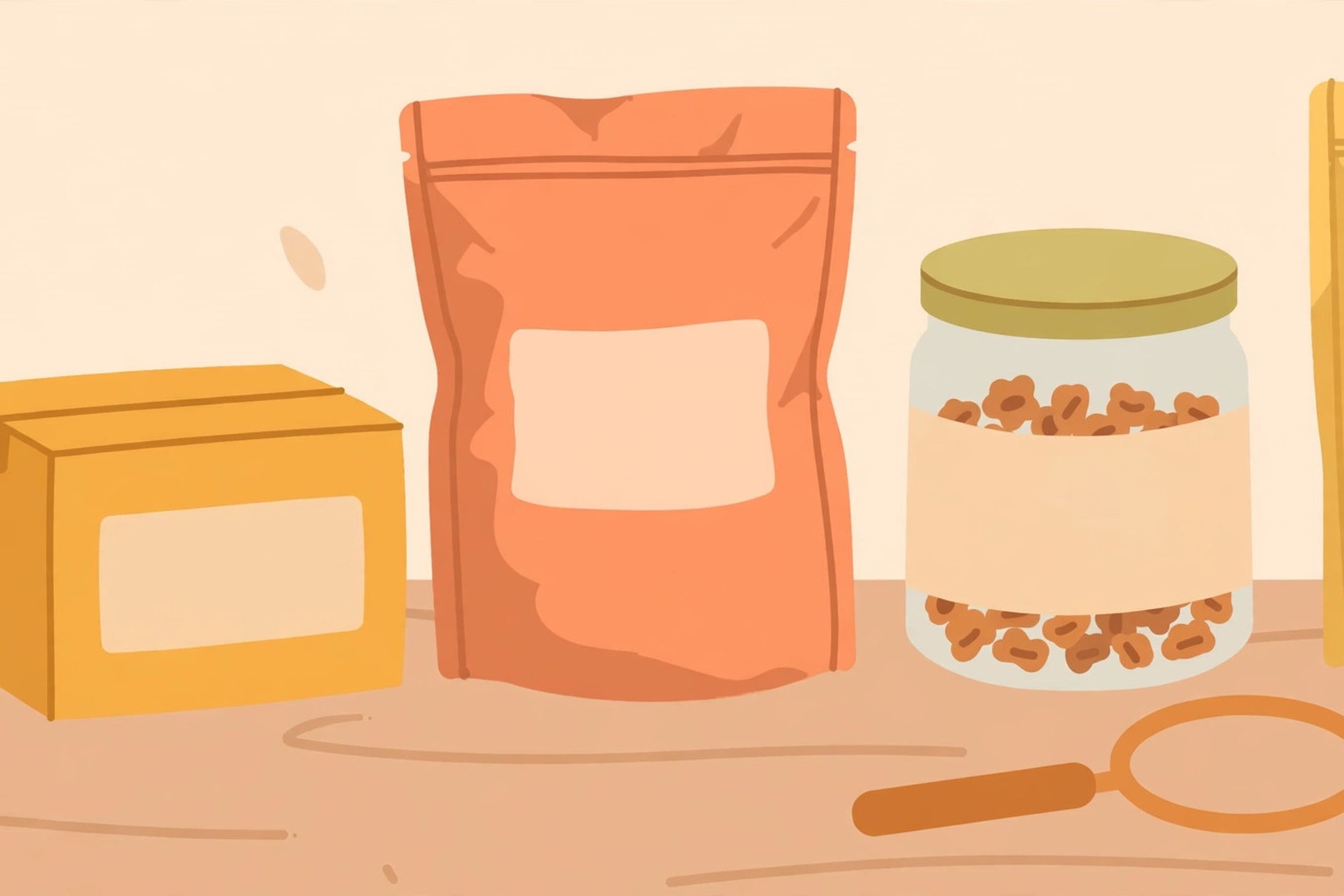
Stand-up pouches, paper bags, and compostable mailers are light, cheap to ship, and compact to store. They suit dry foods, powders, coffee, pet treats, and soft goods. Their weakness is protection: a pouch cannot guard a fragile item the way a rigid box can, and some are hard to recycle because they combine layers of different materials. When you are weighing a pouch against a box, the comparison of stand-up pouches vs boxes to see which format fits your product’s weight, shelf life, and shipping needs.
Paper and tissue
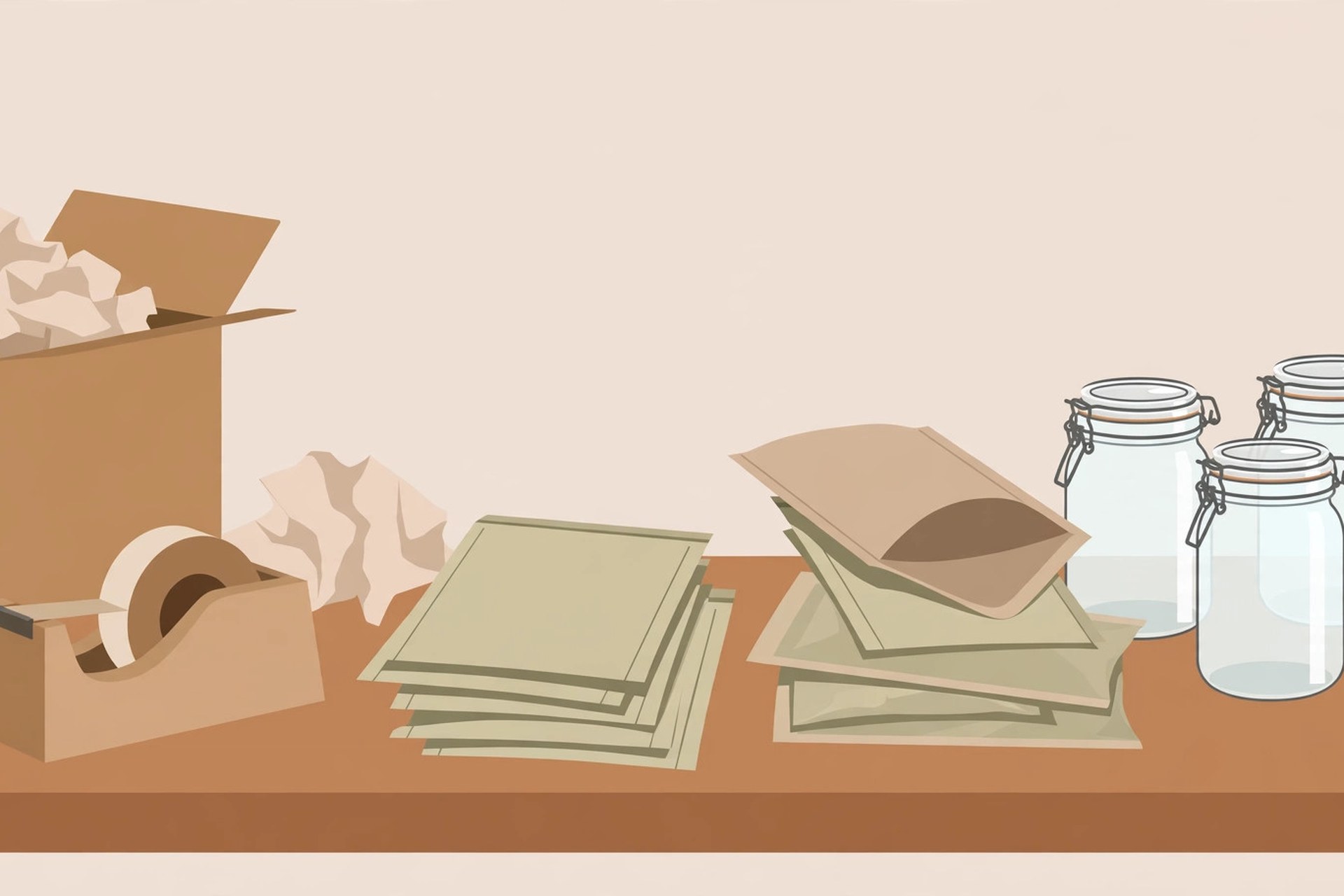
Kraft paper, tissue paper, and paper tape are the finishing layer of most packaging: they protect surfaces, fill gaps, and make an unboxing feel cared for. Paper is recyclable and compostable, but it offers little protection on its own and no resistance to water. Use paper as a wrap and filler inside a stronger outer material, not as the only protection for a fragile or heavy item.
How to Choose the Right Material for Your Product
Once you know the options, work through these six factors in order. They will narrow the choice quickly.
1. What does your product need?
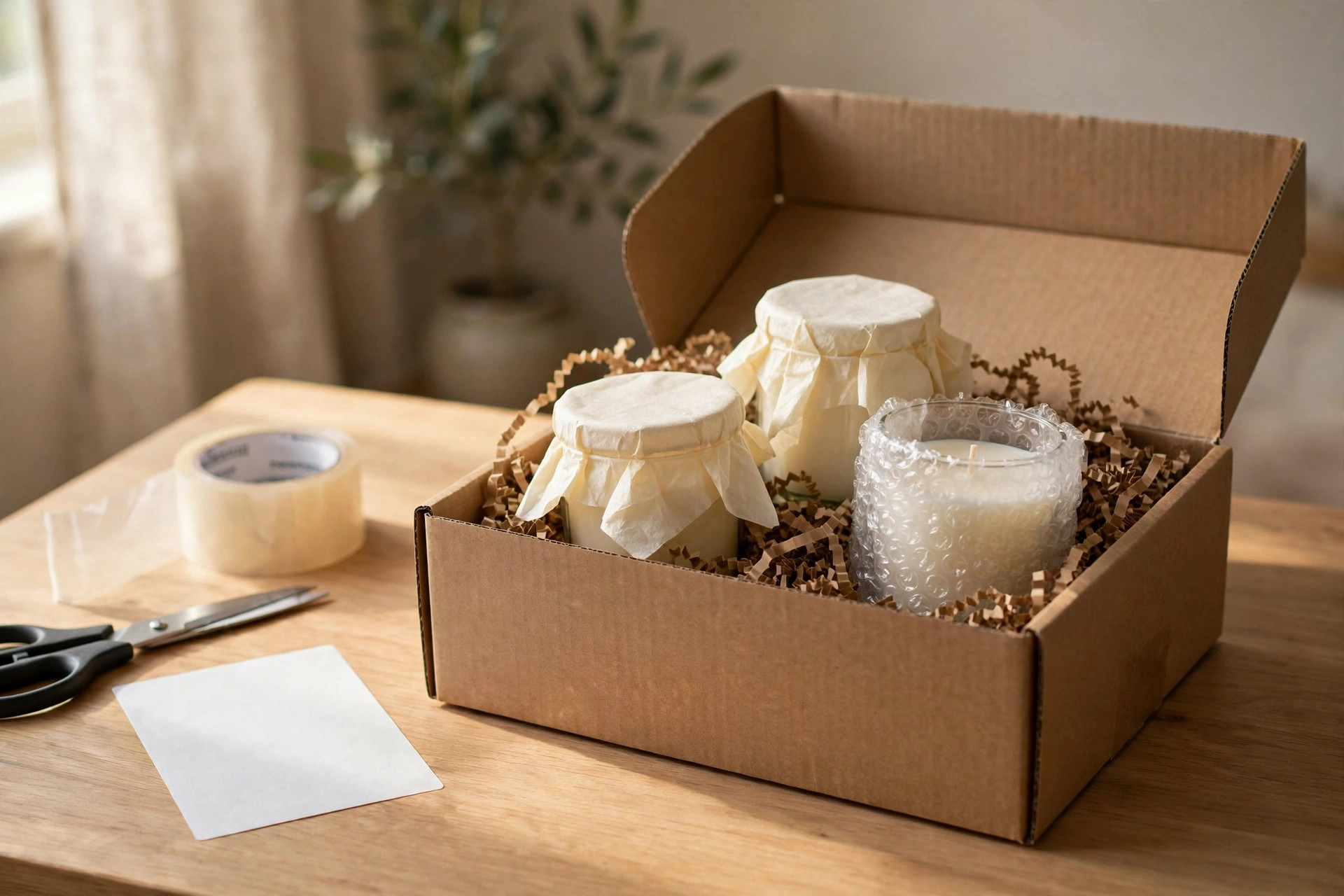
Start with the product itself: is it fragile, heavy, liquid, perishable, or sensitive to light, air, or heat? A glass jar needs rigid protection and cushioning; a bag of coffee needs an airtight seal; a candle needs protection from both impact and heat, which is why the method in how to package candles for shipping combines bubble wrap, a sturdy box, and insulation. Write down your product’s three biggest risks and rule out any material that cannot handle them.
2. How far will it travel?
A product handed over at a market stall needs far less protection than one sent across the country. For shipped products, think about drops, stacking, heat, and rain. Light, flexible packaging saves money locally, while long-distance shipping usually justifies a rigid box and proper cushioning. For international shipping, check the destination’s rules on materials such as wood or certain plastics.
3. What will it cost, all in?
Compare the full cost, not just the price of the material: postage, which depends on weight and size; storage, since bulky boxes take up shelf space; and damage, since replacing a broken item costs far more than the packaging you saved. A slightly more expensive material that cuts breakages by half is usually cheaper overall.
4. What do your customers expect?
Customers read packaging as part of the product. A handmade soap in a plain plastic bag feels different from the same soap in a printed kraft box with tissue paper. Think about your price point and brand: premium products can carry the cost of premium packaging, while everyday products should feel honest and practical rather than over-packaged. Ask a few customers what they think of your packaging; their answers are often surprising.
5. How sustainable is it?
Look at the whole life of the material: what it is made from, whether your customers can recycle or compost it, and how much of it you actually need. The greenest choice is usually to use less material, right-size the box, and pick a single material that is easy to recycle. Avoid mixing materials that cannot be separated, such as a plastic window glued into a cardboard box, unless there is a good reason.
6. Does it meet the rules?
Some products have legal requirements. Food packaging must use food-safe materials and carry specific information; cosmetics need ingredient and safety labelling; and some countries restrict certain plastics or require recycling marks. Check the rules for your product type and market before ordering in bulk: reprinting or repacking later is costly.
Common Mistakes When Choosing Packaging Materials
The most common mistake is over-packaging: a small item in a huge box looks wasteful and costs more to ship. The opposite mistake, under-packaging, is worse: a flimsy mailer for a fragile item leads to breakages and refunds. Another frequent error is choosing a material for how it looks in a photo rather than how it survives delivery.
Many sellers also forget labelling until the end. If your product is food, the label is not decoration but a legal requirement, and the material has to take a label cleanly and keep it readable. Our guide on how to label food packaging covers the rules, including what must appear on the pack and where it should go. Finally, do not lock yourself into one supplier or material before testing: order small quantities, pack a few real orders, and ship them to yourself to see how they arrive.
A Simple Decision Process
Use this quick process: first, list your product’s risks: fragile, heavy, liquid, perishable, or heat-sensitive. Second, shortlist two or three materials that handle them. Third, compare them on total cost, including postage and likely breakages. Fourth, check the sustainability and labelling rules. Fifth, order samples of your top choice, pack five real orders, and ship them to friends in different places. What comes back in good condition is your answer.
Keep notes on what you test: material, supplier, price, and any damage reports. Over a few months, this record becomes a practical guide to your own products, and stops you repeating expensive mistakes. The best packaging material is rarely the cheapest or the prettiest: it is the one that protects your product, fits your budget, pleases your customers, and can be disposed of responsibly.
Frequently Asked Questions
What is the cheapest packaging material?
Plain cardboard boxes and kraft paper mailers are usually cheapest in bulk. But the cheapest material is not always the cheapest choice overall: if it leads to breakages or high postage, a slightly pricier material can save money over time.
How do I know if packaging will protect my product?
Test it. Pack your product as you would for a real order, then drop the parcel from waist height and shake it gently. If the product arrives undamaged and unmoved, the packaging works. Repeat the test with a few parcels before ordering in bulk.
Is eco-friendly packaging more expensive?
Sometimes, but not always. Recycled cardboard and paper tape are often no more expensive than standard options, and right-sizing your boxes can save more than the greener material costs. Compostable mailers and premium recycled materials can cost more, so compare the full price, postage included.
Should I use boxes or pouches for my product?
Use a box when your product is fragile, heavy, or needs to hold its shape, and a pouch when it is light, flexible, and durable, such as dry food, powders, or soft goods. Pouches are cheaper to ship and store, but offer far less protection than a rigid box.
Do I need special packaging for food products?
Yes. Food must be packed in food-safe, food-grade materials that will not contaminate it, and the packaging must carry legally required information such as ingredients, allergens, and a best-before date. Check local food labelling rules before choosing materials or printing labels.
More Articles You’ll Like
Keep reading — more from this category and across the site:
- How to Package Fragile Food Items for Delivery
- How to Package Baked Goods for Shipping Without Breaking Them
- 50 Funny Hot Chocolate Jokes for Kids and Adults
- How to Build a Workout Routine for Beginners
- How to Create a Business Budget: A Step-by-Step Guide
- How to Find Obituaries in Athens, AL: A Step-by-Step Guide
- How to Fix Common Printing Problems: A Troubleshooting Guide
- What Does ‘Limerence’ Mean? Meaning, Origin, and Examples
- What Does ‘Lowkey’ Mean? Meaning, Origin, and Examples