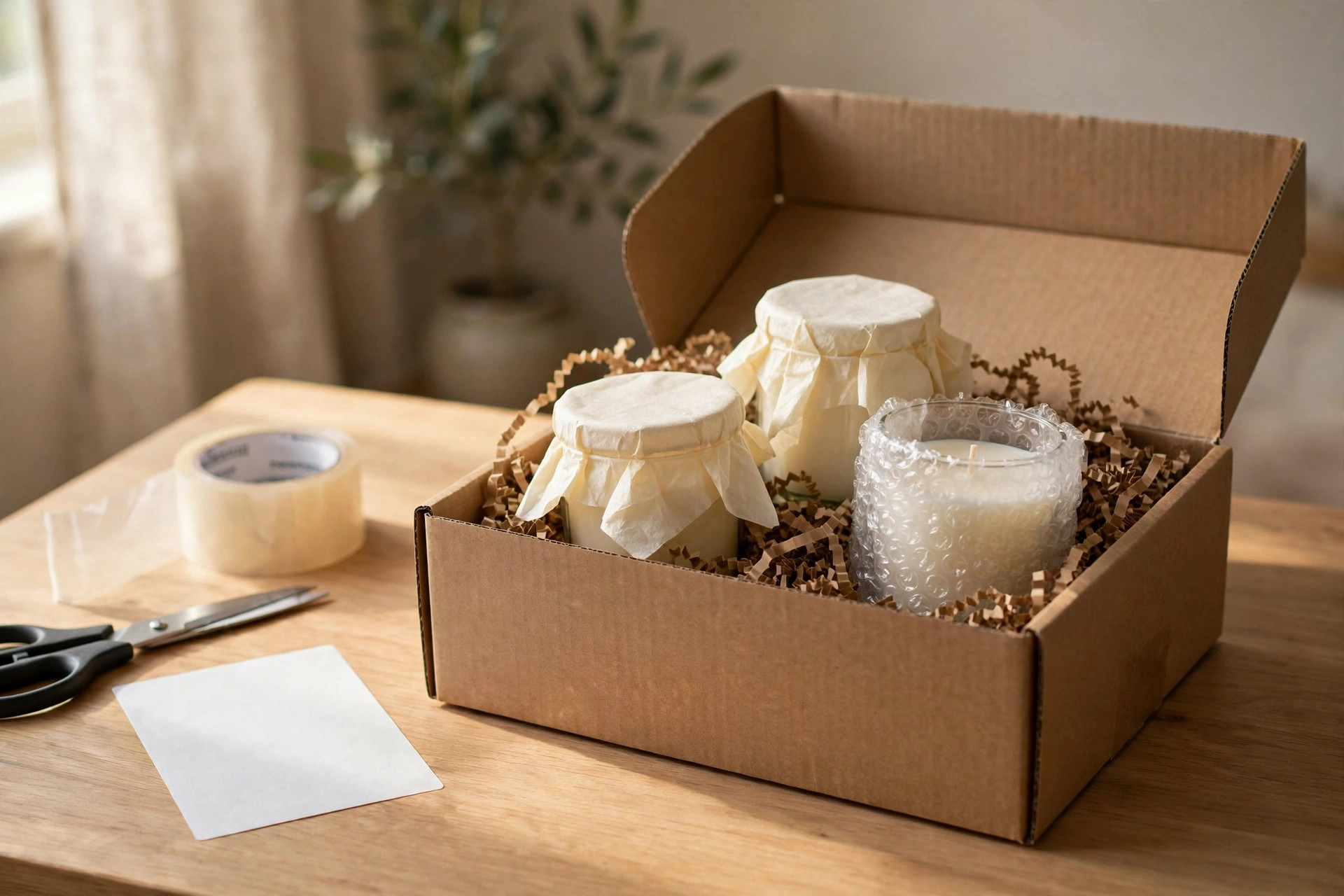
Learning how to package candles for shipping properly is the difference between a happy customer and a refund request. Candles look sturdy, but they are tricky to send through the mail: glass jars crack, wax chips, lids pop off, and a hot delivery van can soften a candle enough to ruin its shape. With the right box, a little cushioning, and a few minutes of care, your candles can survive sorting machines, long journeys, and summer heat.
Whether you sell candles or send one as a gift, the same principles apply: protect the candle from impact, keep it from moving inside the box, and keep heat in mind. This guide walks through what to use and how to pack a candle step by step, so it arrives looking just as good as when it left your hands. If you are building a candle business, eco-friendly packaging for small businesses can help you keep that protection sustainable as you grow.
Why Candles Are Tricky to Ship
Candles face three main risks in transit. First is breakage: most candles come in glass jars or ceramic vessels, and one hard knock can crack the container or snap a pillar candle. Second is melting: wax softens at surprisingly low temperatures, and a parcel left in a hot van or on a sunny doorstep can arrive slumped or dented. Third is mess: a cracked jar can leak melted wax or fragrance oil over everything else in the parcel.
A candle needs both impact protection and insulation from heat, and it must be held still inside its box so it cannot rattle around. That is why tossing a candle into a box with a bit of newspaper is not enough, even for a short journey. The method below handles all three risks, and works for jar candles, pillar candles, tins, and wax melts alike.
What You Need to Package Candles for Shipping
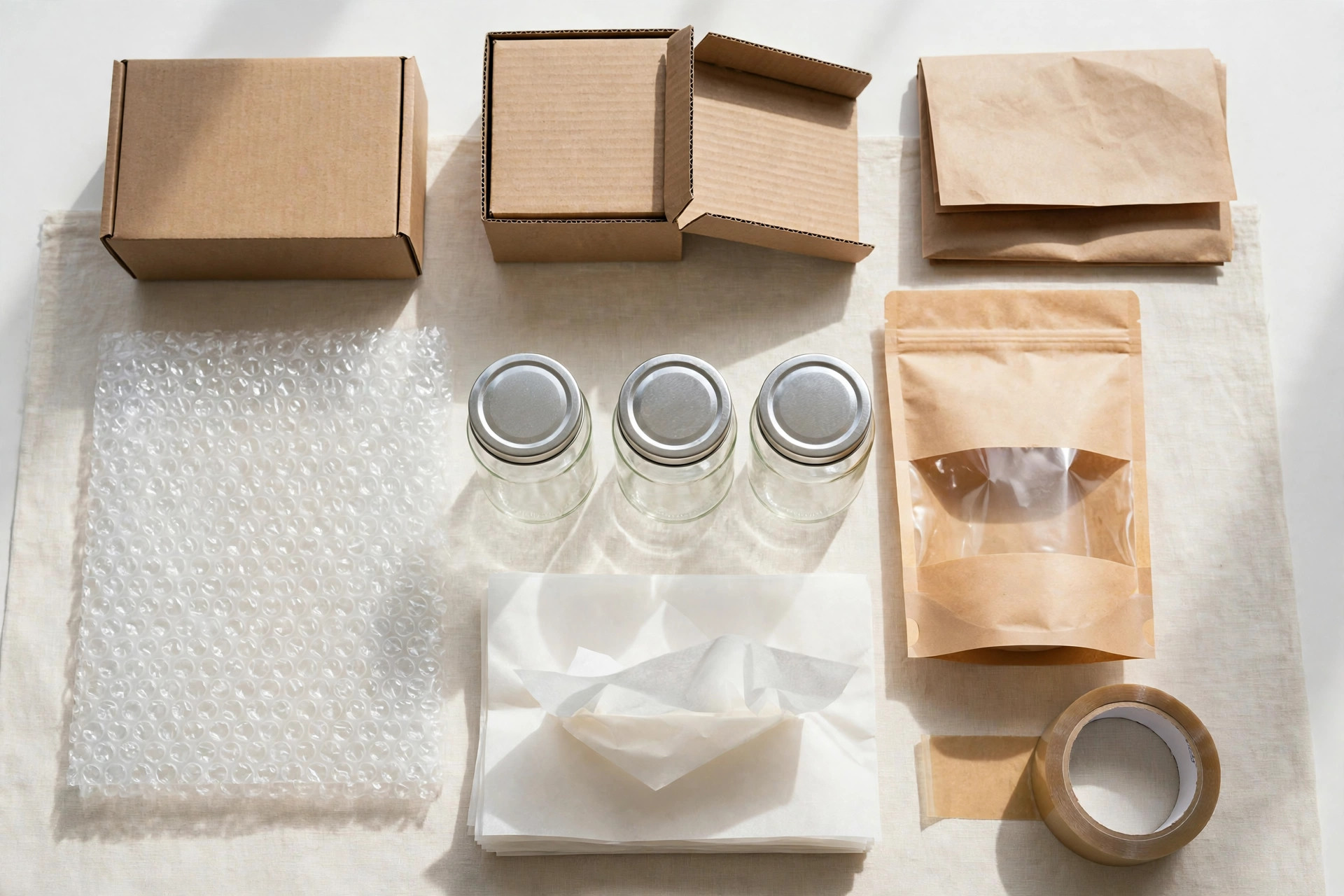
You do not need specialist equipment, but you do need the right materials. Gather these before you start packing:
- A sturdy corrugated box slightly larger than the wrapped candle, with at least 5 cm (2 inches) of space on every side for cushioning. Reusing a box is fine if it is undamaged, dry, and still rigid.
- Tissue paper or kraft paper to wrap the candle itself and protect its surface and label.
- Bubble wrap for impact protection around glass jars and ceramic vessels.
- Cushioning fill such as crinkle paper, air pillows, or biodegradable packing peanuts to fill the gaps.
- Packing tape strong enough to hold the box shut, plus a marker or printed label.
- A plastic bag or cling film as a final waterproof layer if the candle is scented or you are shipping in wet weather.
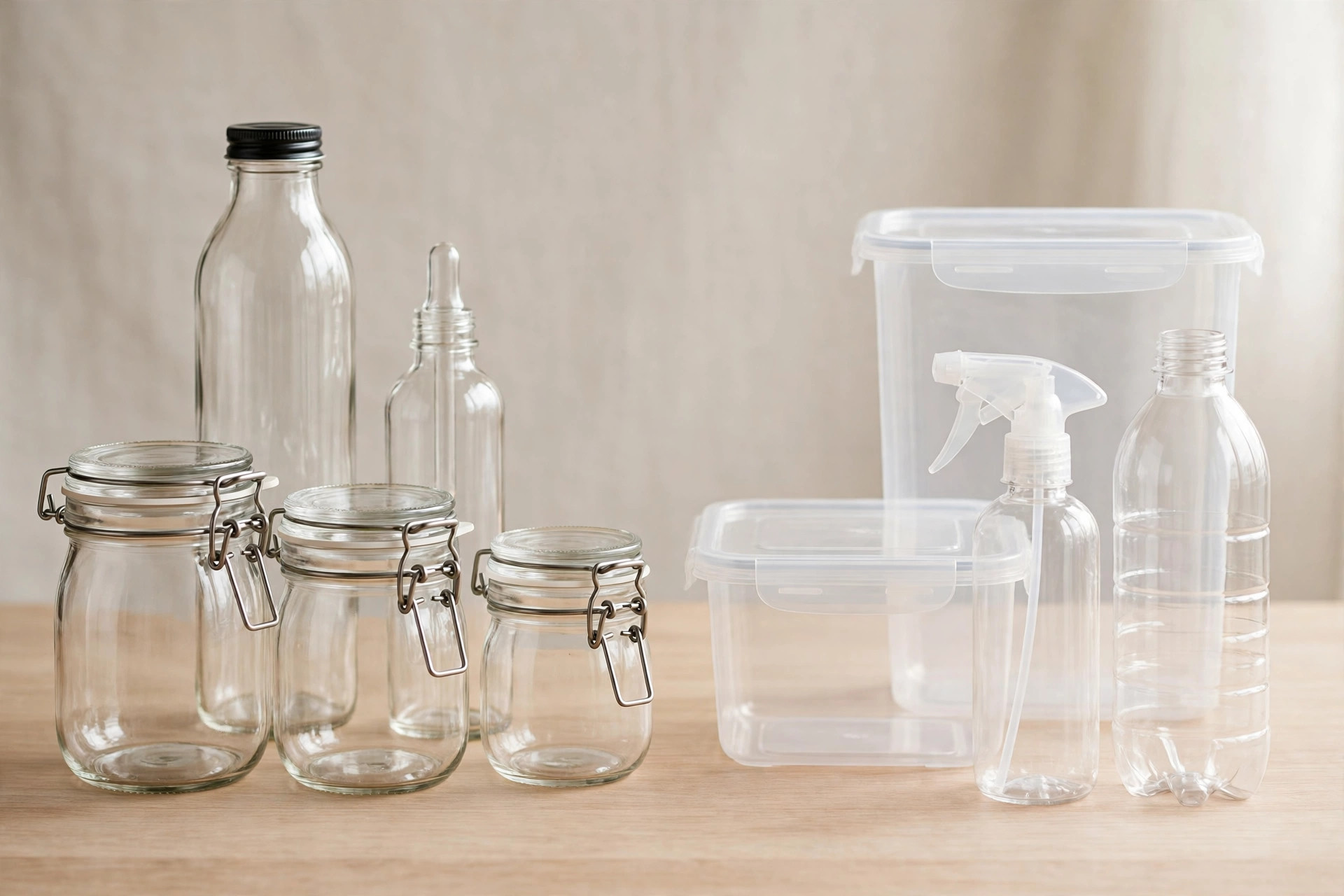
The container matters too: a thick glass jar is heavier and more fragile than a tin, so it needs more cushioning, while a tin dents easily. Thinking about glass vs plastic packaging helps you weigh protection against weight and shipping cost, especially if you are choosing vessels for candles you plan to sell and ship regularly.
How to Package a Candle for Shipping, Step by Step
Follow these steps in order and your candle will be well protected. The process takes about five minutes per candle once your materials are ready.
Step 1: Prepare the candle
Make sure the candle is cool and set before packing: a warm candle is softer and more likely to dent or lose its shape. Put the lid on firmly; if it is loose, tape around it or slip a rubber band over it so it cannot work loose in transit. If the candle has no lid, cover the top with cling film or tissue paper held in place with tape. Wipe the jar clean, then wrap the whole candle in tissue paper to protect the label and finish.
Step 2: Wrap it in bubble wrap
Wrap the tissue-covered candle in at least two layers of bubble wrap, bubbles facing inward. Pay extra attention to the base and the rim, which chip most easily. Secure the wrap with tape so it does not unravel. For tall pillar candles, add an extra layer around the middle, where they are most likely to snap. This is the same careful approach used when packaging fragile food items for delivery, where the wrap has to absorb knocks without crushing what is inside.
Step 3: Choose and prepare the box
Pick a box that leaves about 5 cm (2 inches) of space around the wrapped candle on all sides: too big and the candle slides around, too small and there is no room for cushioning. Tape the bottom securely with an H-pattern of packing tape across the base and up the sides. Then add a 5 cm layer of cushioning fill, such as crinkle paper or air pillows, so the candle sits on a soft bed rather than the hard base.
Step 4: Cushion, fill, and close
Place the wrapped candle upright in the centre of the box, never on its side, and pack cushioning fill tightly around all four sides and on top until it cannot move when you gently shake the box. If you can feel it shift, add more fill. Close the box and tape it shut with the same H-pattern. In hot weather, slip the wrapped candle into a sealed plastic bag before boxing it, so any melted wax stays contained instead of soaking the box.
Step 5: Label the parcel clearly
Attach the shipping label flat on the top of the box, and add a “Fragile” sticker if you have one. Marking the parcel “This Way Up” also helps, since candles packed upright are far less likely to leak or dent. Use a printed label rather than a handwritten one: printed labels are easier for couriers to scan.
Shipping Candles in Hot Weather
Heat is the biggest enemy of a shipped candle. Wax softens well below the temperature inside a delivery van on a sunny day, and a candle left on a doorstep in direct sun can slump in under an hour. If you ship in summer, or to a warm climate, take extra precautions.
Ship early in the week so parcels do not sit in a depot over the weekend, and choose the fastest affordable service. Add insulation: bubble wrap already helps, and a small insulated mailer or a sheet of reflective bubble insulation lining the box makes a real difference. Avoid shipping on the hottest days if you can, and warn customers about possible delays in a heatwave. Choosing the right protective layers is part of knowing how to choose the right packaging materials for a product that is sensitive to temperature as well as impact.
How to Ship Multiple Candles in One Box
Shipping several candles together saves money, but each one must be protected individually. Wrap every candle separately, then place them upright with cushioning fill between each one, so no two candles touch. Never stack candles without fill between them, and never let glass jars knock together.
Use a larger, double-walled box for the combined weight. Fill every gap, including the corners, and do the shake test before sealing: if anything moves, add more fill. For four or more candles, consider two boxes rather than one heavy parcel: heavier boxes are dropped harder and cost more to replace.
Common Mistakes to Avoid
Most damaged candle deliveries come down to a handful of avoidable mistakes. Using a box that is too big is the most common: the candle slides around and takes every knock. Using too little cushioning is a close second, especially at the top of the box, where many people leave a gap. Shipping without a lid, or with a loose lid, lets wax and fragrance oil escape, and skipping the waterproof bag in wet or hot weather turns a small leak into a ruined parcel.
Another mistake is ignoring the weather and shipping on the hottest day of the year with a slow service. Finally, do not forget the outside of the parcel: weak tape, a box that has already been crushed once, or a handwritten label that smudges in the rain can all cause problems that have nothing to do with how well you wrapped the candle.
If You Sell Candles as a Business
If candles are a product you sell rather than a one-off gift, good packaging becomes part of your reputation. Customers remember the unboxing: a tidy, well-protected parcel with a thank-you note feels premium, while a dented jar in a soggy box does the opposite. Keep a stock of the right boxes and fill so you are never tempted to squeeze a candle into whatever box is lying around, and test your packing by shipping a candle to yourself or a friend.
Track which materials and box sizes you use for each candle type, and note any damage reports so you can fix weak spots. Over time, this record tells you where to spend a little more on protection and where you can save. If you are turning a hobby into a shop, learning how to start a small business will help you handle the pricing, postage, and customer service side of selling candles online, while this guide covers keeping them safe in the post.
Frequently Asked Questions
Can you ship candles in summer?
Yes, but take extra care. Use the fastest affordable service, ship early in the week, and add insulation around the candle. In extreme heat, consider pausing shipments or warning customers about possible delays.
Do candles need a fragile sticker?
A fragile sticker helps, but it is not a substitute for good packing: not every handler will see or respect it. Pack the candle as if it will be dropped, and treat the sticker as an extra precaution rather than your main protection.
Can I ship candles internationally?
Usually yes, but check the rules first. Some countries restrict scented products, and some carriers have their own limits on candles. Check the destination’s postal rules before shipping, and allow extra time for customs.
What is the best box for shipping candles?
A new or nearly new double-walled corrugated box that leaves about 5 cm (2 inches) of space around the wrapped candle on all sides. It should be rigid, dry, and undamaged, with the bottom taped in an H-pattern so it cannot split under the candle’s weight.
How do I stop candles from melting in transit?
Keep transit time short, ship early in the week, and insulate the candle with bubble wrap or a reflective insulated mailer. Avoid shipping during heatwaves where possible, and seal the wrapped candle in a plastic bag so softened wax cannot leak into the box.
More Articles You’ll Like
Keep reading — more from this category and across the site:
- Stand-Up Pouches vs Boxes: Which Food Packaging Is Right for Your Product?
- How to Package Baked Goods for Shipping Without Breaking Them
- How to Label Food Packaging: Rules and Best Practices
- 50 Funny Hot Chocolate Jokes for Kids and Adults
- How to Build a Workout Routine for Beginners
- How to Create a Business Budget: A Step-by-Step Guide
- How to Find Obituaries in Athens, AL: A Step-by-Step Guide
- How to Fix Common Printing Problems: A Troubleshooting Guide
- What Does ‘Limerence’ Mean? Meaning, Origin, and Examples
- What Does ‘Lowkey’ Mean? Meaning, Origin, and Examples