Mailer boxes vs shipping boxes is a choice almost every small seller faces sooner or later. Both are cardboard boxes, both protect your products, and both can carry your branding, so it is easy to assume they are interchangeable. They are not. Each type is built for a different job, and picking the wrong one can cost you money on postage, damage your products, or leave customers underwhelmed when they open the parcel.
This guide explains what each box is, how they differ, and which one fits your product. By the end, you will know exactly which box to order for your next batch of shipments, and when it makes sense to use both. If you are still weighing up the materials your products need, start with our guide on how to choose packaging materials, which compares the main options by protection, cost, and sustainability.
What Is a Mailer Box?
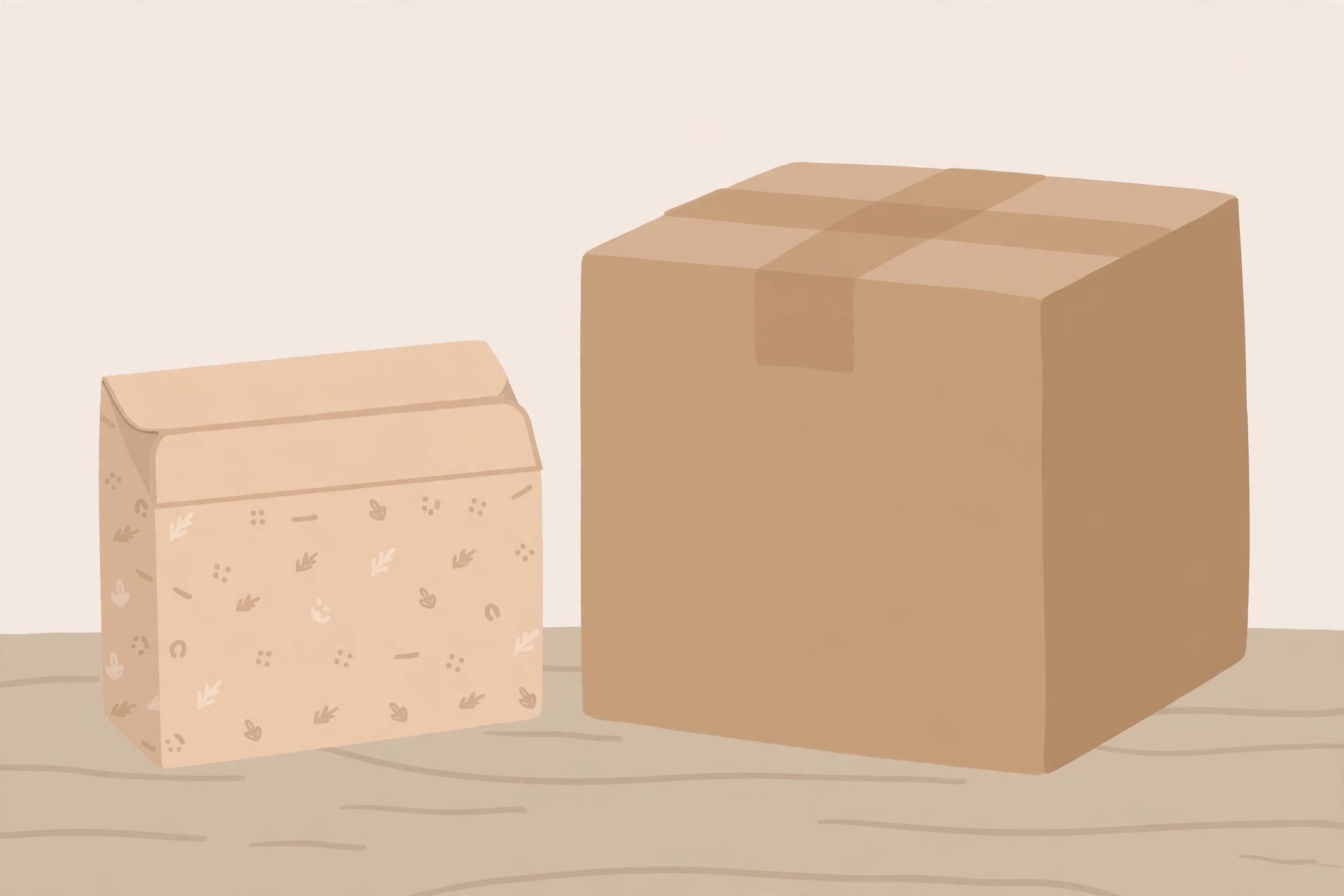
A mailer box is a self-locking cardboard box, usually made from corrugated board, that folds together without tape. The most common style is the tuck-front box: the front panel tucks into the box, and the top flaps fold in to close it. Mailer boxes are designed to look good as well as protect, so they are often printed inside and out with branding, patterns, or a message for the customer.
Mailer boxes are typically used for small, light products: cosmetics, jewellery, candles, soap, stationery, clothing, and subscription boxes. They are popular with small businesses because they create a memorable unboxing experience without needing extra wrapping. When a customer opens a printed mailer box, the inside of the box is part of the presentation, which is why many brands print their logo or a thank-you message on the inside lid.
The main limits of a mailer box are size and strength. They are usually made in smaller sizes, and their self-locking design is not as strong as a taped shipping box. They are not the best choice for very heavy items, or for parcels that will be stacked under heavier boxes in a delivery van.
What Is a Shipping Box?
A shipping box, also called a regular slotted container, is the plain brown cardboard box most people picture when they think of parcels. It has four flaps on the top and four on the bottom, and it is sealed with packing tape. Shipping boxes come in a huge range of sizes, from tiny boxes for a single small item to large boxes for bulky goods, and they are available in single-wall and double-wall corrugated board.
Shipping boxes are built for protection and stacking. The taped flaps and the corrugated walls make them strong enough to survive sorting machines, long journeys, and being stacked under other parcels. They are the standard choice for heavy, fragile, or valuable items, and for anything that will travel a long way. A handmade product that needs serious cushioning, for example, is usually safer in a shipping box: the steps in how to package handmade soap for shipping use a sturdy shipping box for exactly that reason.
The trade-off is presentation. A plain shipping box looks functional rather than special, and it needs tissue paper, filler, or a printed insert to create a good unboxing experience. It also needs tape and usually more filler than a mailer box, because the box is often larger than the product inside.
Mailer Boxes vs Shipping Boxes: The Key Differences
Strength and protection
Shipping boxes are stronger. Their taped flaps and the option of double-wall board mean they hold up better under stacking and rough handling. Mailer boxes are strong enough for light items, but they can pop open or crush if they are overloaded or stacked under heavy parcels. For fragile or heavy products, a shipping box is the safer choice.
Cost and postage
Mailer boxes often cost more per box than plain shipping boxes, because they are printed and die-cut. But they can save money overall: they need no tape, they usually need less filler because they fit the product closely, and their smaller size can reduce postage, which is charged by size as well as weight. Shipping boxes are cheaper to buy, but the tape, filler, and larger size can add up. Compare the total cost, not just the price of the box.
Size and fit
Mailer boxes come in a limited range of standard sizes, and many sellers order a custom size to fit their product exactly. Shipping boxes come in almost any size, so you can usually find one that fits without ordering a custom run. If your product is an unusual shape or size, a shipping box is usually easier to source.
Branding and unboxing
Mailer boxes win on presentation. They are designed to be seen: printed inside and out, with a clean fold and no tape across the top. Shipping boxes can be printed too, but the tape and flaps interrupt the design, and the inside is usually plain brown. If the unboxing experience is part of your brand, a mailer box is hard to beat.
Ease of packing
Mailer boxes are quicker to assemble for small orders: fold, fill, tuck, done. Shipping boxes take a little longer because you need to tape the bottom, fill the box, and tape the top. For a seller packing dozens of orders a day, that extra minute per parcel adds up, though the difference is small for low volumes.
Which Box Should You Use?
Choose a mailer box when your product is light, not fragile, and the unboxing experience matters to your brand. Cosmetics, jewellery, small candles, soap sets, stationery, and clothing all suit mailer boxes well. They are also a good choice for subscription boxes and gift sets, where the box itself is part of the product.
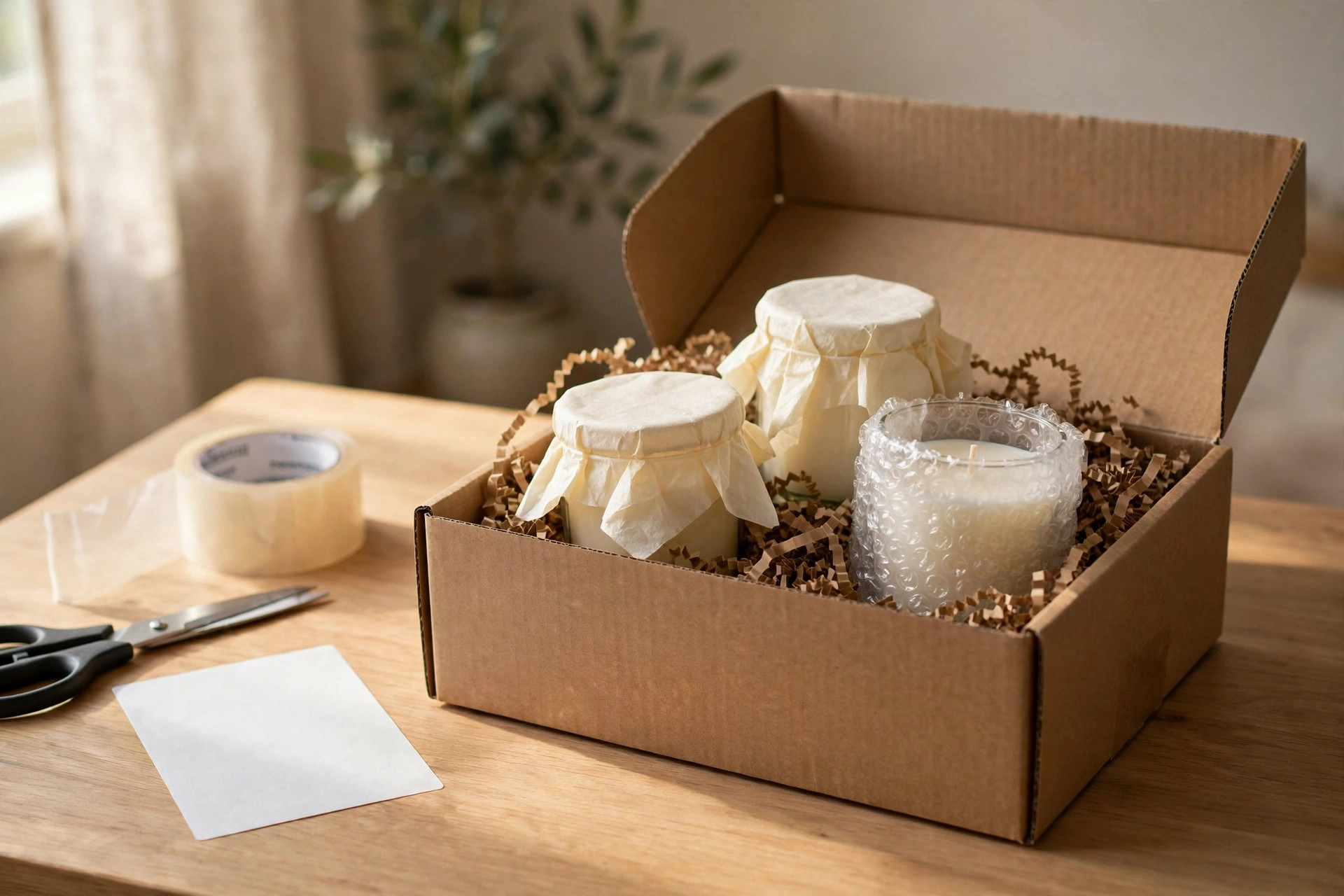
Choose a shipping box when your product is heavy, fragile, or valuable, when it will travel a long way, or when it needs a lot of cushioning. Glass jars, large candles, multi-item orders, and anything that could break if dropped belong in a shipping box. The method for how to package candles for shipping is a good example: a candle is heavy and breakable, so it needs the strength of a taped shipping box and plenty of filler.
Consider sustainability too. Both box types are recyclable, but the greener choice is usually the one that uses less material: a right-sized box, minimal filler, and paper tape. If you want to cut the environmental impact of your packaging further, eco-friendly packaging for small businesses covers practical swaps such as recycled board, paper tape, and compostable filler.
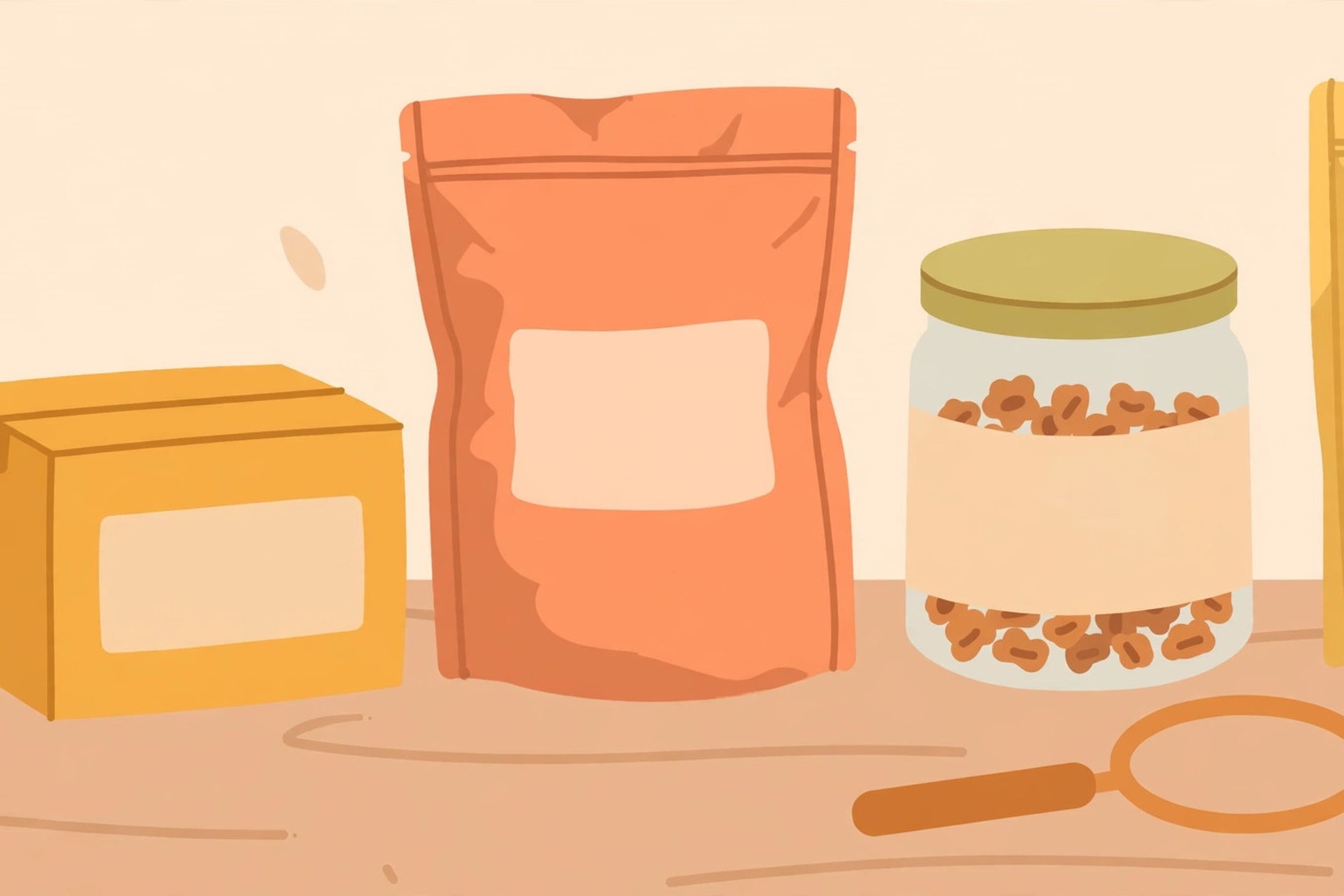
If you sell a mix of products, you may need both. Use mailer boxes for your light, standard orders and shipping boxes for heavy, fragile, or multi-item orders. Keep a small stock of each in two or three sizes, and you will always have the right box to hand. And if you are weighing a pouch against a box for a light product, the comparison of stand-up pouches vs boxes explains when a pouch is cheaper to ship and when a rigid box protects better.
Common Mistakes When Choosing Between Them
The most common mistake is choosing a mailer box for a product that is too heavy for it. A mailer box that is overloaded can burst open in transit, and a damaged parcel costs far more than the postage you saved. If you are unsure whether your product is too heavy, test it: pack the box, seal it, and drop it from waist height. If it holds, it is probably fine; if it pops open or crushes, use a shipping box.
The opposite mistake is sending a small, light product in a large shipping box. The parcel costs more to post, uses more filler, and looks wasteful when the customer opens it. A small product in a big box also slides around and can arrive damaged. Match the box to the product, not to whatever box you happen to have in stock.
Finally, do not forget the inside. A mailer box with a beautiful print but no filler still lets the product rattle around, and a shipping box with no tissue or insert feels careless. Whichever box you choose, pack it properly: cushion the product, fill the gaps, and seal it well.
Frequently Asked Questions
Are mailer boxes strong enough for shipping?
Yes, for light, non-fragile products. Mailer boxes are made from corrugated board and hold up well for cosmetics, soap, clothing, and similar items. For heavy or fragile products, use a shipping box instead.
Do mailer boxes need tape?
Most mailer boxes are self-locking and do not need tape to close, which is part of their appeal. For valuable orders, a strip of tape across the tuck flap adds extra security and shows if the box has been opened.
Which is cheaper, a mailer box or a shipping box?
Plain shipping boxes are usually cheaper per box, but mailer boxes can cost less overall because they need no tape and less filler, and their smaller size can reduce postage. Compare the total cost of each option for your typical order.
Can I brand a shipping box?
Yes. You can order printed shipping boxes, or add branded tape, stickers, or a printed insert. It will not look as polished as a printed mailer box, but it still carries your brand.
What size mailer box should I order?
Order the smallest size that fits your product with a thin layer of cushioning around it. Measure your product, add room for tissue or bubble wrap, and check the internal dimensions of the box before ordering, since listed sizes are often external.
More Articles You’ll Like
Keep reading — more from this category and across the site:
- How to Package Fragile Food Items for Delivery
- How to Package Baked Goods for Shipping Without Breaking Them
- Glass vs Plastic Packaging: Which Is Better for Your Product?
- How to Label Food Packaging: Rules and Best Practices
- 50 Funny Business Jokes for Work and Office Laughs
- 50 Funny Christmas Tree Jokes for Kids and Adults
- How to Do a Digital Detox: A Practical Guide to Unplugging
- How to Find Obituaries in Cullman, AL: A Step-by-Step Guide
- How to Print Stickers at Home: A Step-by-Step Guide
- What Does ‘Halcyon’ Mean? Meaning, Origin, and Examples