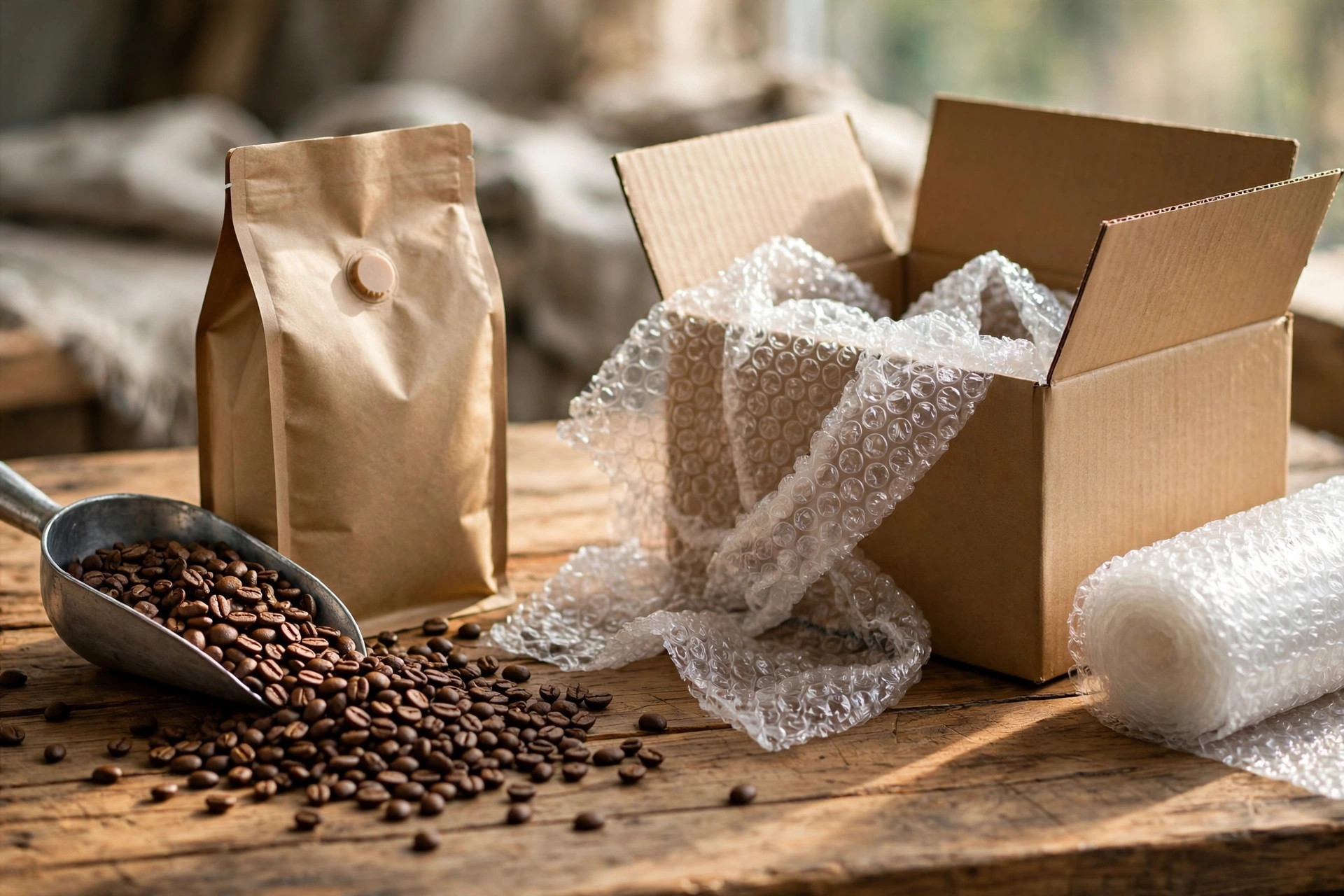
Coffee is one of the most popular things to buy online, but it is also one of the easiest to ruin in transit. Freshly roasted beans give off gas, absorb smells, go stale in air, and lose flavour fast if the bag is crushed or the seal fails. Knowing how to package coffee for shipping means your customers get coffee that tastes the way it should — fresh, aromatic, and undamaged — instead of a flat, stale bag that makes them shop somewhere else next time. The same careful approach that works for other delicate foods applies here, and our guide on how to package fragile food items for delivery is a useful companion if you also ship other food products.
This guide walks you through the whole process step by step: choosing the right bag, sealing it properly, protecting it inside the box, and labelling it for a safe journey. It works whether you roast and sell coffee yourself, run a small online shop, or are sending a gift bag of beans to a friend. Follow the steps in order and your coffee will arrive in the condition you packed it.
Why Coffee Needs Special Packaging
Coffee is more fragile than it looks. Four things damage it, and good packaging guards against all of them.
Air. Oxygen is the biggest enemy of fresh coffee. Once beans are roasted, they start to lose their aromatic compounds, and exposure to air speeds that up. Ground coffee goes stale even faster because so much more surface area is exposed. A bag that lets air in will deliver flat coffee, however good the beans were.
Moisture. Coffee beans absorb water from the air, and damp coffee goes stale and can even grow mould. Packaging needs to keep moisture out from the roastery to the customer’s kitchen.
Light. Sunlight and strong light break down the oils in coffee that carry its flavour. That is why coffee bags are usually opaque rather than clear.
Physical damage. Coffee bags can be punctured, crushed, or split open during sorting and delivery. A torn bag spills beans everywhere and ruins the whole shipment.
What You Need Before You Start
Gather your supplies before you pack your first order. You will need:
- Coffee bags — foil-lined, opaque bags with a one-way degassing valve and a resealable closure (tin tie or zip seal). Choose the right size for the weight you sell, with a little room at the top for sealing.
- A heat sealer or bag sealer — for a truly airtight seal. A tin tie alone is not airtight; a heat-sealed bag is.
- A shipping box — a new, sturdy corrugated box, slightly larger than the coffee bag so there is room for cushioning on all sides.
- Cushioning — bubble wrap, kraft paper, or air pillows. Avoid loose packing peanuts if you can: they shift in transit and can leave the bag unprotected.
- Packing tape — wide, strong tape for sealing the box.
- Labels — a shipping label, plus a “fragile” or “this side up” label if you use them.
- A scale — to weigh the packed box so you can buy the right postage and avoid surprise charges.
Step 1: Choose the Right Coffee Bag
The bag matters more than the box. It is the layer that keeps air, moisture, and light away from the coffee, so choose it carefully.
The best bags for shipping coffee are foil-lined stand-up pouches with a one-way valve. The foil layer blocks light and air, the valve lets carbon dioxide escape from freshly roasted beans without letting oxygen in, and the stand-up shape sits neatly in a shipping box. A resealable zip or tin tie lets the customer close the bag after opening it, which keeps the coffee fresher once it arrives. Our comparison of stand-up pouches vs boxes explains when a pouch is the right choice and when a rigid box works better for your product.
Pick the bag size for the weight you sell. Leave enough empty space at the top of the bag — at least a few centimetres — so you can fold it over and heat-seal it cleanly.
Step 2: Fill and Seal the Coffee Bag
Fill the bag with freshly roasted coffee — ideally within a few days of roasting, so the customer receives it at its best. Weigh each bag so every customer gets exactly what they paid for, and so your postage calculations stay accurate.
After filling, press out as much air as you can from the top of the bag without crushing the beans, then fold the top over once or twice. If the bag has a tin tie, fold it over and crease it firmly. Then heat-seal the top of the bag: run the sealer across the folded edge in a slow, even pass, and check the seal by gently squeezing the bag — no air should escape.
Step 3: Protect the Bag Inside the Box
Never put a coffee bag loose in a shipping box. Bags shift, rub, and get punctured, and a loose bag will end up crushed in a corner.
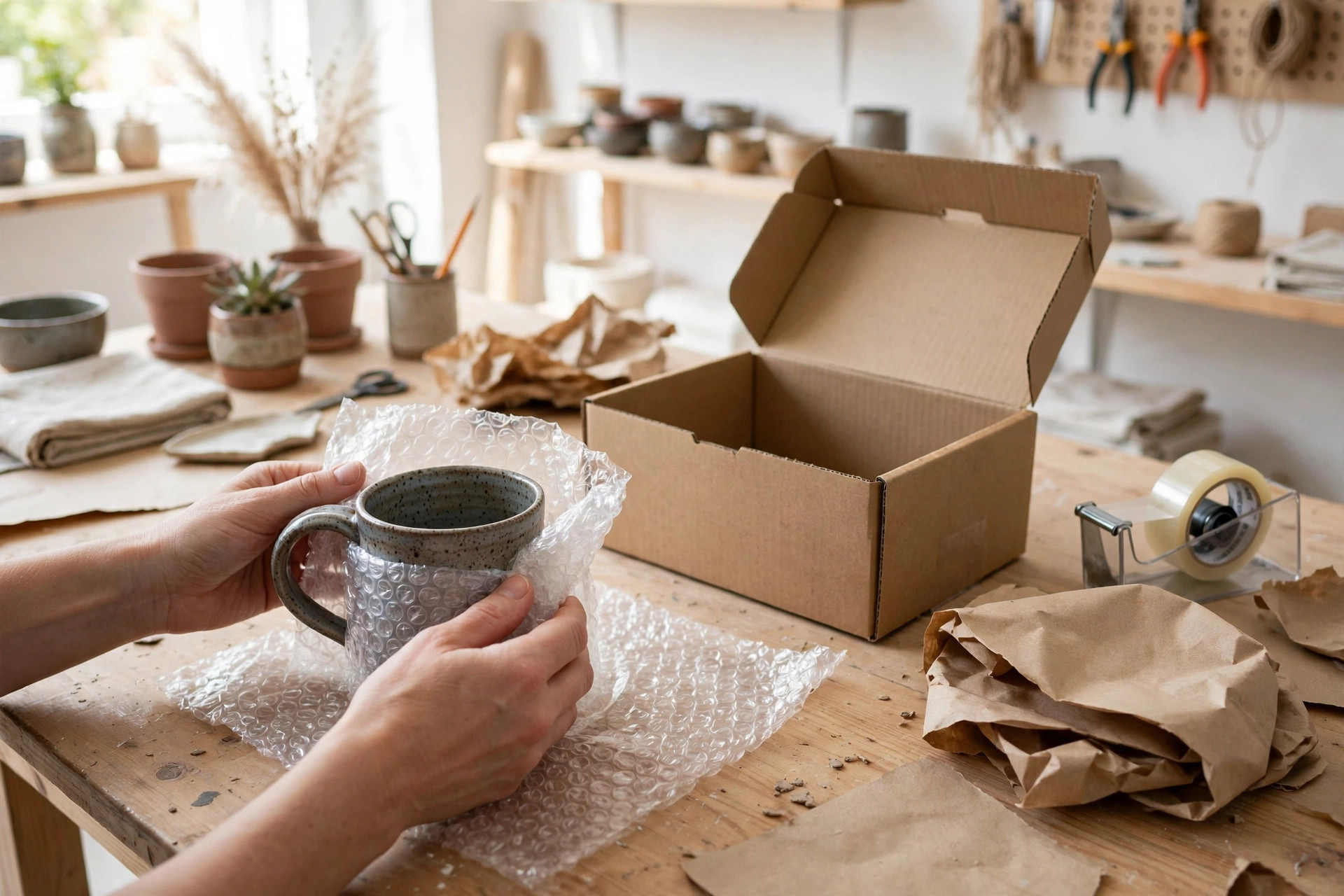
Wrap the sealed coffee bag in a layer of bubble wrap, with the bubble side facing the bag, and tape the wrap closed so it stays in place. This protects the bag from punctures and gives it a little cushioning if the box is dropped. If you are shipping several bags in one order, wrap each bag separately so they do not rub against each other.
Place a layer of cushioning in the bottom of the box, set the wrapped bag on top, and fill the remaining space around and above it with more cushioning. The bag should not move when you shake the box gently — if it slides around, add more packing material. This is the same principle used for other fragile food shipments, and the techniques in our guide on how to package baked goods for shipping show how to stop delicate items moving around in transit, which applies just as well to coffee.
Step 4: Choose and Prepare the Shipping Box
Choose a box that fits the wrapped coffee bag with about five centimetres of cushioning on every side. A box that is too big wastes packing material and postage, and lets the contents move around; a box that is too small forces you to squeeze the bag in, which risks splitting the seal.
Tape the bottom of the box with the H-taping method: one strip along the centre seam, and one strip across each edge, forming an H shape. This is much stronger than a single strip and stops the bottom splitting open under the weight. Pack the coffee and cushioning inside, close the flaps, and tape the top the same way. The difference between a mailer box and a shipping box matters here, and our guide to mailer boxes vs shipping boxes will help you pick the right box for coffee orders of different sizes.
Step 5: Label and Ship
Stick the shipping label flat on the top of the box, where it is easy to scan. Make sure the address is clear and correct, and double-check it against the order before you seal the box — a wrong address is the most common reason coffee shipments go missing.
Add a “fragile” label if your carrier offers one, though be aware that it is a request rather than a guarantee: good packing matters far more than a sticker. If you are shipping internationally, check the destination country’s rules for importing coffee — most countries allow it, but some require customs forms or have restrictions on food products.
Choose a shipping speed that fits the coffee’s freshness. Standard delivery is usually fine for coffee shipped within a few days of roasting, but if the journey will take more than a week, consider a faster service, especially in hot weather. Ship early in the week so the coffee does not sit in a warehouse over the weekend.
Include a short note inside the box with the roast date, brewing suggestions, and your contact details. It costs almost nothing, it helps the customer get the best from the coffee, and it turns a plain delivery into something that feels personal. The label on the outside matters too: if you sell food products, our guide on how to label food packaging covers the labelling rules and best practices you need to follow.
Common Mistakes to Avoid
Using a bag without a valve. Freshly roasted beans release carbon dioxide for days after roasting. Without a valve, that gas builds up and can split the bag or push the seal open. Always use valve bags for freshly roasted coffee.
Skipping the heat seal. A tin tie or zip seal alone is not airtight. If you rely on it, air will slowly seep in during transit. Heat-seal the bag, then close the tin tie or zip on top of the seal.
Underfilling the box. Empty space lets the coffee bag bounce around and get crushed. Fill every gap with cushioning so nothing moves.
Frequently Asked Questions
What is the best bag for shipping coffee?
The best bag for shipping coffee is a foil-lined, opaque stand-up pouch with a one-way degassing valve and a resealable closure. The foil blocks light and air, the valve lets carbon dioxide escape without letting oxygen in, and the resealable top keeps the coffee fresh after the customer opens it.
Can I ship coffee in a regular envelope?
No. A regular envelope offers no protection against crushing, punctures, or moisture, and a coffee bag will almost certainly arrive damaged. Coffee should always be shipped in a sturdy corrugated box with cushioning around the bag.
How long does shipped coffee stay fresh?
Coffee shipped in a sealed valve bag stays fresh for about two to four weeks after roasting for whole beans, and about one to two weeks for ground coffee. The roast date matters more than the shipping date: coffee packed and shipped within a few days of roasting will arrive fresh, while coffee that sat on a shelf for a month before shipping will not.
Do I need to add a one-way valve to coffee bags?
Yes, for freshly roasted coffee. Roasted beans release carbon dioxide for several days after roasting, and without a valve the gas builds up inside a sealed bag until it splits the seal or bursts the bag. A one-way valve lets the gas out while keeping oxygen out.
How much does it cost to ship coffee?
The cost depends on the weight, the size of the box, the distance, and the speed of service. A single 250g bag in a small box is one of the cheapest food items to ship, because it is light and compact.
More Articles You’ll Like
Keep reading — more from this category and across the site:
- Glass vs Plastic Packaging: Which Is Better for Your Product?
- Eco-Friendly Packaging for Small Businesses: A Practical Guide
- How to Choose the Right Packaging Materials for Your Product
- How to Package Candles for Shipping Without Melting or Breaking
- How to Package Handmade Soap for Shipping Safely
- Child-Resistant Packaging Explained: Rules and Safety
- How to Package Electronics for Shipping Safely
- How to Package Fragile Ceramics for Shipping Safely
- What Is Tamper-Evident Packaging? Types and Benefits
- 50 Funny Christmas Jokes for Kids to Share This Holiday