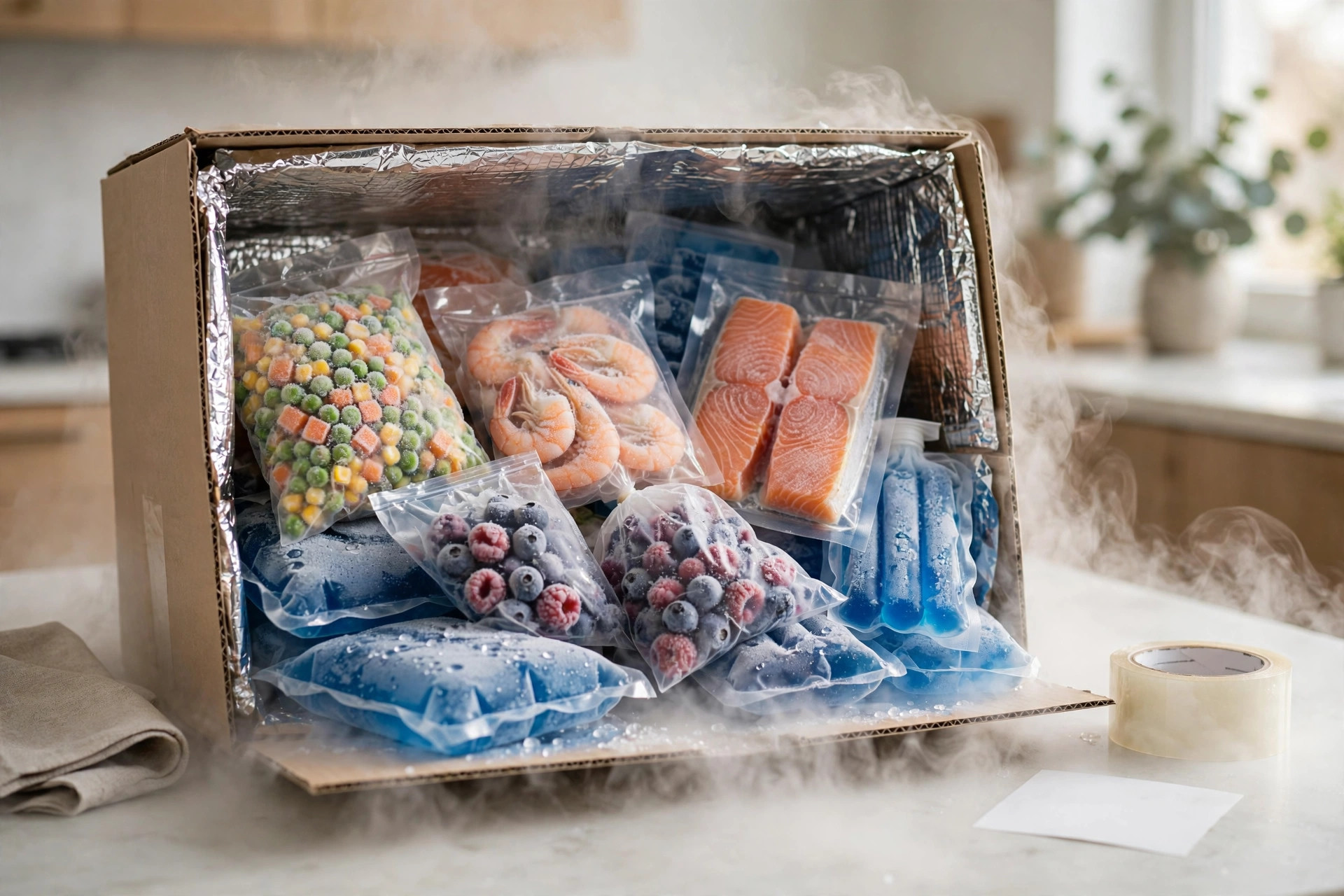
Shipping frozen food is not like shipping anything else. The product has to arrive still frozen, even after hours in a warm van, a sorting depot, and a doorstep in the sun. If the cold chain breaks, the food can thaw, refreeze, or spoil, and your customer will not order again. The good news is that with the right box, the right insulation, and enough coolant, almost any frozen product can be shipped safely. This guide explains how to package frozen food for shipping, step by step, so it arrives in the condition it left your kitchen or warehouse.
Whether you sell frozen meals, ice cream, meat boxes, or baked goods that need to stay cold, the principles are the same: start with food that is fully frozen, pack it in an insulated container with enough coolant, seal it well, and ship it fast. The details matter, so we will work through each one. If you also ship food that is fragile but not frozen, our guide to how to package fragile food items for delivery covers the cushioning and handling side of the job.
Why Frozen Food Shipping Is Different
Most parcels only need to survive bumps and drops. A frozen food parcel also has to fight time and temperature. From the moment it leaves your freezer, the clock is running: every minute in transit lets heat in and cold out. A standard cardboard box offers almost no protection against heat, so frozen food shipped in an ordinary box will start to thaw within a few hours, even in cool weather.
That is why frozen food shipping relies on three things working together: insulation to slow heat getting in, coolant to absorb the heat that does get in, and speed to keep the total journey short. If any one of the three is weak, the other two have to work harder. There is also a food safety angle: frozen food that thaws and then refreezes can lose texture and quality, and food that sits partly thawed for too long can become unsafe to eat.
What You Need to Package Frozen Food
Before you start packing, gather everything you need so the food spends as little time as possible outside the freezer: a sturdy outer box, an insulated liner or foam cooler, gel ice packs or dry ice, waterproof bags for the food, void fill such as crumpled paper, strong tape, and perishable labels.
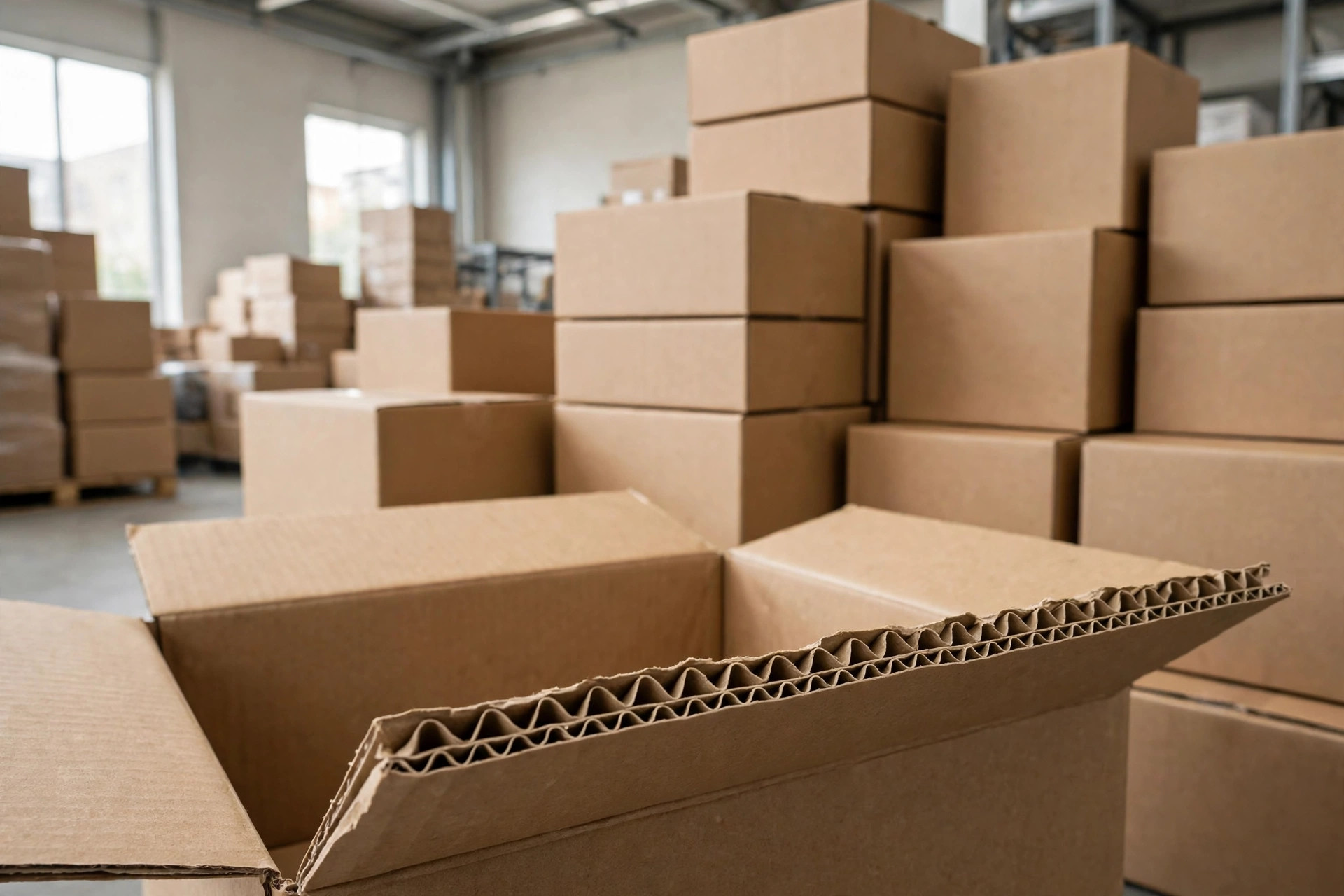
Choose an outer box strong enough to carry the weight of frozen food plus coolant, which is heavier than most people expect. Double-walled boxes are a good choice for heavier orders. The liner can be a polystyrene foam box, a foil bubble liner, or a moulded insulated shipper. Foam gives the best insulation, while foil liners are lighter and easier to store flat. Pick a liner that matches your product size: one far too big leaves empty space that fills with warm air.
How to Package Frozen Food for Shipping: Step by Step
Step 1: Freeze the Food Completely
Start with food that is frozen solid all the way through, not just cold on the outside. Place it in the freezer for at least a full day before packing, and longer for large joints of meat or big containers. Food that is only partly frozen will thaw much faster in transit. If you are shipping baked goods that need to stay chilled, our guide to packaging baked goods for shipping without damage has extra tips on protecting them in the box.
Step 2: Pre-Chill the Box and Coolant
Freeze your gel packs solid for at least a full day, and chill the insulated liner and outer box before you pack. A warm box will eat into your coolant before the journey even starts. Work quickly once the food comes out of the freezer: aim to have the box sealed within a few minutes.
Step 3: Seal the Food in a Waterproof Layer
Put each item in a sealed, waterproof bag or pouch. This stops condensation and meltwater from soaking the box, and it protects the food if a coolant pack leaks. Vacuum-sealed bags work well for meat and meals, while sturdy zip bags suit smaller items. Squeeze out as much air as you can before sealing.
Step 4: Line the Box and Add Coolant
Place the insulated liner inside the outer box, then put a layer of coolant at the bottom. Add the sealed food in the middle, packing items close together so there is as little empty space as possible. Surround the food with more coolant on the sides and on top, because heat comes in from all directions. As a rough approach, plan for more coolant than you think you need, and test your pack-out against your longest realistic transit time.
Step 5: Fill the Gaps and Seal the Box
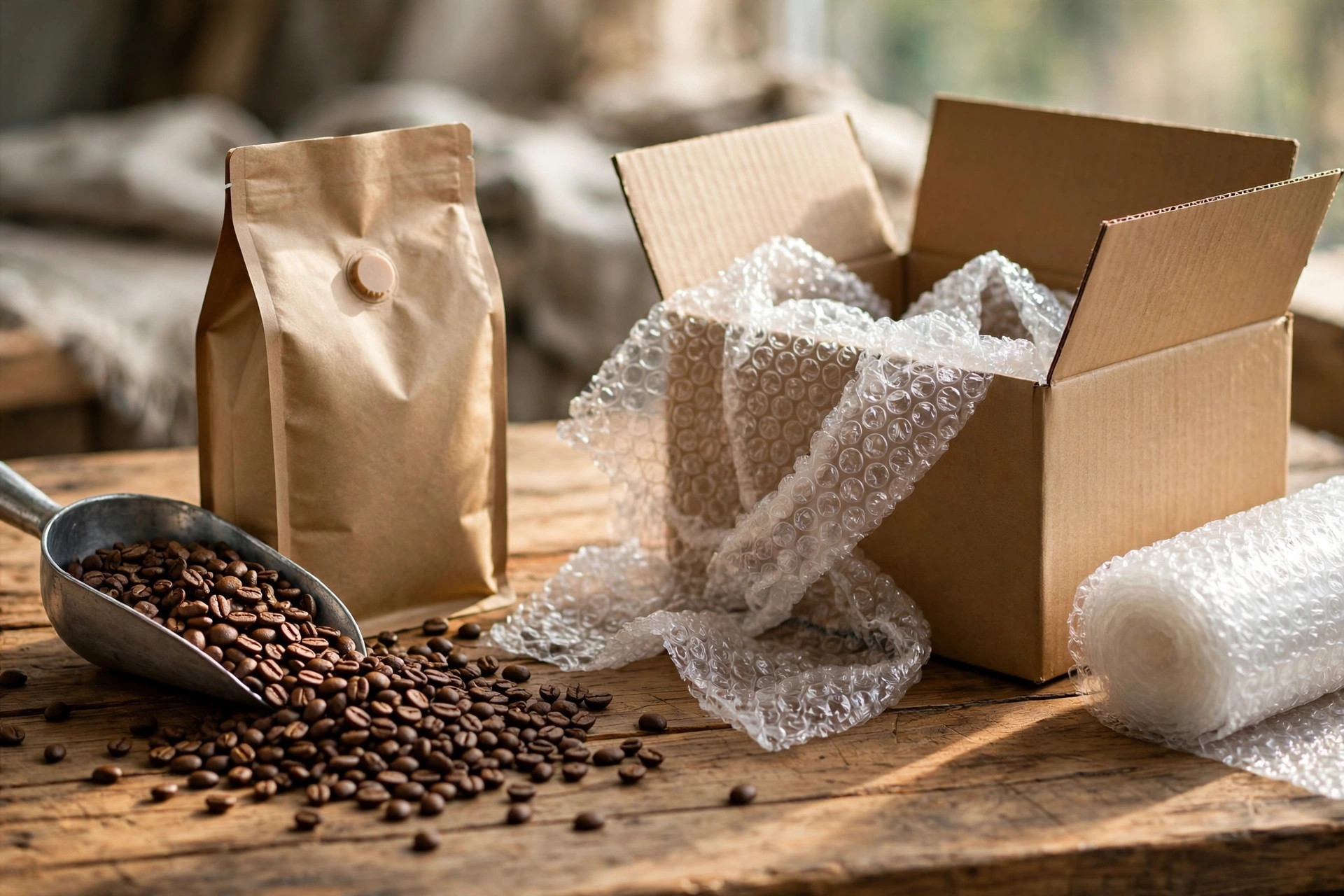
Fill any remaining gaps with crumpled paper or bubble wrap so nothing moves around in transit. Movement can damage the insulation or puncture a coolant pack. Close the liner and seal the outer box with strong packing tape, using the H-taping method along all seams. Give the box a gentle shake: if you feel movement, open it and add more fill.
Step 6: Label Clearly and Ship Fast
Mark the box clearly as perishable and keep frozen, and add this way up arrows if the contents need to stay upright. If you used dry ice, follow your carrier’s labelling and declaration rules exactly. Book the fastest service that fits the journey: next-day delivery is the standard for frozen food. Try to ship early in the week so the parcel is not sitting in a depot over the weekend.
Choosing the Right Box and Insulation
The outer box and the insulation do different jobs, so choose them separately. The outer box provides strength and a surface for labels; the insulation provides the temperature protection. A good outer box is rigid, correctly sized, and strong enough for the weight. An oversized box wastes insulation and coolant, while an undersized box crushes the liner. For help picking the outer box, read our comparison of mailer boxes compared with shipping boxes and choose the format that suits the weight and size of your order.
For insulation, foam coolers offer the best protection and are the standard for ice cream and long journeys. Foil bubble liners are lighter, cheaper, and easier to store, and they work well for shorter trips and products that are already very cold. Whichever you choose, test it: pack a box exactly as you would for a customer, leave it at room temperature for the length of your longest delivery, and check the food when you open it. Do not reuse a damaged liner or a soggy box.
Gel Packs vs Dry Ice: Which Coolant Should You Use?
Gel packs are the default choice for most small food businesses. They are cheap, reusable, and safe to handle with bare hands. Freeze them solid, place them around the food, and they will keep it cold for a typical next-day delivery. Their weakness is that they warm up steadily, so they suit short journeys. The same care with air and moisture matters for other foods too: our guide to packaging coffee for shipping shows how oxygen and damp can spoil flavour even when temperature is not the issue.
Dry ice is much colder and lasts longer, which makes it the better choice for ice cream, long-distance deliveries, and hot weather. It needs care: always handle it with gloves, never store it in a sealed airtight container because the gas it gives off needs to escape, and never put it in direct contact with food unless the food is sealed in a waterproof bag. Most carriers ask you to declare dry ice on the label, so check the rules for your carrier before you ship.
Common Mistakes to Avoid
The most common mistake is using too little coolant. It is tempting to save weight and cost by cutting back on gel packs, but one spoiled order, a refund, and a lost customer cost far more than an extra ice pack. When in doubt, add more coolant, and test your pack-out on the longest journey you offer.
Another frequent mistake is shipping on a Friday. A parcel sent on Friday can end up sitting in a depot all weekend if there is a delay, and frozen food will not survive that. Ship Monday to Wednesday where possible, and be clear with customers about delivery days at checkout. The same thinking applies to other temperature-sensitive products: our guide to packaging candles for shipping without melting shows how heat causes the same kind of problem from the opposite direction.
Frequently Asked Questions
How long can frozen food stay frozen in transit?
It depends on the insulation, the amount of coolant, and the weather, but a well-packed insulated box with gel packs usually keeps food frozen for a next-day delivery. Dry ice can extend that further. Always test your own packaging over your longest realistic journey before you promise a delivery time to customers.
Can I ship frozen food with regular gel ice packs?
Yes, for most short journeys. Freeze the gel packs solid for at least a full day, surround the food with them on all sides, and use an insulated liner. For longer journeys, very hot weather, or very temperature-sensitive products like ice cream, dry ice is a better choice.
Do I need to use dry ice to ship frozen food?
No, dry ice is not always necessary. Gel packs are enough for many next-day deliveries. Dry ice is worth considering when the journey is long, the weather is hot, or the product must stay well below freezing. If you do use dry ice, follow your carrier’s rules on labelling and how much you can include.
Can frozen food be shipped with a standard courier?
Yes, most major couriers carry frozen food as long as it is packed in an insulated box with enough coolant and sent on an express service. Check your courier’s rules on perishable goods and dry ice before your first shipment, and choose a service that delivers the next working day.
What should I do if frozen food arrives thawed?
Contact the seller straight away and do not refreeze or eat food that has fully thawed and warmed up. Most reputable food sellers will offer a replacement or a refund. As a seller, having a clear policy for thawed deliveries, and keeping records of your packaging tests, will help you handle these cases fairly and quickly.
More Articles You’ll Like
Keep reading — more from this category and across the site:
- Stand-Up Pouches vs Boxes: Which Food Packaging Is Right for Your Product?
- Glass vs Plastic Packaging: Which Is Better for Your Product?
- Eco-Friendly Packaging for Small Businesses: A Practical Guide
- How to Label Food Packaging: Rules and Best Practices
- How to Choose the Right Packaging Materials for Your Product
- How to Package Handmade Soap for Shipping Safely
- Child-Resistant Packaging Explained: Rules and Safety
- How to Package Electronics for Shipping Safely
- What Is Flexible Packaging? Types, Uses, and Benefits
- 50 Funny Ice Skating Jokes for Kids and Adults to Share